
Squadron 189 in Florida hosts post-traumatic stress disorder awareness dinner that includes remarks from Army veteran who has been diagnosed with the condition.
Sons of The American Legion Squadron 189 in Sebastian, Fla., has made it a regular occurrence to not only support the veterans at Post 189 and in its community, but to honor them as well. This has included Vietnam Veterans Welcome Home nights, honoring Purple Heart recipients and remembering prisoners of war and those still missing in action.
But on June 26, rather than honoring those veterans, Squadron 189 decided to help educate them on a condition that can often be tied into veteran suicide: post-traumatic stress disorder. And in doing so, it also was a night to remind those in attendance about the Legion’s Be the One veteran suicide prevention mission.
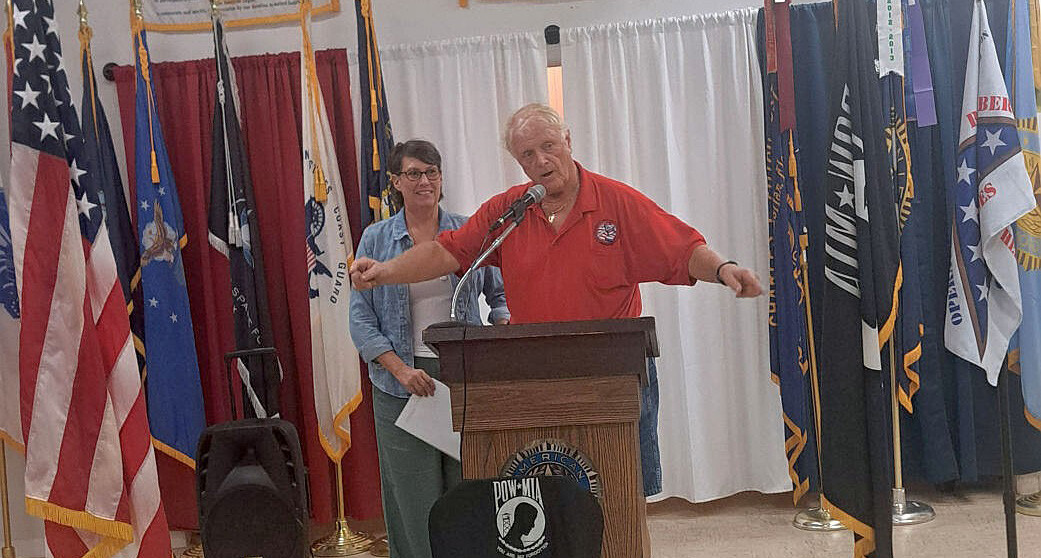
As PTSD Awareness Month came to a close, Squadron 189 hosted a dinner that included guest speaker Michelle L. Auton, a veteran service officer for Indian River County. Auton served in the U.S. Army from 1989 to 1993, where she said she developed PTSD that led to alcoholism. She now is two years sober and was able to share her recovery with those in attendance at Post 189.
“June was PTSD Awareness Month. We’re always looking for some idea to do something we haven’t done before,” said Peter Puzzo, a past commander of Squadron 189 who now serves as chairman of the Detachment of Florida’s Membership Development & Training Committee.
“One of our pillars is Veterans Affairs & Rehabilitation, and this falls directly into that, as well as with Be the One. And I think we miss the big picture by not doing things like this.”
Auton, who is American Legion-accredited, shared how important it is to have discussions about mental health. “The biggest thing I can do to assist a veteran is listen, especially when they’re opening up about mental health,” she said. “A lot of people don’t talk about mental health. There’s been such a stigma for so long, especially with men. Men don’t allow themselves to be vulnerable. Giving them the space to do that and feel comfortable doing that – it’s a safe environment. And we’re actively listening. Letting them express their feelings, and then how do we navigate the outside civilian world and the VA system and getting them the help that they need.
“It’s educating people on what does PTSD look like. What does anxiety look like. What type of physical symptoms your body might go through due to you mental health, and maybe you recognize those symptoms.”
Auton said it was important to make those in attendance aware of their importance if they recognize someone who may be experiencing a mental health crisis. “You could be that lifeline,” she said. “That one phone call that you answer that could save somebody, and you may not even realize it.”
Getting an opportunity to share her message to those at Post 189 that night – including about her own struggles – is important to Auton.
“It feels empowering that I … have gotten to a point in my own recovery success to where I am able to share that and make that impact for others,” she said. “Because people made an impact for me by sharing their stories. If I can impact one life positively, that’s pretty empowering.”
Puzzo said he feels Auton made that impact at Post 189. “I always try to watch the crowd during whatever event we’re having,” he said. “In this case, after she finished talking, I could see a different look in people’s eyes. Many of them – veterans and spouses of veterans – they came up to me later on thanked me because someone is finally talking about it.”
- Be the One