

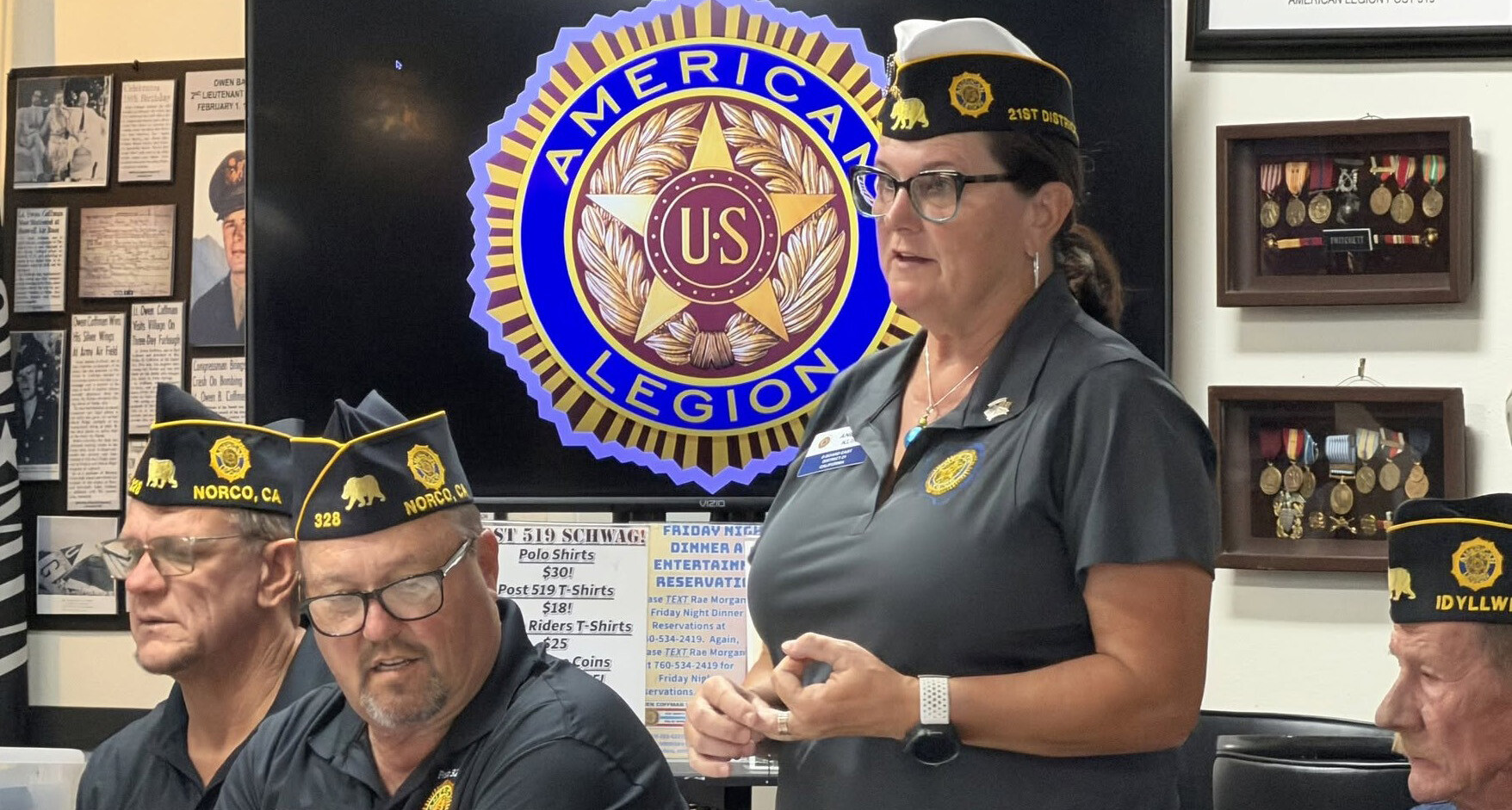
In six weeks, the Buddy Check team at California Post 519 made more than 300 calls to its members, using a new plan implemented by its first vice commander.
Department of California Legionnaire Andrea Kline has wanted to start at Buddy Check program at American Legion Post 519 in Palm Springs for a few years. When she was elected first vice commander in mid-August, she saw her opportunity.
After getting her team up and running by mid-September, its dedication has resulted in more than 300 aging veterans who are members of the post being contacted. And Buddy Checks don’t start and stop with a phone call. If a veteran needs further help, the post will ensure he or she gets it.
A former nurse with experience in building healthcare programs, Kline calls the Buddy Check program “fabulous. And it’s more than just calling people. It’s actually connecting with them and then finding out how they can be helped by The American Legion.
“I was elected first vice, and I said, ‘OK guys, we’re going to do this Buddy Check program.’”
A member of the Legion’s National Veterans Affairs & Rehabilitation Commission and the Department of California’s Mental Health chairman, Kline put together a team of six post members who regularly serve as “a welcoming crew” when the post hosts events. Most of the callers are older male veterans, but an LGBTQ female member of Post 519 also is on the team and is responsible for calling the female veterans on the Buddy Check list.
The group downloaded Buddy Check resources available on The American Legion’s national website and then customized them for the post. “We changed the script a little bit,” Kline said. “We created a tracking form so that we could keep track of the calls that were being made, and also the referrals – just key things we wanted to be able to keep track of.”
Those items include:
· Has the veteran passed away?
· Does the veteran feel isolated?
· Is the veteran homebound or hospitalized?
“When we have our calls, we just tell them it’s a Buddy Check,” Kline said. “We get them talking, and we find out how are they doing.”
The Buddy Check team meets every week at 2 p.m. on Tuesdays and spends an hour calling veterans. “The guys wanted to call everybody over 80 (years old),” Kline said. “Palm Springs is a heavy retirement destination. The number of veterans over 80 was like 300-something. I said, ‘Guys, that’s a lot of people to call.’ But they said, ‘Well, that’s our goal.’ And I believe that we have made calls to everybody over 80.”
Kline collects the call sheets every week and then puts on the tracking form whether or not contact was made, and whether a referral to a service officer or chaplain needs made.
“Most people, they’re just thankful for the call,” she said. “But we have run into people who are homebound, and for those we’ve committed to calling them more frequently. We offer that if they want to come to the post, that we can get transportation and bring them to an event at the post.”
The calls also have reached the veteran’s surviving family. “We have gotten ahold of spouses where the member has passed away,” Kline said. “Our position with the spouses and families is they are a part of us. We’ve engaged them to ask them how they’re doing. We’re sending out sympathy cards to them even if we’re six months late finding this out.
“And some of the spouses have said, ‘You know, I think I’ll come in and join the Auxiliary, because I feel really isolated.’ We’re engaging them as well.”
Kline said while Buddy Checks aren’t a membership tool, “I will say that since we started doing this, we’ve had renewals coming in. After last week’s calls I had a number of renewals that came in. But that’s not the ultimate goal. Our ultimate goal is to connect with people.”
And Kline sees that connection as critical.
“We’re the lifeline for them. We are the connection to the community. We are the connection to healthcare. The connection for transportation. The connection for social services,” she said. “Whatever it is, they know that they can talk to us. And I think they’re more willing to talk to us because when we call them, we do tell them we’re a veteran. That was something that was important in our script: to identify ourselves as veterans. They’re willing to talk to us, where they might not be willing to talk to someone in their community, their neighbor, whatever.”
- Buddy Check