

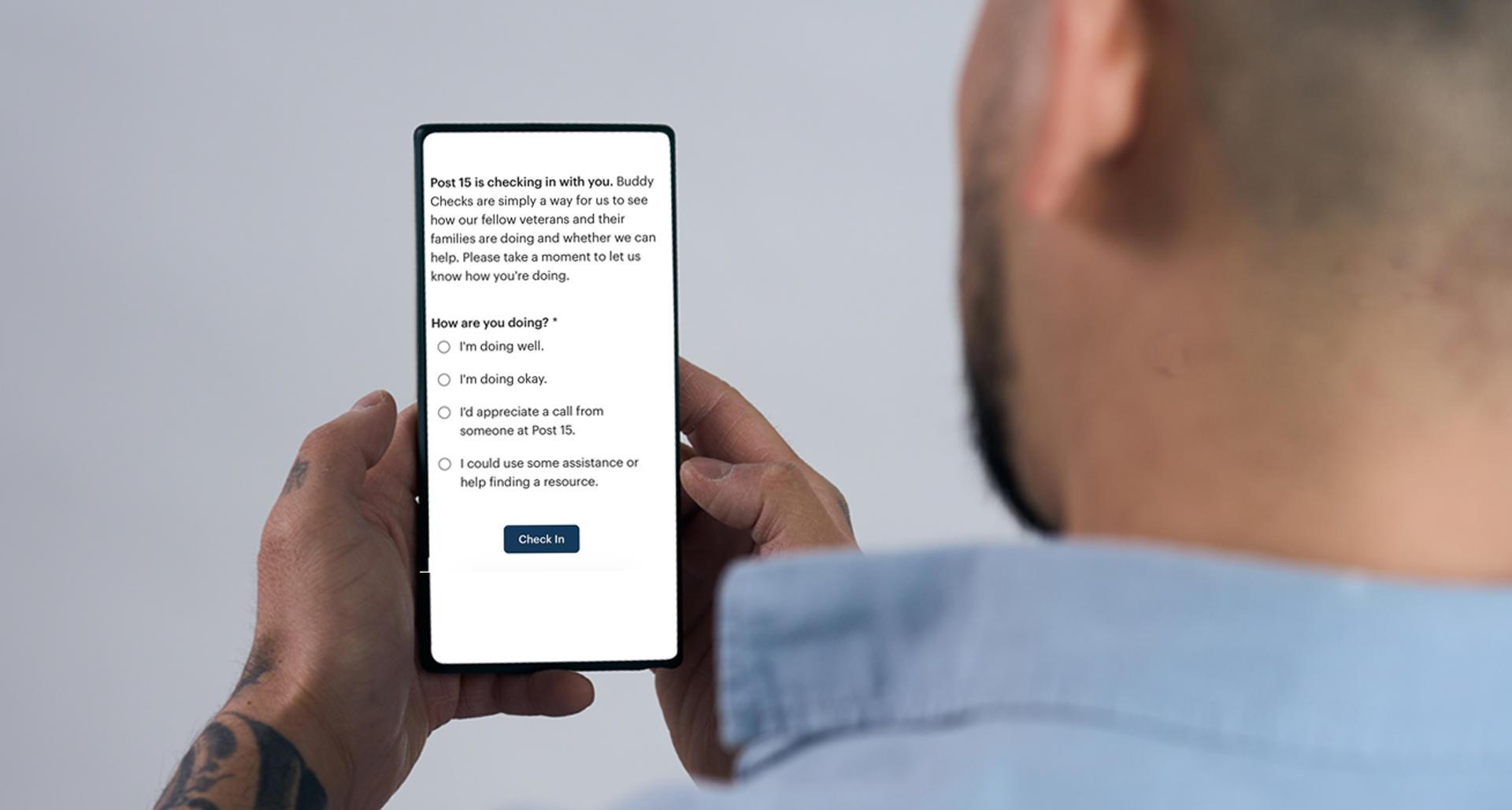
Florida Post 15 has developed a plan to reach out to those most in need of support.
Gordon M. Crothers American Legion Post 15 in Dade City, Fla., has developed a strategic plan for making Buddy Checks on its members. But Post 15 Adjutant Rob McGregor is quick to admit the approach didn’t come from his own brainstorming.
Rather, it’s more along the lines of “imitation is the sincerest form of flattery.”
McGregor said he was motivated to improve the post’s Buddy Check efforts after seeing how American Legion Auxiliary Unit 15 was reaching out to its own members.
“The Auxiliary really kind of kicked me into gear to do something,” McGregor said. “They sent out emails, and some emails weren’t coming back. So then they were trying some phone calls. And finally, they sent out a letter with a self-addressed envelope with a note that said, ‘We’re trying to reach you. Is this a good address?’” They used that multi-prong approach, and I liked that. So I tried to do the same thing on our side.”
So now, Post 15 makes Buddy Checks using what McGregor calls a “triage” approach. He uses Mailchimp to send out emails with a brief survey, asking if members are doing well, doing OK, would like a call from the post or need help locating resources or support.
From that, the post then trims down the list of potential Buddy Check recipients. “It’s who do we need to reach out to the most,” McGregor said. “Who are we not getting responses from? Let’s focus on the people we’re not hearing back from at all.
“And to whittle it down even further, when we run the membership roster, I’m looking at these people that have all these continuous years (of membership), but we haven’t heard from them. And we’re checking on those people first. We’re doing this in phased approach to focus on those that might be most at need.”
McGregor said making Buddy Checks is one of the reasons why The American Legion exists. “That’s the core of what we do: look out for each other,” he said. “My post has always sent people to visit older members that are sick at home and can’t come to the post anymore. It’s just to check on them and see how they’re doing.”
And those Buddy Checks also fall under the Legion’s most important mission: its Be the One veteran suicide prevention program. “That’s part of why we’re doing this,” he said. “One of the (survey) questions is, ‘Hey, do you need somebody to reach out?’ That’s the intent of that question. We know that veterans will self-isolate. Let’s weed down to the ones who have withdrawn and make sure they’re doing OK. That’s part of the whole Be the One thing. It’s asking the question, ‘Are you all right?’”
- Buddy Check