
The department leadership has created a statewide push for training, mentoring and now membership impact reports.
When the American Legion Department of New Hampshire leadership left last year’s National Membership Workshop in Indianapolis, they took home two priorities – connect successful posts with those struggling to meet goals, and train district leaders on post operations to they could support post officers with their roles.
The goal is to give post leadership with the training and tools they need to fullfill the job they have been elected to do.
“We want to empower the folks with training that they need so they feel valued,” said Department of New Hampshire Commander Myron Crossley. “I can't tell you how many Legionnaires I've met over the last 10 years who said, ‘I was just hoping for election to come because I had no idea what I was doing and I wanted to get out of the job before I screwed it up.’ It's not fair to the individual, and they don't feel valued. And you won't retain them. We have a higher retention rate if people feel valued and feel like they're contributing.”
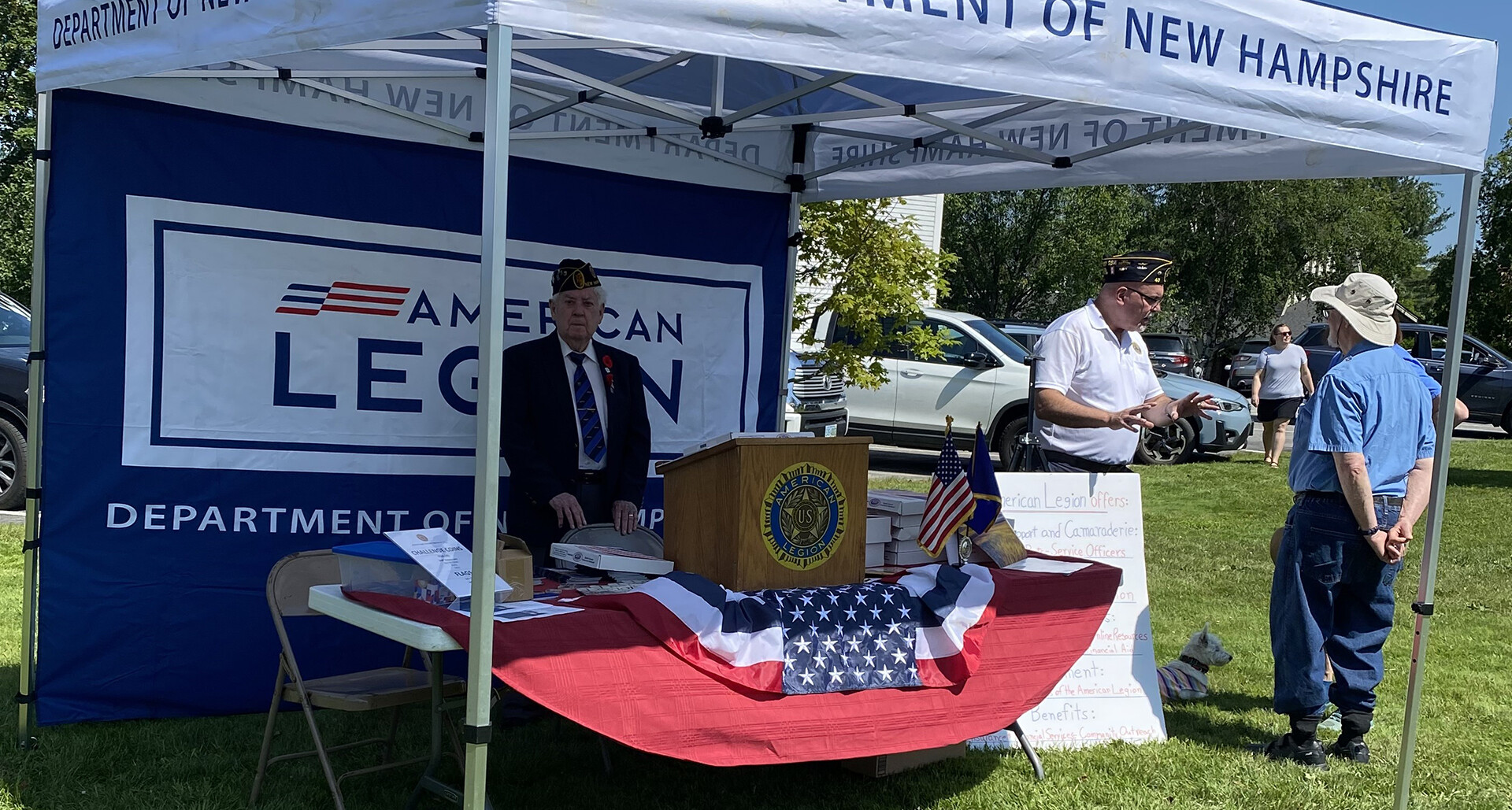
The department hosts a training initiative at least once a month using a curriculum that mirrors the American Legion National Regional Informational Conference but tailored to New Hampshire post needs. The training has reached districts across the state, as Crossley asks vice commanders and district staff regularly where they think the training is most needed.
“It's very well known within our department that if you need training, we will come to you,” he said.
The two-hour training is conducted by subject matter experts within the department staff who follow a formatted lesson plan for consistency. Topics of the training include the duties of post commanders, adjutants, vice commanders and finance officers; how to run a post meeting; the role of the post in the community; using MyLegion.org for membership processing; and using available resources such at the Post Officer’s Guide and Adjutant Guide.
“It’s enlightening to show them that, ‘Hey, you want to know how to run a meeting? Turn to page 79 and 80 of the Post Officer’s Guide. It's right there,’” said Michael MacLellan, Department of New Hampshire Membership Committee chairman. “The Post Officer’s Guide, the Adjutant’s Guide, those things are aids to the post to do their business.”
Legion posts host the training to help connect larger and smaller posts along with successful and struggling posts. “They work together in tandem rather than separate,” Crossley said. “So we co-mingle and share knowledge rather than coveting it and keeping it to yourself. We all strive together or we all fail together. That is a fact.”
Crossley shared an example of what success looks like when posts share knowledge and mentoring among posts. Keith Ferguson left his post to help lead another one that was struggling and less than two years later, Post 69 in Somersworth, N.H., “is now thriving under his leadership,” Crossley said. “That’s what our mission is, is to train the next level of leadership. You see hope or prospect in Legionnaires, you mentor them with positive reinforcement along the way, and they will walk miles for you. Don’t meet people with negative, Oh, you didn’t make this deadline, you didn’t make this number. I like to say, ‘How can I help you get there? How can I give you the tools to get there?”
MyLegion.org has been a significant piece of training to help members comfortable using computers to process membership because posts were still sending their membership to department headquarters for processing. The training moved that responsibility back to the post, a transition that wasn’t easy but is now expected.
“That was a huge emotional event at first but now it's the expectation, it's the norm,” MacLellan said. “Department does not process any post membership. The post is responsible for having somebody in MyLegion take care of that.”
Crossley said MacLellan “implemented a very positive training initiative” for MyLegion. “We got the message out that Mike or one of his membership folks that is really good at MyLegion.org will come to your post and show you how to do it. He's brought that training to literally every single district in the state. After people saw value and that it's easier, they also felt that, ‘Hey, I didn't just stick a form and a check in an envelope and mail it out to somebody. I accomplished this myself.’”
About half of New Hampshire’s 94 active Legion posts have received training or mentoring in the past year. It’s involved engagement with new post officers, or officers who have been in the role for a while, on reviewing the basics of running a post, conducting a meeting, locating and filling out annual reports like the Consolidated Post Report and post officer’s report, handling dues changes, pulling the Direct Membership Solicitation members from the department holding post off of MyLegion and transferring into local posts, and what to do when you receive a new member.
The MyLegion training has resulted in fewer calls for assistance with membership processing and locating reports and lists, which goes back to making the Legionnaire feeling valued.
“When you have somebody who feels like they are making a valuable contribution to your organization, they're more likely to stay than if they just feel they’re marking time and sit in the back corner at a meeting, they vote on a few things a month and never get asked a question or never get involved,” Crossley said.
Crossley and MacLellan are building upon the department’s training and mentoring by adding a third priority – implementing a membership impact report.
“We ask people to collect data, but a lot of people feel the data goes nowhere,” Crossley said. “So we want to make a membership impact report that adjutants and commanders can see and take back to their members and say, ‘We had this impact on the community.’
“I want to use a membership impact report so at the end of this cycle we can go back to the membership and say, ‘This is what you did.’ This is what you did. And everybody did it together. That's what we want to bolster down on is that it takes the entire family. It takes everybody to succeed. We succeed together and we fail alone is a fact. I want to get that information back to them so that they see their hard work.”
- Dispatch