

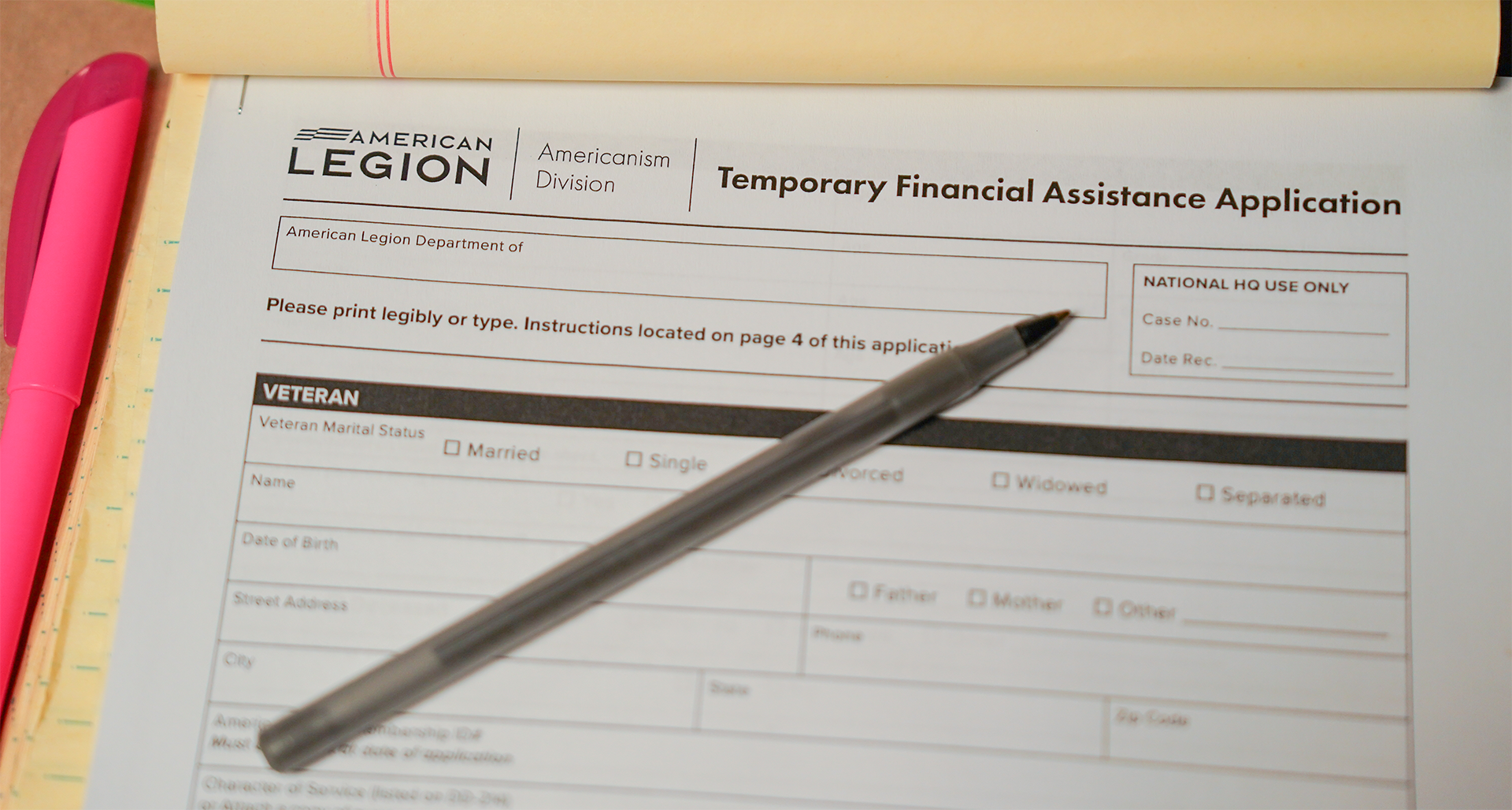
The American Legion’s Temporary Financial Assistance grant provides up to $2,500 for active duty and Legion members with minor children in the home.
American Legion Children & Youth department chairmen who attended the Combined Americanism Conference Sept. 19 in Indianapolis received training on what The American Legion Temporary Financial Assistance (TFA) program is and how to fill out an application as an investigator.
The TFA training was important as the program is funded through The American Legion’s Veterans & Children Foundation, which also provides training for American Legion accredited veteran service officers who provide benefits claims assistance for veterans and their families, free of charge.
TFA meets the needs of eligible active duty servicemembers and veterans with minor children in the home who are facing a financial hardship by providing one-time non-repayable cash grants of up to $2,500. The program helps provide for the basic needs of children such as housing, food and clothing.
Download the TFA investigator baseline PowerPoint that was provided during the training.
TFA eligibility:
- A veteran must be a member of The American Legion or on active duty currently serving on federal orders under Title 10 or Title 14 for those in the Coast Guard, with minor child(ren) living in the home. The minor child(ren) must be unmarried and under the age of 18 and still in high school. A TFA grant will be considered if the child(ren) is under the age of 21, unmarried and still in high school.
- The minor child(ren) must be the biological child, stepchild, legally adopted or in the legal custody of a qualifying veteran or active-duty servicemember.
- Active duty servicemembers do not need to be a member of The American Legion for TFA consideration.
If a veteran is not a member of The American Legion, a post can sponsor their membership to make them eligible.
TFA helps pay for:
- Shelter (mortgage or rent)
- Utilities (electric, gas, propane, water, trash and sewer)
- Essentials (food, personal hygiene items and cleaning supplies)
- Clothing for children
- Medical or dental care of the child(ren)
- Medications for the child(ren)
- Educational expenses (book fees, basic school supplies) see Resolution No. 5
TFA does not cover:
- Car payment or other transportation fees, car repairs
- Home or cell phone
- Property taxes
- Cable TV
Where TFA originates
TFA applications originate at the post level. If the applicant has received a TFA grant in the past, they are not eligible for another one. Posts can obtain a fillable PDF TFA application from their respective department headquarters.
An American Legion member (investigator) completes the application form that includes a detailed report and supporting documentation.
Role of investigator
A trained two-party team, that includes an official of The American Legion post or duly authorized persons, visits the home or another location (could be at a coffee shop) of the child(ren) to validate the information provided by the applicant and verifies the need.
Before scheduling a two-party TFA investigation, it is recommended that investigators first confirm that the applicant meets the TFA requirements.
The investigator completes the application form, including a detailed investigator’s report that provides, and attaches, all supporting documentation, which is critical. The report should be very detailed.
Supporting documentation can be current Legion membership card, birth certificates of child(ren), marriage license if applicable, death certificate of eligible veteran if applicable, custody documentation, divorce decrees and legal name changes (if applicable), all current bills (bills within 30 days), leases, eviction notices, etc. The report should detail the applicant’s need and that all other sources of assistance, including reasons for denial, approval amounts and when assistance was requested.
Complete the entire application. An “N/A” or incomplete sections will likely result in the application being returned for completion.
TFA submission
- The completed application is submitted by the investigator to the department Children & Youth chairman, adjutant or duly authorized department official.
- Department reviews and validates the TFA application before sending it to the Americanism Division at National Headquarters in Indianapolis.
- National reviews the TFA application. If more information or documentation is needed, the application will be sent back to the department as incomplete. Incomplete does not mean it’s denied. If the needed information/documentation can be sent, the application will be reviewed again for possible approval.
- Final approval is by the national adjutant of The American Legion.
Payment
- A two-party check to the applicant and creditor(s) is issued.
- Turnaround time once an application is sent to national is about one week.
Common TFA questions answered
- If the veteran is not a member of The American Legion and the post sponsors their membership, it is recommended that they sign up at legion.org/join because their membership will be approved in 24 hours. If they join through the post, membership processing can take two weeks.
- If the applicant does not ask for food assistance, ask about their food need as any remaining grant can help with this.
- If applicant and their spouse are both active duty military, they can both receive a TFA grant.
- If there is a declared natural disaster and the applicant is a Legion member with minor children in the home, they can apply for both the National Emergency Fund and TFA grant.
TFA don'ts
- Do not submit bills that are from a previous billing cycle or expect payment for a bill that was not in the TFA packet.
- Do not include original documents as supporting documents; they will not be returned.
- Do not provide illegible copies of documents.
- Do not provide National Headquarters contact information to the applicant so that they may follow-up on their application.
- Do not send application packets directly to National. TFA applications must first be reviewed and approved by the department.
- Do not promise the applicant or creditors anything.
- Do not be afraid to tell an applicant that they do not qualify.
- Dispatch