

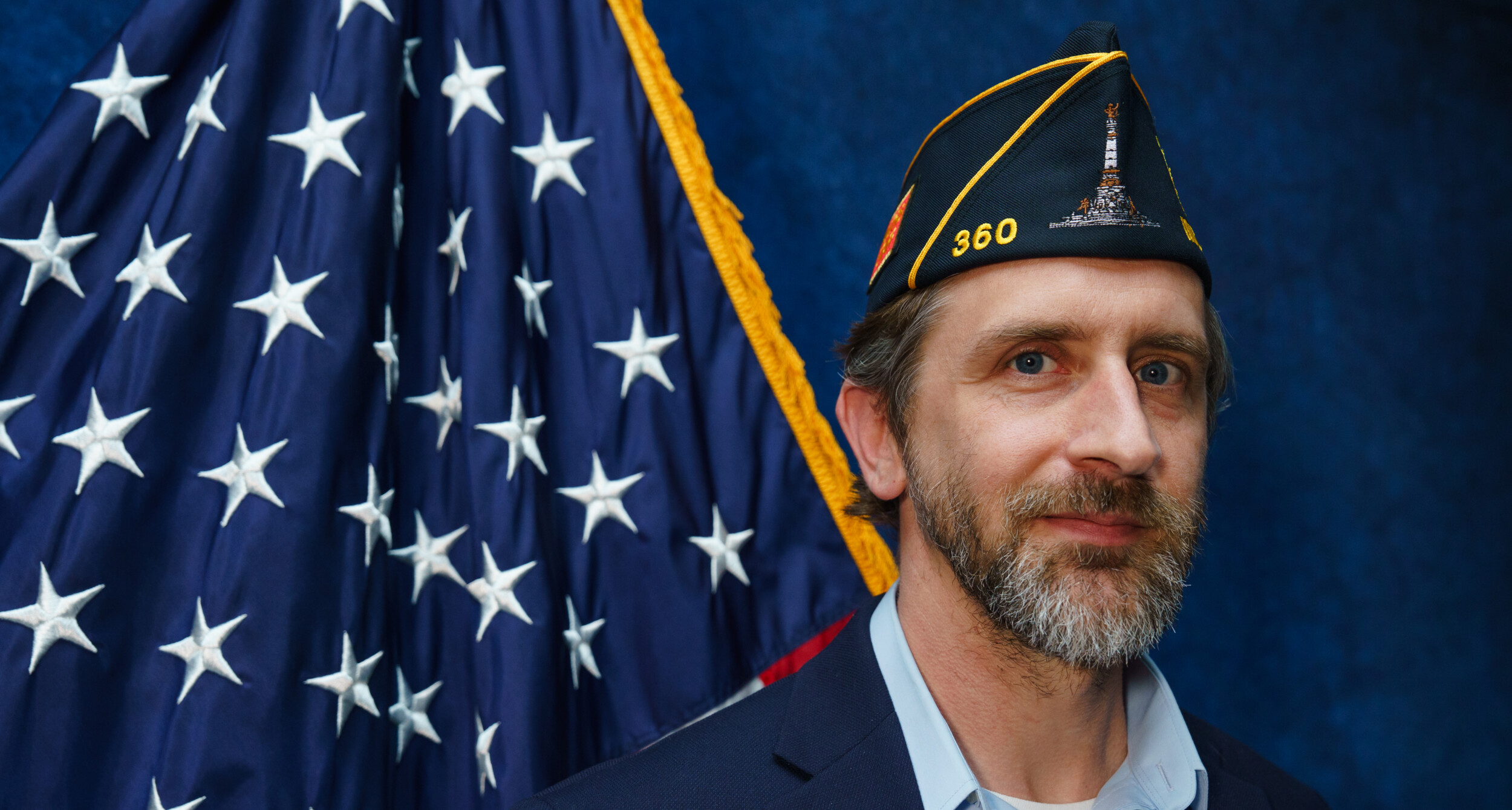
Army veteran shares his discovery to what the flag represents and how it shapes his views when it comes to leadership, service and educating others.
When I was 19 years old, I raised my right hand and swore an oath to defend the Constitution of the United States. At the time, the American flag meant something to me, but in truth, I didn’t yet understand the depth of its meaning.
It was a symbol I respected, something I’d seen hanging in classrooms, on front porches, and draped over stadiums during the national anthem. But after seeing combat as an infantryman in Iraq from 2005 to 2009, losing friends, and coming home to build a life as a husband and father, the flag took on a meaning that is personal, permanent, and, at times, heavy.
To me, the American flag represents the men and women I served with, the brothers I laughed with, fought besides, and in some cases, buried. It’s impossible for me to see the flag without remembering faces and voices.
I remember long, exhausting patrols, the tension of uncertainty, and the quiet moments between missions when we talked about home and dreamed about our futures. We carried the flag not as an abstract idea, but as something worth risking everything for. Some paid that price. Because of that, the flag is no longer just a symbol of ideals; it’s a reminder of sacrifice written in blood and memory.
The flag also represents responsibility to me.
When I wore the uniform, it was a constant reminder that I was part of something bigger than myself. The stars and stripes stood for the country I had sworn to serve, but also for the people back home who trusted us to do that job. That sense of responsibility didn’t end when I took off the uniform. Today, as a 40-year-old husband and father of three young children, I see the flag as a call to live in a way that honors the sacrifices made by those who never came home.
As a father, the flag has taken on yet another layer of meaning.
My children see it through innocent eyes; they see it waving on holidays, printed on shirts, or standing tall at school ceremonies. They don’t yet understand war or loss, and I don’t rush to burden them with those realities. I do want them to understand that the flag stands for something more than decoration. It represents freedom to grow, to learn, to speak their minds, and to live lives of opportunity.
At the same time, the American flag reminds me that freedom is not guaranteed. It requires effort, sacrifice and a willingness to stand up for what is right. I want my children to understand that patriotism isn’t just about celebration, it’s about responsibility, character, and respect. It’s about taking pride in your country while also striving to make it better.
There are moments when the flag is especially powerful for me. Seeing it folded at a military funeral hits differently when you’ve lost friends. Hearing taps while watching a family receive a folded flag is a reminder of the cost of the freedoms many take for granted. In those moments, the flag feels incredibly heavy, not physically, but emotionally, because of everything it represents.
At the same time, the flag is also a symbol of hope. It represents the idea that despite our differences, struggles, and imperfections, we are part of something unified. During my service, I stood shoulder-to-shoulder with people from all walks of life, different backgrounds, beliefs, and experiences, but we were united under one flag with one mission. That unity is something I still believe in, even in a world that often feels divided.
To me, the American flag represents a nation always working to live up to its highest ideals. It stands for values that are greater than any one person and reflects our shared commitment to grow, improve, and move forward together. Under that flag, I’ve seen people from all walks of life come together with a common purpose, united in something bigger than themselves.
When I look at the flag today, I don’t just see red, white and blue fabric. I see sacrifice, duty and the faces of the men and women I served with. I see the responsibility I carry as a veteran and as a father. I see the future in my children’s eyes and the past in the memories I carry. Most of all, I see a reminder that freedom is both a privilege and a responsibility, one that must be protected, respected and passed on.
Today, in my work with The American Legion, that sense of unity and service continues to guide me. It’s a way for me to stay connected to the values I carried while in uniform, supporting fellow veterans, mentoring young people and giving back to the communities we swore to protect. After separating from the Army, I learned serving under the flag doesn’t end; it just takes on a new form. That new form is rooted in leadership, service and helping the next generation understand what that flag represents.
That is what the American flag means to me.
Aaron Bacon, an Army veteran, is a Youth Programs Manager for The American Legion. He oversees the organization’s flag etiquette and advocacy, its Boys Nation program and more.
- Flag