

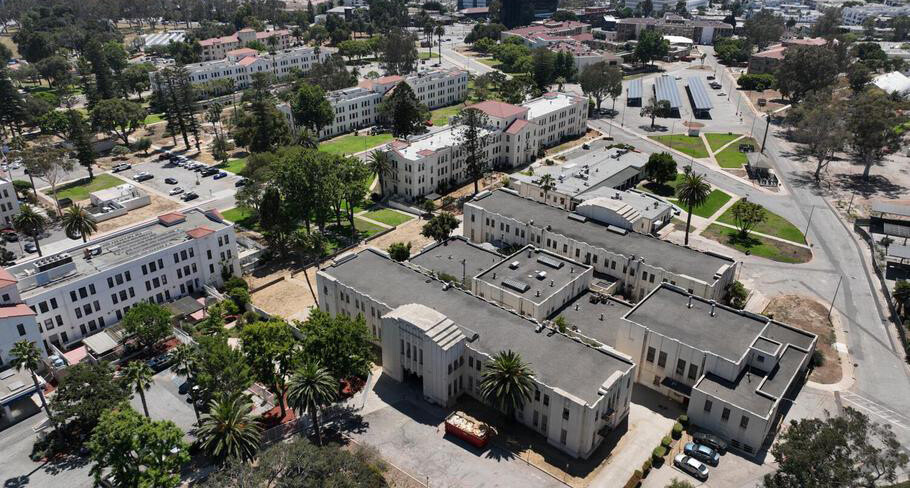
Illicit drug use, prostitution and other unlawful activities by veterans at the site of the National Center for Warrior Independence ‘threaten to undermine the success’ of the major veterans housing initiative, senator says.
Illicit drug use, prostitution and other unlawful activities by veterans at the site of the National Center for Warrior Independence “threaten to undermine the success” of the major veterans housing initiative before it is built, a California lawmaker and a Los Angeles County veterans affairs official warned Wednesday.
Rep. Mark Takano, D-Calif., described a lack of oversight and resources for veterans at the West Los Angeles VA Campus — the 380-acre site of the future veterans housing project — during a three-hour hearing of the House Veterans’ Affairs Committee.
He said the conditions at the campus are dangerous and unacceptable. While hundreds of affordable housing units have opened on campus, homeless veterans continue to live in their cars and in tents on and around the property, according to lawmakers.
“Without action, this property is doomed to become a vast West Side skid row,” Takano said, adding that some of the apartment units are infested with roaches. “There is no other place besides skid row where so many formerly homeless persons live. This concentration of veterans without adequate supportive services jeopardizes tenant safety, sobriety, and public health.
“A home should be more than just a place to sleep. It should be a community with services and amenities,” Takano said.
President Donald Trump in 2025 signed an executive order directing construction of the National Center for Warrior Independence on the West Los Angeles VA Campus. The development is expected to house 6,000 homeless veterans by 2028 and serve as an onsite hub offering job training, drug treatment, counseling and other services for former service members.
Jim Zenner, who directs the Los Angeles County Department of Military and Veterans Affairs, urged lawmakers to take steps soon to broaden the authority of the VA Police Department working at the campus and to establish a campus-based drug treatment court.
“Addressing these foundational issues is an absolute priority,” Zenner said in written and oral testimony at a House VA hearing titled “Expanding the Mission: The Future of the National Center for Warrior Independence in West LA.”
The hearing’s purpose was to gather information on the development’s progress, including the preconstruction work and the status of unrelated commercial leases at the site.
Rep. Mike Bost, R-Ill., the committee chairman, said it was critical to examine the contracts, because the VA has been “significantly underpaid” for the land leases, compared to the market values. But lawmakers also heard in detail about day-to-day challenges as the campus is prepped for major construction of the housing development.
“We have seen firsthand that homeless veterans living on the campus do not have the services to help them successfully get out of homelessness and back on track,” Bost said.
Zenner urged lawmakers to immediately establish a federal Veterans Treatment Court and expand the powers of VA police to investigate and arrest people. The VA police officers “are not allowed to be deputized by local law enforcement agencies,” which limits their ability to address unlawful conduct.
“This policy has inadvertently created jurisdictional dead zones that compromise public safety for everyone on campus,” he said.
John Bartrum, under secretary for health at the Veterans Health Administration, said that the VA is actively working to reduce crime in and around campus. The VA is installing more lighting, hiring 160 VA police officers and adding private security.
“We are building for a community and not just a housing complex,” Bartrum said.
Veterans often have post-traumatic stress disorder, traumatic brain injuries and addictions connected to military service, Zenner said.
“These conditions contribute to non-violent offenses. Without mandated treatment and structured accountability, we are simply cycling veterans through the justice system without addressing the root causes,” Zenner said.
The creation of an onsite federal treatment court would help to ensure veterans have the opportunity to address their problems and change their behaviors instead of repeatedly being sent to jail, he said.
Participants would be ordered to receive mental health services, enter substance abuse programs and connect with peer mentors, Zenner said. He also emphasized the need to add “workforce housing” that extends subsidized apartment leases to veterans who are employed, in addition to housing homeless veterans.
“To build a resilient community, we need to surround our most vulnerable with the varied life experiences of their peers,” he said.
- Homeless Veterans