

For the first time, no Pearl Harbor survivors attend Oahu memorial observation; Hegseth defends strikes on alleged drug cartel boats; and ceasefire broken in Cambodia-Thailand peace deal brokered by President Trump.
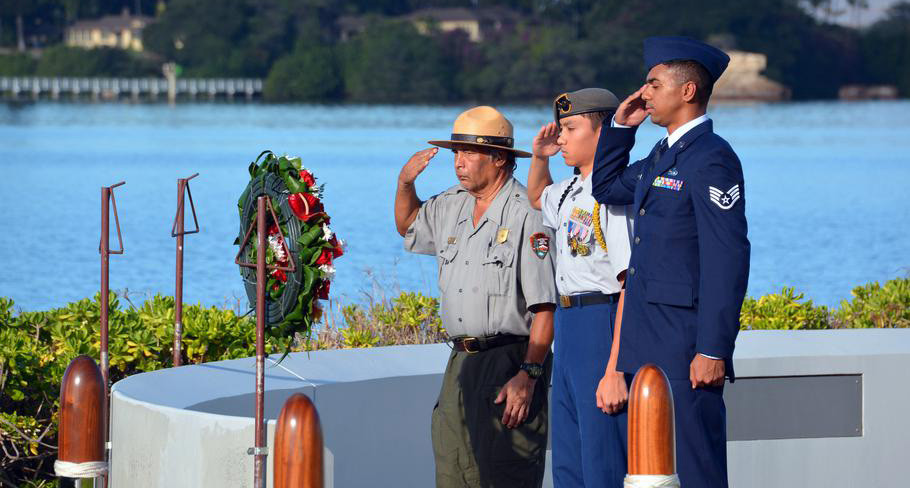
1. For the first time in 84 years, no survivors of Japan’s surprise attack on Oahu were present at the annual remembrance ceremony Sunday, marking a poignant shift for the living memory of Dec. 7, 1941. In past decades, scores of veterans who endured the deadliest assault on American soil gathered each year to honor the fallen. But the few who remain are now more than 100 years old and no longer able to travel. Only two — Ken Stevens and Ira Schab — attended last year’s ceremony. Schab, 105, had planned to attend this year, but health problems forced him to cancel the trip late last week. Stevens died in March at age 102.
2. Defense Secretary Pete Hegseth defended strikes on alleged drug cartel boats during remarks Saturday at the Ronald Reagan Presidential Library, saying President Donald Trump has the power to take military action “as he sees fit” to defend the nation. Hegseth dismissed criticism of the strikes, which have killed more than 80 people and now face intense scrutiny over concerns that they violated international law. Saying the strikes are justified to protect Americans, Hegseth likened the fight to the war on terror following the Sept. 11, 2001 attacks. “If you’re working for a designated terrorist organization and you bring drugs to this country in a boat, we will find you and we will sink you. Let there be no doubt about it," Hegseth said during his keynote address at the Reagan National Defense Forum. "President Trump can and will take decisive military action as he sees fit to defend our nation’s interests. Let no country on earth doubt that for a moment.”
3. Thailand said it launched airstrikes into Cambodia on Monday as fighting broke out in multiple areas along their disputed border, after both countries accused the other of breaching a ceasefire brokered by U.S. President Donald Trump. At least one Thai soldier had been killed and eight were wounded in the fresh clashes that intensified around 5:00 a.m. local time (2200 GMT), a Thai army spokesperson said, adding that air support was called in to hit Cambodian military targets. Thailand's Air Force said that Cambodia mobilised heavy weaponry, repositioned combat units and prepared support elements that could escalate military operations. "These developments prompted the use of air power to deter and reduce Cambodia's military capabilities," it said in a statement.
4. President Volodymyr Zelenskyy was meeting the French, German and British leaders in London on Monday as Kyiv’s European allies try to strengthen Ukraine’s hand in thorny talks on a U.S.-backed plan to end the Russia-Ukraine war. Prime Minister Keir Starmer was due to gather with Zelenskyy, President Emmanuel Macron and Chancellor Friedrich Merz at the British leader’s 10 Downing St. residence. Zelenskyy said late Sunday that his talks with European leaders this week in London and Brussels will focus on security, air defense and long-term funding for Ukraine’s war effort. The leaders are working to ensure that any ceasefire is backed by solid security guarantees both from Europe and the U.S. to deter Russia from attacking again.
5. U.S. President Donald Trump's new global security roadmap has dropped any reference to denuclearizing North Korea as a goal, fueling speculation that Washington may be angling to boost the chances of a diplomatic breakthrough with Pyongyang in 2026. The target of ending North Korea's nuclear threat had been a constant in the National Security Strategy of every U.S. president since the emergence of Pyongyang's program in 2003, but was conspicuously absent in Friday's document. The omission of any mention of North Korea and its accelerating program to build nuclear weapons that can be delivered by ballistic missiles capable of striking the mainland U.S. is fanning expectations of a potential revival of talks between Trump and Kim Jong Un, last held in 2019. Trump has spoken of his willingness to sit down with the North Korean leader in a "proactive" way, indicating he "wants to get something done by taking some action," said Hong Min of the Korea Institute for National Unification.
- Honor & Remembrance