

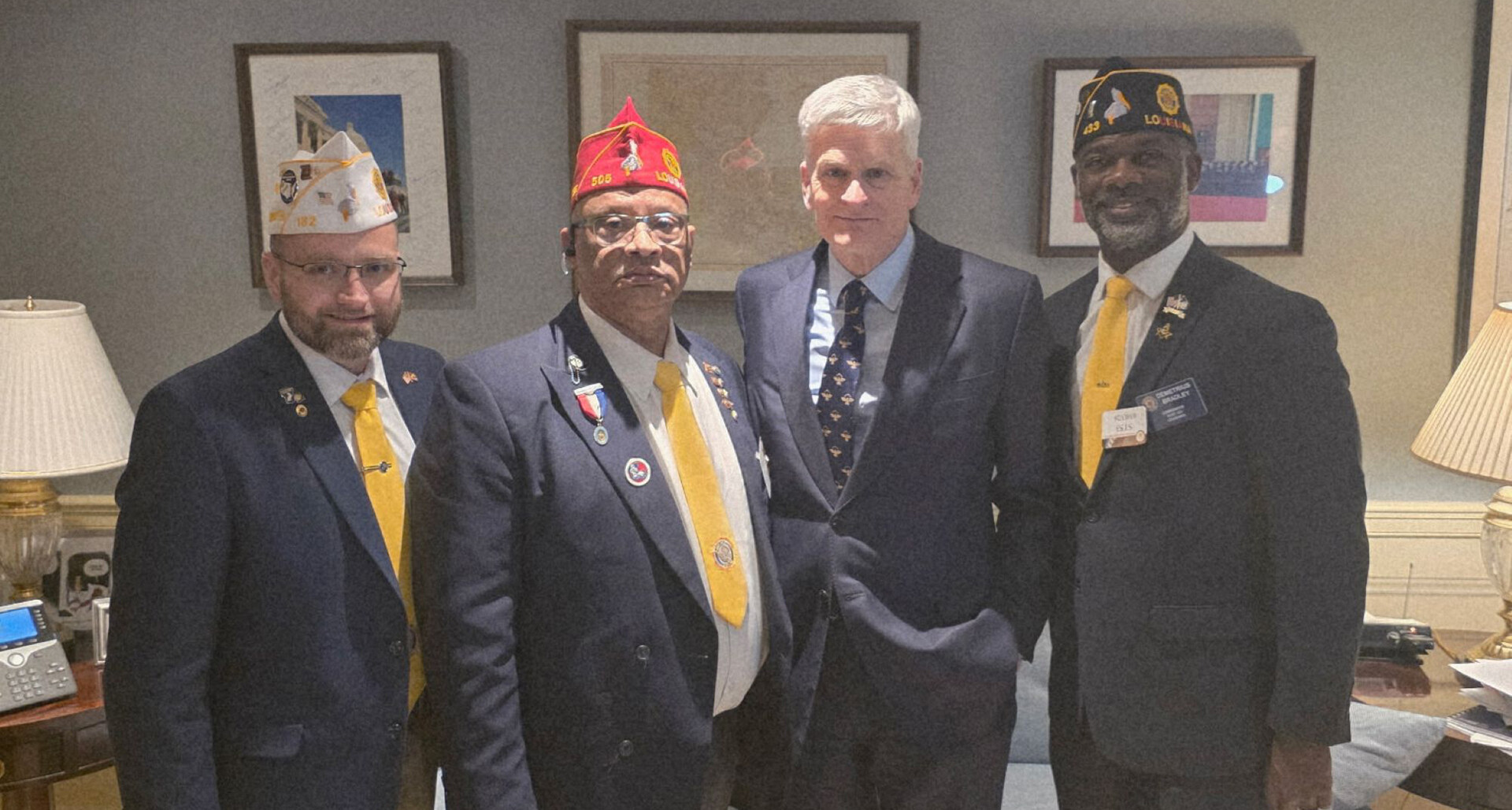
Formerly incarcerated post commander writes groundbreaking bill to help incarcerated veterans coming home.
Across the United States, Legionnaires are in prison.
Justice-involved veterans are often overlooked within the veteran community, but their stories are all too common. Many veterans face homelessness, unemployment, difficult transitions, and mental health challenges. These hurdles are compounded when veterans face a second journey home: their transition from incarceration. Incarcerated and formerly incarcerated veterans deserve support that acknowledges their experience during and after military service, centers their identity as veterans, and ensures comprehensive rehabilitation.
More than 107,000 veterans are currently incarcerated in the United States. One in three has been arrested at least once in their life, according to the Department of Justice.
Veterans Treatment Courts (VTCs), “second look” resentencing policies that honor military service, and other legal alternatives are promising solutions that address the specific needs of justice-involved veterans. But only 15% of U.S. counties have VTCs, and resentencing practices do nothing to ensure successful reentry after time served. Legionnaires and the veteran community at large deserve more.
Justice-involved veterans need specialized support to prepare for their release. To reduce recidivism and honor justice-involved veterans’ service, we must implement policies and programs that address specific effects of military service that lead to incarceration. Demetrius Bradley is a formerly incarcerated Legionnaire in southwest Louisiana who is pushing for that change.
As commander of American Legion Post 433 inside the Louisiana State Penitentiary, Bradley created the Post Conviction Veteran Mentor Program. The program provides veteran-centric cognitive rehabilitation before an incarcerated veteran’s return home to promote success in civilian life. The original legislation was sponsored by then-State Rep. Kenny Cox and enacted in 2018. Now released, Bradley is partnering with Louisiana State Rep. Raymond Crews to introduce revisions to the Post Conviction Veteran Mentor Program through Louisiana H.B. 1109.
The legislation would launch a pilot program in Louisiana to establish a Veterans Transitional Work Facility, veteran-specific cognitive rehabilitation curricula, workforce training, and mentorship programs to promote a smooth transition for every incarcerated veteran.
“We are trying to reform and strengthen that particular program so that incarcerated veterans have a real path toward rehabilitation, redemption, and reintegration into civilian life,” Bradley says.
Bradley collaborated with state lawmakers and policy experts to potentially extend his highly successful program statewide, giving all justice-involved veterans in Louisiana a fairer shot at building a future upon their release. The program would emphasize business industry programs for incarcerated veterans to “gain skills and income on their way back into civilian life,” Bradley says.
“We want to be there to give them the tools and wraparound services for when they walk out so we can reduce recidivism and suicide amongst our veterans.”
The program draws upon Bradley’s personal experience as a formerly incarcerated veteran and uplifts those who have undergone similar journeys. It acknowledges the universal connection between veterans and uses shared identity as a pillar of rehabilitation.
“We’re trying to make this legislation reflect the realities of today’s veteran population,” Bradley says. “Every veteran doesn’t end up getting justice-involved, but there is some type of trauma they all have to deal with.”
Correctional facilities are home to more than 30 American Legion posts across the country. These posts foster camaraderie in environments that otherwise breed division and shame. They provide tools to build confidence and address the specific relationship between a veteran’s military service and prison sentence.
Most importantly, they help veterans change their ways. A Maine Legion post has seen a 0% recidivism rate among its released members.
“They are going to mentor each other,” Bradley says. “They are going to hold each other accountable while they are incarcerated.”
American Legion prison posts provide a blueprint for policies to mitigate the effects of justice involvement and empower veterans to take their lives back after incarceration. Bradley’s legislation emphasizes the Legion’s suicide-prevention call to Be The One for fellow veterans and proves that we have the answer to navigating a smooth re-entry home: community.
Says Bradley: “It’s veterans looking out for other veterans.”
Olivia Baisier is a VE&E Policy Associate covering veteran incarceration and homelessness.
- Legislative