

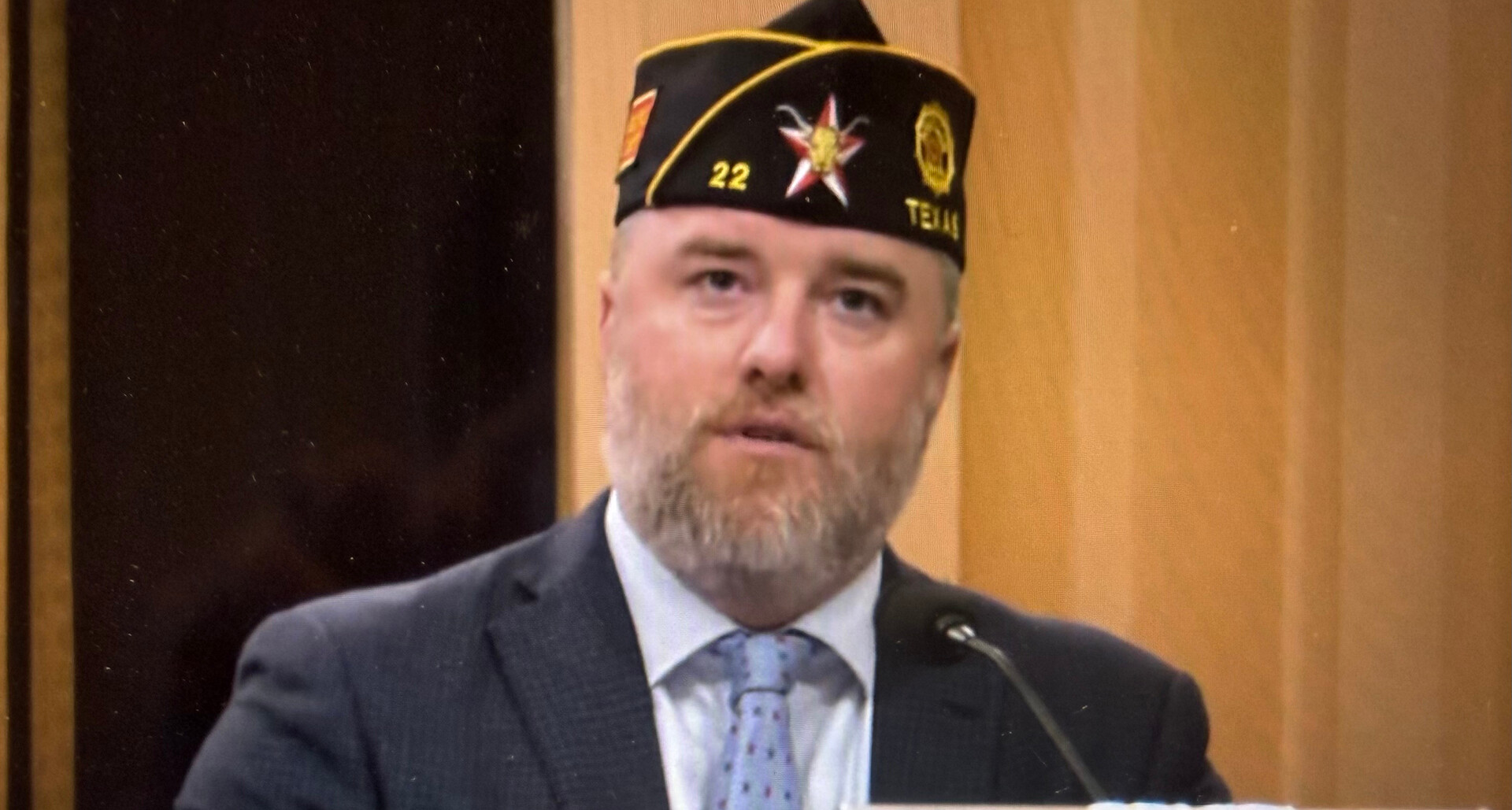
Legislative Director Cole Lyle testified before the House Committee on Veterans’ Affairs on pending legislation that the organization supports and opposes.
American Legion Legislative Division Director Cole Lyle testified May 20 before the House Committee on Veterans’ Affairs regarding pending legislation that the Legion supports and opposes. In his testimony, Lyle answered questions from committee members regarding U.S. Department of Veterans Affairs’ (VA) research, veterans defrauded of GI Bill benefits, creating trust and excellent care for sexual assault victims and consolidation of advisory committees.
Download Lyle’s written testimony here.
“The bills before us today, representing a meaningful effort to modernize the Department of Veterans Affairs, improve efficiency, close long-standing gaps, and care and benefits, and strengthen accountability at a time when demand for VA services continues to grow,” Lyle shared in his opening remarks.
The American Legion supports H.R. 6583: The VA Research Reform Act of 2025, with amendments that was asked of Lyle by Committee Chairman Mike Bost to address. The legislation will establish a centralized research data system for VA and make certain improvements to processes applicable to major research projects of the department, and for other purposes.
“We strongly back the VA Research Reform Act, which would reduce administrative burdens on research, speed the translation of discoveries into better care and extend partnerships that bring new resources into the system,” Lyle said, noting that The American Legion is concerned with the language within section 7386, titled, “Veteran impact forecast and translation plan for major research projects required.”
“The section requires any research proposal to include a section that clearly identifies the forecasted impact of the research on the veteran community,” Lyle wrote in his testimony. “Specifically, the research proposal must identify how the results will lead to ‘reductions in morbidity or mortality; improvements to functional status; and enhancements to the quality of life for veterans from the condition or conditions subject to the research.’ We request this language is removed or amended to avoid interfering with or delaying research.”
The next question addressed to Lyle was from Ranking Member Delia Ramirez. Her legislation, H.R. 1391: The Student Veteran Benefit Restoration Act, would provide a means for veterans who have been scammed or defrauded by an institution of higher learning to restore their Post 9/11 GI Bill eligibility for the months they spent in the fraudulent program. When asked if The American Legion would support the inclusion of a retroactive clause in the legislation so that all veterans have a path to recourse, Lyle answered, “Absolutely, we would support an amendment, it's included in our written statement, to veterans who have been defrauded by these institutions deserve restitution.”
Rep. Dr. Kelly Morrison shared that one in three female veterans and one in 50 male veterans in the VA health-care system reported experiencing sexual assault or harassment in the military. This is why she is “proud to be leading HR 5203, the VA SafeCare Act, to continue the work of advancing VA's exceptional care to veterans by equipping VA medical facilities with the appropriate tools to support and care for veterans that have experienced sexual assault.
“This bill recognizes VA's unique position to provide specialized veteran care and helps make sure no veterans physical health, mental health or safety falls through the cracks as they navigate the incredibly difficult aftermath of a sexual assault.”
Morrison asked Lyle why is ensuring trust and appropriate care coordination is of particular importance in the context of supporting veterans impacted by sexual assault.
“One of the reasons we supported the bill, the 72-hour requirement obviously that's critical for preventative care and evidence collection,” Lyle testified. “Women and men that are going through acute sexual assault deserve the best care and the fastest care possible, any way that we can streamline that, either to a community provider or for same providers in the VA system, and standardize that care and that training for a trauma informed response, is going to improve outcomes in every other avenue of their stability in their healthcare.
“The American Legion is pleased to see that the legislation addresses sexual assault as a traumatic event that requires wrap-around services. It is vital that a veteran who is sexually assaulted receive not only medical care and treatment, but also unfettered access to mental health and counseling services.”
At the conclusion of the testimony, Ranking Member Mark Takano addressed The American Legion’s opposition to H.R. 6764: The Veterans Affairs Advisory Committee Oversight Act of 2025, which aims to eliminate 16 advisory committees, according to Takano, to simplify them. Takano said to Lyle, “I share your concerns about how consolidated advisory committees would greatly diminish the ability of veterans to engage directly with VA about the issues that matter most to them. Can you talk about the importance of a few of the advisory committees that this bill would eliminate?”
“For example, the Women Veterans Advisory Committee, the Tribal and Indian Affairs Advisory Committee, the Homeless Veteran Advisory Committee, all have very unique voices in not just the legislative, but the regulatory process and being able to offer those unique needs is important for consideration by VA or by Congress for their work on some of the issues that are unique to their population,” Lyle responded. “You would lose the individual focus that those advisory committees provide.
“if you consolidate, you could have individuals that represent each of those populations, but that one person that's representing that population in the consolidated advisory committee would not encompass the entire depth and breadth of experience with people on an individual committee that is focused on that one particular issue.”
Other legislation Lyle addressed in his opening remarks.
H.R. 6733: The VISN Reform Act of 2025 “seeks to streamline the network structure after years of bipartisan concern, with VISN organization and management. We support the bill and urge targeted amendments to safeguard rural and highly rural veterans, ensure thoughtful staffing decisions, and prevent any disruption in care during what is already a period of significant reorganization.”
H.R. 6580 The VA National Formulary Act of 2025 The proposed legislation requires pharmaceutical purchasing agreements with VA to maintain greater consistency in medications and supplies included on formulary across VISNs and facilities to help standardize medication availability throughout the VA healthcare system. The legislation also calls for the nonformulary request process to be submitted electronically and integrated into the veteran's electronic health records.
H.R. 6599: The Leasing and Infrastructure Act of 2025 “would give VA tools it needs to expand facilities more quickly and cost effectively while protecting taxpayer dollars.”
H.R. 210: Dental Care for Veterans Act would require VA to furnish dental care in the same manner as other medical services provided through the department by removing several statutory provisions that currently distinguish dental treatment from VA’s broader medical care authorities.
H.R. 4114: EVEST Act would automatically enroll eligible transitioning servicemembers into VA care, removing one of the most frustrating barriers they face when they leave the military.
H.R. 3869: Every Veteran Housed Act would expand the definition of “veteran” as described in Section 2002 of Title 38 to include any veteran who did not receive a dishonorable discharge or a general court-martial sentence. Expanding eligibility for critical housing benefits would ensure that no veteran who has made the sacrifice to serve is denied the right to a safe home.
H.R. 6740: VA TRUST Act would restore accountability around executive bonuses.
- Legislative