

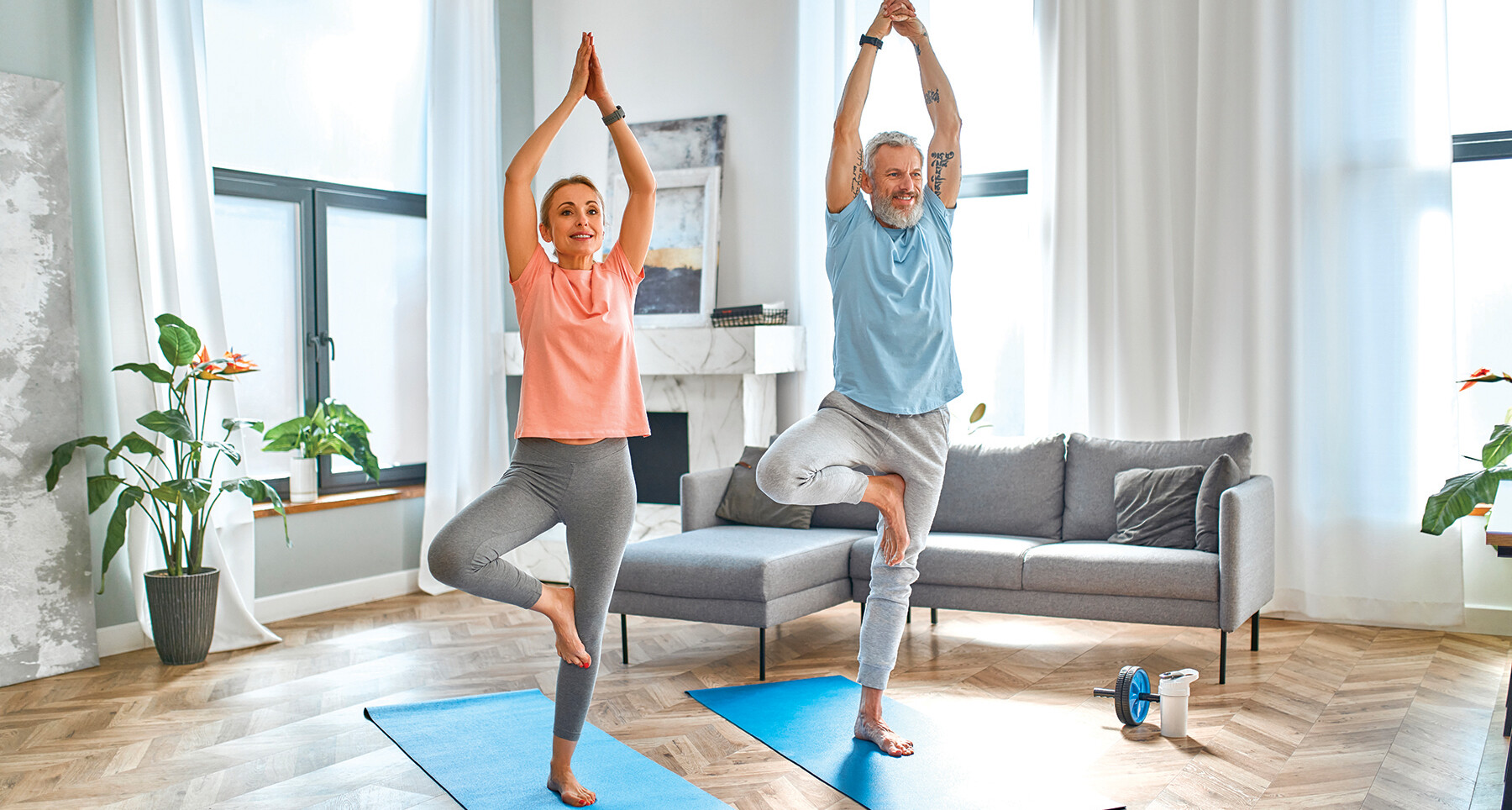
Together, they help prevent injuries, reduce fall risk, and keep you active and independent.
When most people think about fitness, they focus on strength, weight loss or cardiovascular endurance. Balance is often overlooked. This isn’t simply the ability to stand on one foot but depends on two essential components: mobility, the ability of your joints to move freely through their full range of motion without pain, and stability, the ability to control those movements with strength and coordination. Together, they help prevent injuries, reduce fall risk, and keep you active and independent.
Falls are the leading cause of injury among adults 65 and older, with more than 14 million Americans – about one in four older adults – reporting a fall each year. Exercise is one of the most effective means of prevention; research shows balance-focused programs can reduce falls by 20% to 50%, while those that combine balance, strength and mobility training provide the greatest benefits.
MOBILITY Healthy mobility allows you to squat, climb stairs, reach overhead, turn your head while driving and maintain proper posture. It tends to decline with age; years of sitting, repetitive movements, injuries and arthritis can lead to stiff hips, ankles, shoulders and spine. When one joint loses mobility, the body often compensates elsewhere, increasing stress on muscles and connective tissues.
The good news is that mobility can improve at any age. These daily exercises can help:
Hip circles Stand tall and lift one knee. Slowly rotate the knee in a circle 10 times in each direction. Repeat on the opposite side.
Ankle rocks Stand facing a wall. Keeping your heel down, gently drive your knee forward over your toes. Perform 10 repetitions per side.
Cat-camel stretch Begin on hands and knees. Alternate between arching and rounding your back. Perform 10 slow repetitions.
Thoracic rotations Sit or kneel and rotate your upper body from side to side, 10 repetitions each direction.
STABILITY Mobility alone is like having a powerful engine without good brakes. Stability comes from strong muscles, a responsive nervous system and good body awareness. As we age, we naturally lose muscle mass and coordination. This decline can affect balance, reaction time and confidence during everyday activities. Studies consistently show that exercise improves balance and reduces fall risk in older adults.
Here are some daily exercises to improve stability:
Single-leg stand Stand near a wall for support if needed. Lift one foot and hold for 20 to 30 seconds. Repeat two to three times per side.
Heel-to-toe walk Walk in a straight line, placing one foot directly in front of the other. Take 10 to 20 controlled steps.
Bird dog Begin on hands and knees. Extend one arm and the opposite leg. Hold for three to five seconds before switching sides. Perform 10 repetitions per side.
Sit-to-stand Rise from a chair without using your hands. Slowly lower yourself back down. Perform 10 to 15 repetitions
Jennifer Campbell is a certified personal trainer with a master’s degree in nutrition education. She is past commander of the California American Legion’s 24th District and Hollywood Post 43.
- Magazine