

Man accused of opening fire at Correspondents’ dinner railed against Trump administration policies in writings, Iran offers to open Strait of Hormuz if U.S. lifts blockade, and Russia and North Korean pledge push for greater cooperation.
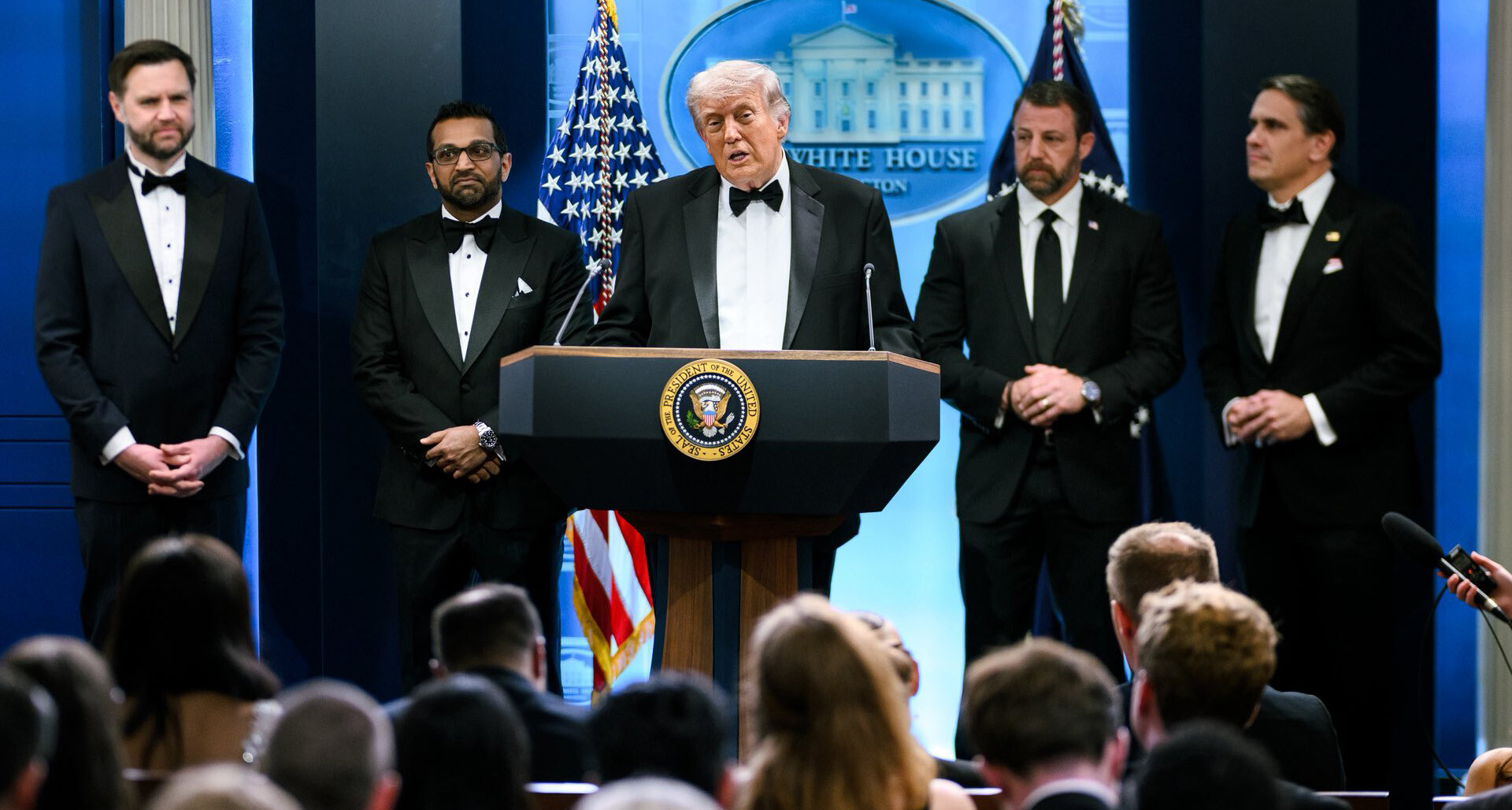
1. The man accused of opening fire at the White House Correspondents’ Association dinner railed against Trump administration policies and referred to himself as a “Friendly Federal Assassin” in writings sent to family members minutes before an attack that authorities increasingly believe was politically motivated, according to a message reviewed by The Associated Press. The writings, sent shortly before shots were fired Saturday night at the Washington Hilton, made repeated references to President Donald Trump without naming him directly and alluded to grievances over a range of administration actions, including U.S. strikes on boats accused of smuggling drugs in the eastern Pacific Ocean. Investigators are treating the writings, along with a trail of social media posts and interviews with family members, as some of the clearest evidence yet of the suspect’s mindset and possible motives.
2. Iran has offered to end its chokehold on the Strait of Hormuz in exchange for the U.S. lifting its blockade on the country and an end to the war, while proposing that discussions on the larger question of its nuclear program would come in a later phase, two regional officials said Monday. U.S. President Donald Trump seems unlikely to accept the offer, which was passed to the Americans by Pakistan and would leave unresolved the disagreements that led the U.S. and Israel to go to war on Feb. 28. With a fragile ceasefire in place, the U.S. and Iran are locked in a standoff over the strait, through which a fifth of the world’s traded oil and gas passes in peacetime. The U.S blockade is designed to prevent Iran from selling its oil, depriving it of crucial revenue while also potentially creating a situation where Tehran has to shut off production because it has nowhere to store the oil.
3. The war with Iran so far has not deterred young people from joining the Air and Space forces, according to the general in charge of recruiting for those branches. “We haven’t seen any significant change,” Brig. Gen. Jeff Nelson, commander of the Air Force Recruiting Service, told Stars and Stripes during a visit to the home of U.S. Forces Japan, 5th Air Force and 374th Airlift Wing in western Tokyo. The Air Force and Space Force have already surpassed their annual recruiting goals five months ahead of schedule, he said. Nelson also leads the Air Force Accessions Center, which oversees programs such as ROTC, officer training and enlisted accessions. The organization manages more than 6,000 military and civilian personnel responsible for recruiting and training. About 32,000 recruits have enlisted in the two services over the past seven months, according to figures released this month.
4. North Korea has opened a memorial museum for its soldiers killed while fighting for Russia against Ukraine, with top leaders of North Korea and Russia pledging a push for greater cooperation. In April 2025, North Korea and Russia announced that their soldiers fought together to repel a Ukraine incursion into Russia’s Kursk border region. The two countries haven’t disclosed exactly how many North Koreans soldiers were deployed, but South Korea’s intelligence service estimated last year that North Korea sent about 15,000 troops and 2,000 of them were killed. The North’s Korean Central News Agency reported Monday the museum’s inaugural ceremony was held in Pyongyang on Sunday to mark the one-year anniversary of the end of an operation to liberate the Kursk region. KCNA said leader Kim Jong Un attended the ceremony along with top visiting Russian officials including Vyacheslav Volodin, speaker of the State Duma, and Defense Minister Andrei Beloussov.
5. Military spending in Europe last year increased at its fastest pace in nearly three-quarters of a century, according to a new analysis that also showed American expenditures declining in 2025. While the United States remains by far the biggest individual military spender, its total of $954 billion marked a 7.5% drop from 2024, the Stockholm International Peace Research Institute said in its annual report published Monday. The decline was primarily related to a halt in new military assistance to Ukraine last year, the report said. But it may be short-lived, with a new U.S. budget proposal calling for defense spending of $1.5 trillion.
- News