

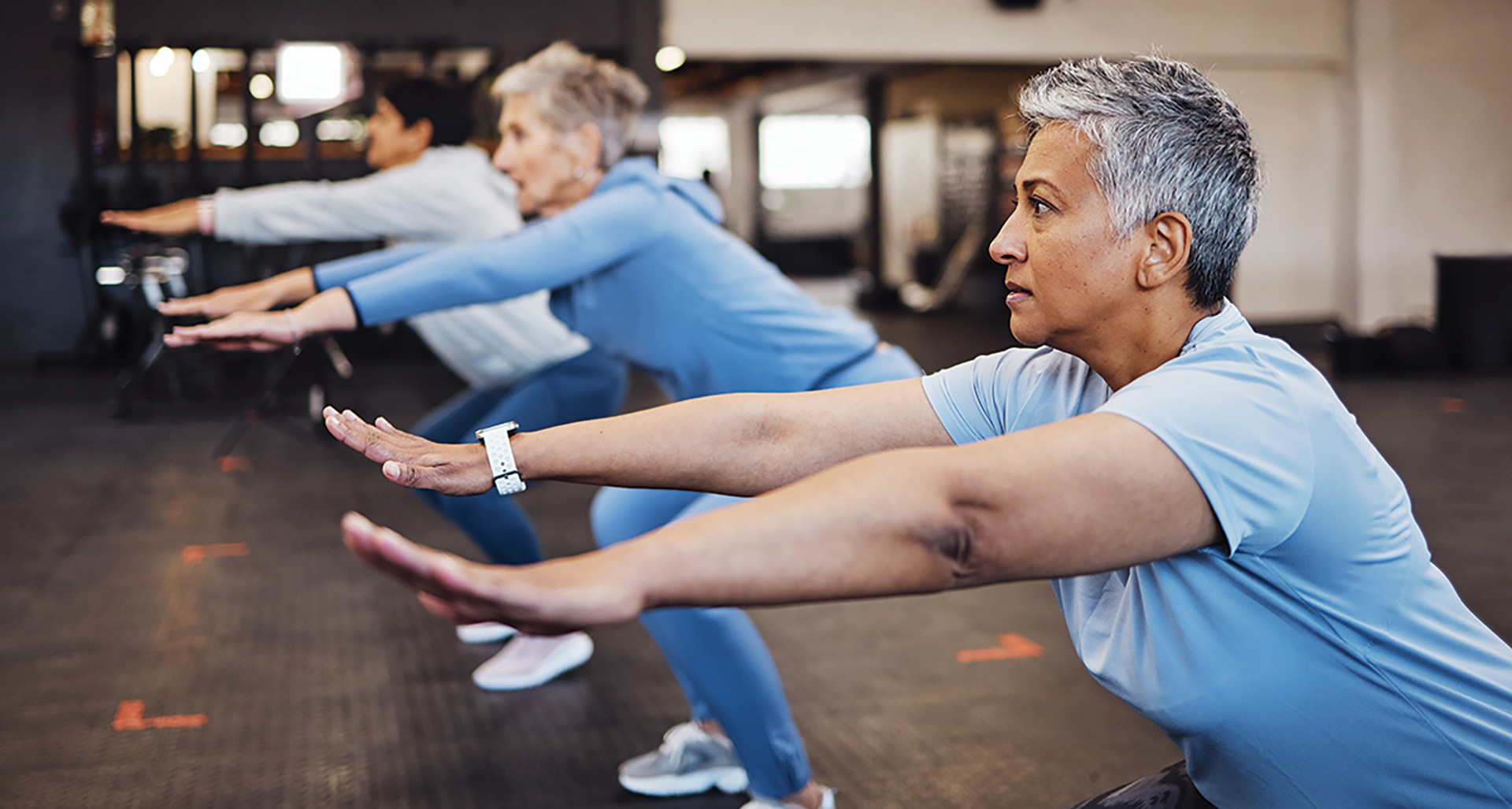
Exercises to build muscle and endurance.
March is Women’s History Month – great timing to make your training work with your changing physiology. The winning combination is strength training to protect muscle and bone, high-intensity interval training (HIIT) to efficiently boost aerobic capacity and metabolic health, and steady cardiovascular work to support the heart and brain.
Here’s why and how to put it all together:
Why muscle matters As estrogen declines, women lose muscle and bone more easily, which can sap strength, slow metabolism, and increase the risk of injury. Meta-analyses and trials in perimenopausal and postmenopausal women show that resistance training improves strength, body composition and bone health – benefits you don’t get from cardio alone. Think two to three days a week of multijoint lifts (squat, hinge, push, pull) with progressive load. If this sounds overwhelming, find a gym buddy or personal trainer to guide you.
The power of HIIT HIIT is a time-efficient way to improve VO2 max and cardiometabolic markers, even in older postmenopausal women. It involves short bursts with easy recovery. One to three sessions per week have increased VO2 max and improved health profiles. Keep intervals hard but controlled (7 to 8 out of 10 effort), with longer recovery early on. Try vigorous “bursts” in daily life such as fast stair climbs and uphill walking, both of which are linked to substantially lower cardiovascular risk.
Steady cardio still matters Layering moderate, steady aerobic work (Zone 2 or conversational pace) helps maintain mitochondrial function, blood pressure and endurance. Menopause studies suggest that regular aerobic training may counteract vascular decline by improving nitric oxide bioavailability and related mechanisms. Aim for 90 to 150 minutes a week, mostly at an easy pace, with one HIIT day.
Load it or lose it Bone is living tissue that responds to impact and muscle pull. Classic randomized trials in perimenopausal women and meta-analyses in premenopausal women show that targeted loading exercises help maintain or improve bone mineral density at the hip and spine, key fracture sites as
we age. Add step-ups, loaded carries and jumps/hops as tolerated and progressive resistance.
How to put it all together This combination is critical for insulin sensitivity, mobility and long-term independence. Try the following template for a week, with rest days between workouts (adjust loads to your level):
Day 1 – Strength (40 to 50 minutes) Goblet squat 3×8–10; hip hinge (Romanian deadlift) 3×8; push (incline or floor press) 3×8–10; pull (row) 3×8–10; suitcase carry 3×40–60 yards
Day 3 – Zone 2 (30 to 45 minutes) Brisk walk, cycling or rowing at conversational pace
Day 5 – HIIT (20 to 25 minutes) After a 7- to 10-minute warmup, do eight intervals of 30 seconds hard, followed by 90 seconds easy on a bike, rower or uphill walk. Cool down for 5 minutes.
Optional Day 6 – Strength (30 to 40 minutes) Step-ups, split squats, pulldown/assisted pull-up, overhead press, farmer carry
Army veteran Jennifer Campbell is a certified personal trainer with a master’s degree in nutrition education. She is past commander of the California Legion’s 24th District and Hollywood Post 43.
- News