

Websites offer help finding unclaimed insurance proceeds, savings bonds and more.
LEARN HOW YOUR PLANNED GIFT CAN HELP THE AMERICAN LEGION
After my parent passed away, we discovered several small accounts and an insurance policy we were not aware existed. This situation made me wonder how often families uncover forgotten or unclaimed assets. Is this a common occurrence, and where should someone start their search?
After a parent or spouse dies, families often come across small, forgotten accounts, uncashed checks or insurance policies that slipped through the cracks over the years. In many cases, paperwork was misplaced, accounts were opened decades ago or loved ones simply were unaware that the assets existed.
According to the National Association of Unclaimed Property Administrators, billions of dollars in unclaimed assets are currently being held by state governments and federal agencies, waiting to be claimed by rightful owners or heirs. Unclaimed property usually comes from financial accounts or benefits that became inactive because the owner moved, changed names or died. In many cases, heirs were never aware the money existed or did not know where to look. These assets may include savings or checking accounts, uncashed dividend checks, utility security deposits, life insurance proceeds, pension benefits, tax refunds, matured savings bonds and unpaid wages.
By law, banks, employers, insurance companies and other institutions must turn these assets over to the state if they cannot locate the owner or the next of kin after a set period, usually two to five years. Once turned over, the money is held indefinitely, so there is no deadline for families to file a claim.
Where to Start A good place to begin is missingmoney.com, a free website endorsed by the association and the National Association of State Treasurers. The website allows users to search for unclaimed property in 49 states, the District of Columbia and Puerto Rico at once. Hawaii is not included but can be searched through a link on the website.
When searching, check every state where your parent lived, worked or conducted business. Be sure to search under maiden names, married names and common misspellings. Using just the first initial and last name may also uncover accounts that do not appear under a full-name search. Each state’s website will indicate whether property is listed and explain how to file a claim.
Other Places to Check State treasuries are only part of the picture. Families should also check several other common sources of forgotten money.
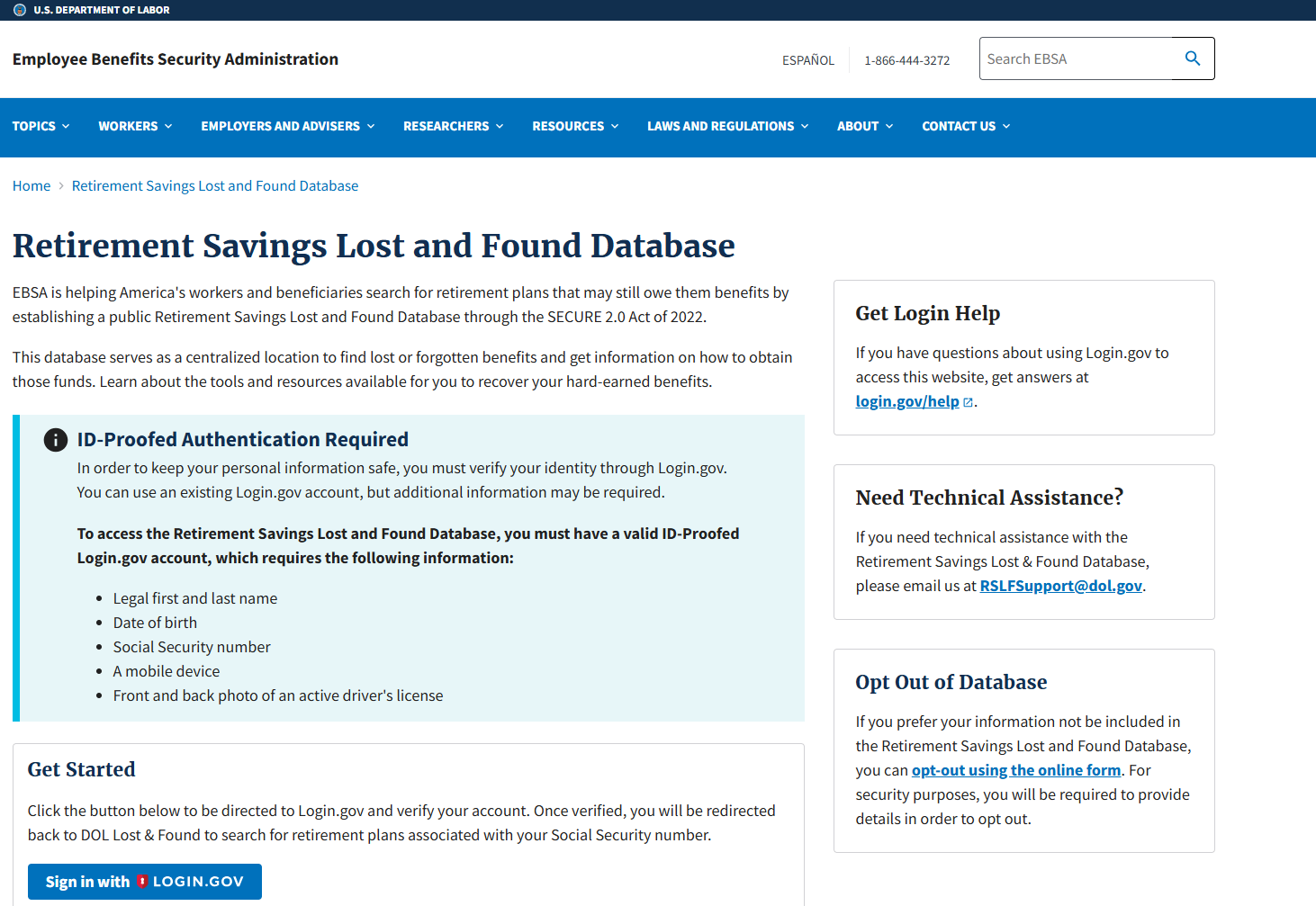
Pensions and 401(k)s: To search for lost or forgotten retirement benefits your parent may have left behind with a previous employer, use the U.S. Department of Labor’s Retirement Savings Lost and Found Database at lostandfound.dol.gov and the National Registry of Unclaimed Retirement Benefits at unclaimedretirementbenefits.com. To search for unclaimed retirement benefits from private-sector plans, use the Pension Benefit Guaranty Corporation search tool at pbgc.gov/workers-retirees.
Savings Bonds: It is very common for people to lose track of U.S. Saving Bonds because they are often given to children as gifts and forgotten before the bonds reach maturity. To find out if your parent had a Savings Bond or other Treasury security, visit your state’s unclaimed property office using unclaimed.org. Search the state of residence at the time of the purchase or the last known address.
Life Insurance: To track down a lost or forgotten life insurance policy, the National Association of Insurance Commissioners, an insurance regulatory support organization, offers a free policy locator service at eapps.naic.org/life-policy-locator.
Other Refunds: To search for money left at an FDIC-insured bank or credit union that has gone out of business, visit closedbanks.fdic.gov/funds. Federal tax refunds may be checked at irs.gov/refunds or by calling 1-800-829-1954. FHA mortgage refunds may be researched at entp.hud.gov/dsrs/refunds. For possible unpaid wages, use the search tool on dol.gov/agencies/whd/wow.
“Savvy Living” is written by Jim Miller, a regular contributor to NBC’s “Today Show.” The column, and others like it, is available to read via The American Legion’s Fund Development program, a way of establishing your legacy of support for the organization while providing for your current financial needs. Consider naming The American Legion in your will or trust as a part of your personal legacy. Learn more about the process, and the variety of charitable programs you can benefit, at legion.org/plannedgiving. Clicking on “Learn more” will bring up an “E-newsletter” button, where you can sign up for regular information.
- Planned Giving