

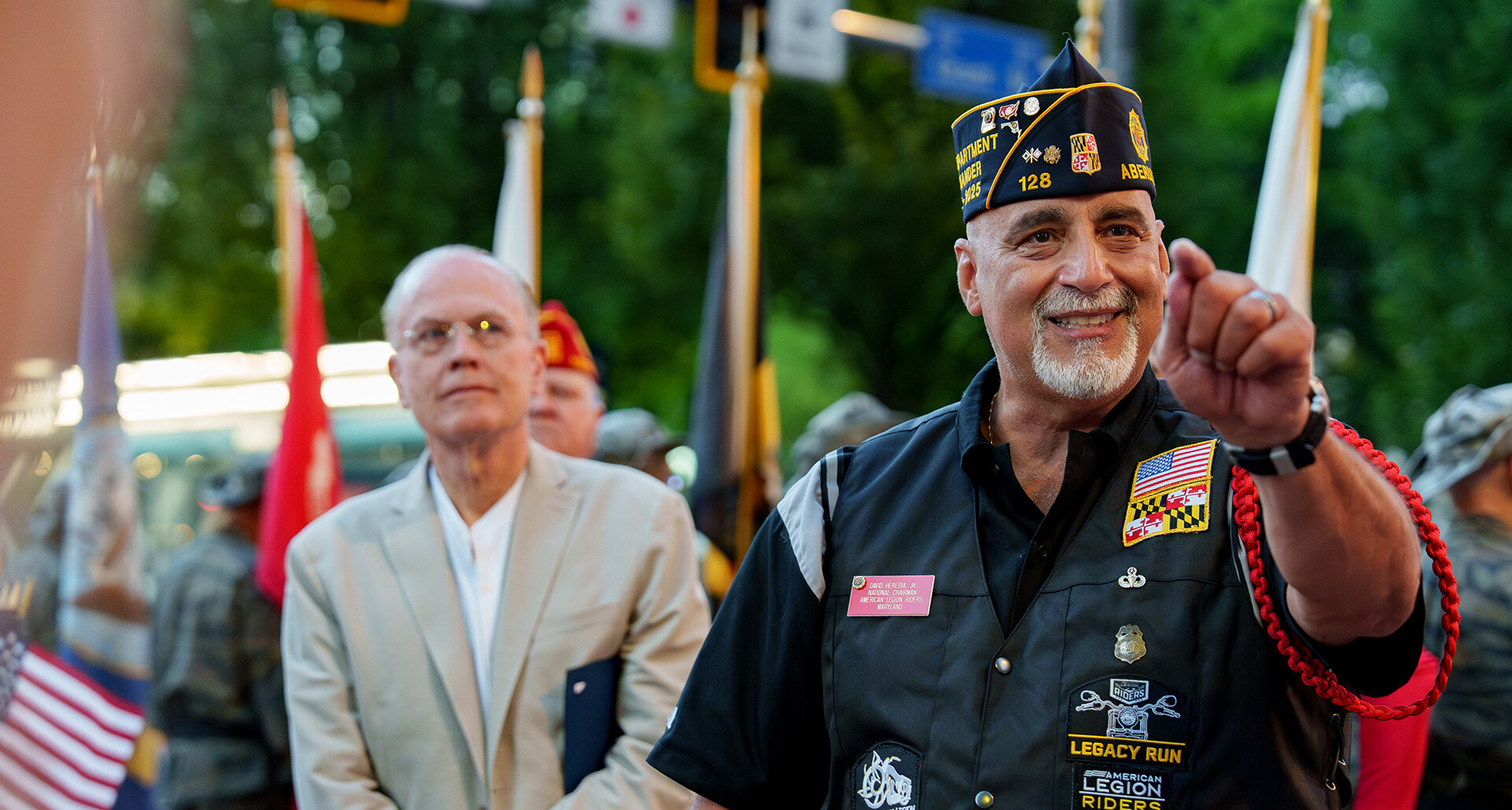
Legion Riders national chairman shares component of the Take Care of America’s Veterans Act that truly resonates with him.
Over the past several months, there has been no shortage of discussion about the Take Care of America's Veterans Act (TCAVA). Much of that conversation has centered on areas of disagreement. Those discussions are important, and The American Legion continues to do what it has always done — work with Congress to improve legislation so it best serves America's veterans.
But that isn't what I want to talk about.
Instead, I want to talk about why I support TCAVA.
As national chairman of the American Legion Riders, I have the privilege of traveling across this country. Whether it's a local chapter ride, a department visit, the Legacy Run or a stop at a U.S. Department of Veterans Affairs’ medical center, I meet veterans from every generation.
Some are thriving.
Some are still fighting battles long after leaving the uniform behind.
And one thing I've learned is that not every wound can be seen.
During my Army career and throughout my years with The American Legion, I have met veterans carrying the invisible wounds of war: post-traumatic stress, traumatic brain injuries, military sexual trauma, survivor’s guilt, depression, anxiety and the countless emotional burdens that too many carry in silence.
Those conversations stay with you.
You never forget the veteran who quietly admits they almost didn't make it.
You never forget the spouse who says, “I just want my husband back.”
You never forget the Rider who pulls you aside after a meeting simply because they need someone to listen.
That's why one part of TCAVA stands above the rest for me.
The bill continues to strengthen mental health services and suicide prevention efforts for veterans – extending the Staff Sergeant Parker Gordon Fox Suicide Prevention Grant Program for three more years with stronger accountability, funding a pilot program to put free overdose-reversal medication in the hands of high-risk veterans, waiving copays for naloxone, and expanding grants for the community organizations and service-dog programs that walk alongside veterans and their families through PTSD and TBI recovery.
To some, that may sound like just another line in a piece of legislation. According to VA's most recent National Veteran Suicide Prevention Annual Report, an average of 17.6 veterans died by suicide every single day in 2022 — the most recent year of confirmed data.
To me, that number represents people.
It represents the Vietnam veteran who waited decades before asking for help.
It represents the post-9/11 veteran struggling to reconnect with family after multiple deployments.
It represents the young servicemember transitioning into civilian life while carrying experiences that few will ever understand.
And it represents every family praying that their loved one receives the help they need before it's too late.
The American Legion has long recognized that preventing veteran suicide requires more than awareness — it requires access to quality care, timely intervention, continued research, and a commitment to removing barriers that prevent veterans from seeking help.
TCAVA helps move that mission forward.
Will this legislation solve every challenge facing veterans? No. No single bill ever will.
And TCAVA does more than this one provision, too.
It finally fixes the Major Richard Star Act penalty — the one that has forced combat-injured veterans, medically retired before 20 years of service, to forfeit part of the retirement pay they earned just to receive the VA disability compensation they also earned. Congress has had bipartisan support to fix this for six years. It still hasn’t happened.
It stands behind the caregivers who put their own careers and financial security on hold so a wounded veteran could heal at home instead of somewhere else.
And through the Love Lives On Act, it finally lets surviving spouses — including Gold Star widows and widowers — to remarry without losing the survivor benefits their fallen servicemember earned for them.
Every one of those provisions matters to someone.
But for me, the mental health and suicide prevention component is the one that hits closest to home.
If stronger mental health resources help one veteran ask for help ...
If expanded suicide prevention efforts save one life ...
If one family gets to spend another birthday, another Christmas or another ordinary Tuesday with someone they love ...
… then that provision matters.
As Riders, we often say that we ride for those who cannot.
That phrase carries meaning far beyond honoring the fallen.
Sometimes we ride for the veteran who no longer has the strength to ask for help.
Sometimes we ride for the caregiver who quietly carries the weight every day.
Sometimes we ride simply to remind another veteran they are not alone.
That is why this legislation matters to me.
It isn't about politics.
It isn't about headlines.
It isn't about winning an argument.
It's about making sure veterans receive the care they earned through their service to this nation.
The American Legion Riders, alongside The American Legion Family, have always believed in leading through action. Every mile we ride, every fundraiser we organize, every community event we support, and every conversation we have is another opportunity to improve the lives of veterans and their families.
This is one more opportunity. The House vote on TCAVA was recently postponed and will not happen until the end of August or early September; the Senate vote could happen either before or after the House vote. This is a live moment to be heard, not a distant debate.
Take the time to learn about TCAVA. Read it. Ask questions. Have respectful conversations.
As Riders, we challenge one another to Be MAD: Make A Difference.
Sometimes making a difference means raising money for the Veterans & Children Foundation.
Sometimes it means escorting a fallen hero home.
Sometimes it means simply being there for another veteran.
And sometimes, it means supporting legislation that can save a life.
We don't advocate because legislation is easy. We advocate because veterans matter.
If even one veteran finds hope because of the work we do together, every mile, every conversation and every effort will have been worth it.
That is why TCAVA matters to me.
- Riders