

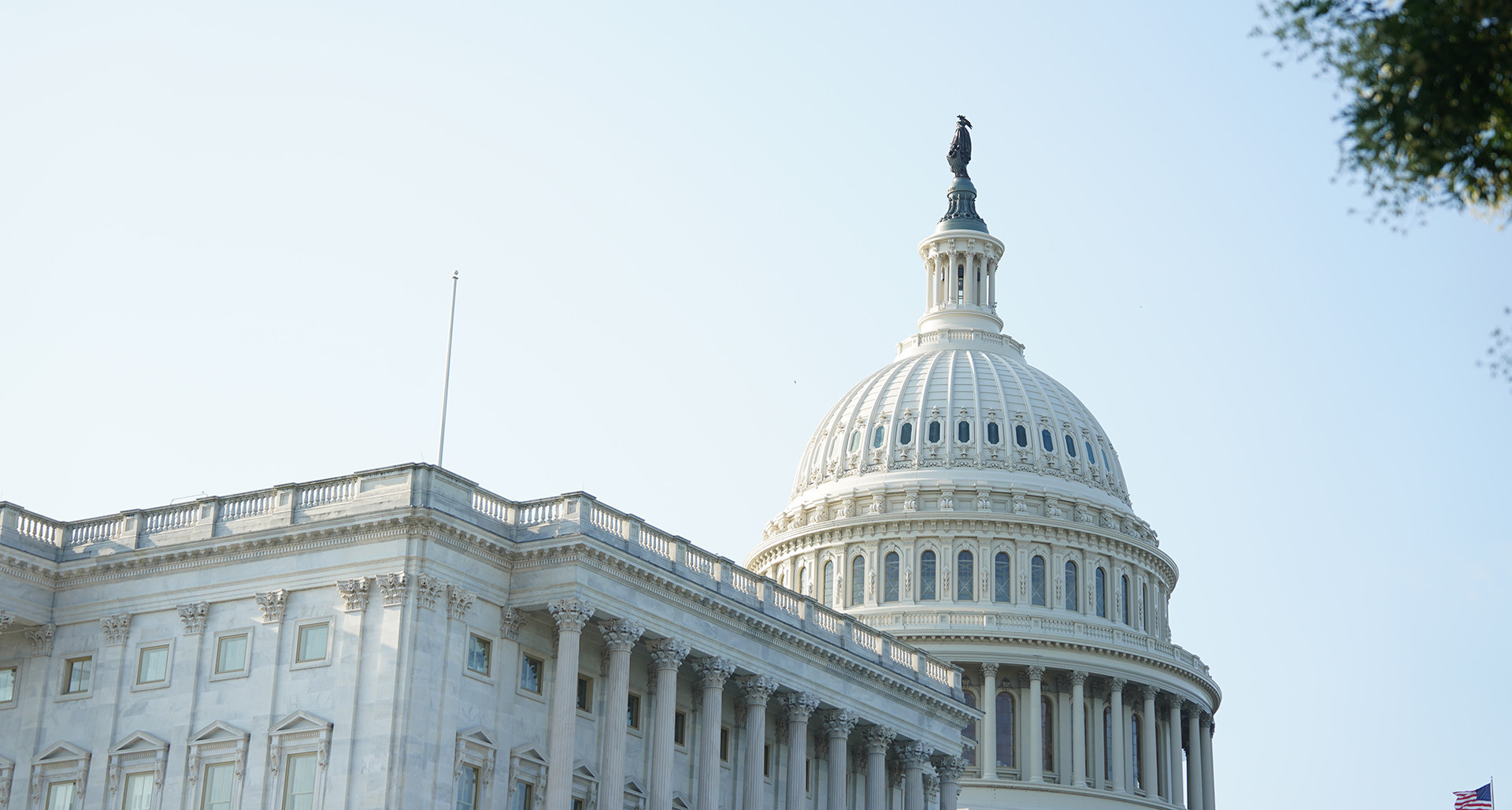
Bill raises troop pay, restricts Trump administration’s ability to reduce U.S. troop levels in Europe and South Korea, provides aid for Ukraine and repeals decades-old laws authorizing military force in the Middle East.
The House passed a sprawling annual defense policy bill on Wednesday raising troop pay, restricting the Trump administration’s ability to reduce U.S. troop levels in Europe and South Korea, providing aid for Ukraine and repealing decades-old laws authorizing military force in the Middle East.
Lawmakers voted 312-112 for the legislation, which authorizes a record $901 billion in national security spending for 2026 — $8 billion more than President Donald Trump had requested. The Senate is expected to take up the 3,000-page bill, known as the National Defense Authorization Act, next week.
The legislation reflected bipartisan efforts to push back against the Trump administration’s moves to disengage from Europe and Ukraine as well as mounting lawmaker frustration with the Pentagon’s campaign against suspected drug boats in the Caribbean and eastern Pacific.
“This bill does something that, to my knowledge, we haven’t really done this year in Congress and that is reassert some of the authority of the congressional branch,” said Rep. Adam Smith of Washington, the top Democrat on the House Armed Services Committee.
The bill blocks the Pentagon from reducing the number of troops in Europe below 76,000 or relinquishing the role of NATO’s Supreme Allied Commander until Defense Secretary Pete Hegseth certifies to Congress that the decision was made in consultation with NATO allies and is in the best national security interests of the U.S.
It places similar limitations on reducing troop levels in South Korea below 28,500. Trump has repeatedly stated his desire to remove U.S. troops from South Korea and force Europe to become more self-reliant. In October, the Army said it would downsize its presence in Romania, drawing criticism from top Republican defense hawks.
Lawmakers also inserted a provision authorizing $400 million for the Ukraine Security Assistance Initiative for each of the next two years despite the Trump administration requesting no funding for the long-running program arming Kyiv.
The legislation also pressures the Pentagon to be more forthcoming about its attacks on boats the Trump administration says are carrying drugs to the U.S. A provision withholds 25% of Hegseth’s travel budget until he turns over executive orders behind the strikes as well as unedited videos of them to the House and Senate Armed Services Committees.
“That’s just basic oversight,” Smith said. “We are supposed to be a co-equal branch of the government.”
Congress in the legislation is also asserting its constitutional power to declare war, repealing two authorizations for the use of military force in Iraq in 1991 and 2002. Trump used the 2002 authorization to partly justify a 2020 drone strike that killed Iranian general Qasem Soleimani. Critics said the laws could be abused by a president to carry out actions far from their original intent. The White House said Tuesday that the repeals aligned with Trump’s commitment to ending “forever wars.”
Trump’s authority as commander-in-chief is not expected to be affected — a 2001 authorization continues to underpin nearly all U.S. counterterrorism operations around the world.
Service members will see a 3.8% pay raise under the legislation as lawmakers seek to build on last year’s initiatives to improve troop quality of life. The bill increases the family separation allowance for deployed service members from $250 to $300 and authorizes $1.5 billion in new construction of barracks, dormitories, housing and childcare centers.
The legislation also authorizes $26 billion for shipbuilding, $38 billion for aircraft, $25 billion for restoring munition stockpiles, and $145 billion for the research and development of new technology for troops.
The cornerstone of this year’s bill is weapons acquisition reform, which Republican Mike Rogers of Alabama, the chairman of the House Armed Services Committee, said was broken and “failing our warfighters.” The legislation cuts regulatory red tape and requires the Pentagon to look to commercial off-the-shelf solutions before embarking on costly system-building programs.
Debate on the House floor on Wednesday also turned to what was left out of the bill. Democrats railed against the removal of a bipartisan, bicameral provision that would have provided Tricare coverage of in-vitro fertilization and other fertility services for military families.
House Speaker Mike Johnson, R-La., stripped the measure from the final bill.
“Today’s Republican-led bill destroyed any hope for a Christmas miracle for the service men and women who just want to have a baby and raise a family,” said Rep. Teresa Leger Fernández, D-N.M.
A spokesperson for Johnson has told reporters that Johnson is supportive of access to IVF “when sufficient pro-life protections are in place.” Some anti-abortion advocates oppose IVF because it creates unused or discarded embryos, which they see as people.
The final legislation also removed a provision that would have reversed Hegseth’s decision to revert several Army bases to their original names. The names had originally honored Confederates and were changed as part of a Congress-directed effort to scrub mentions of the Confederacy from military assets.
- Security