
What to know about another government shutdown, U.S. conducts more than 10 strikes against ISIS targets and California passes law severely limiting veteran ‘claim sharks’.
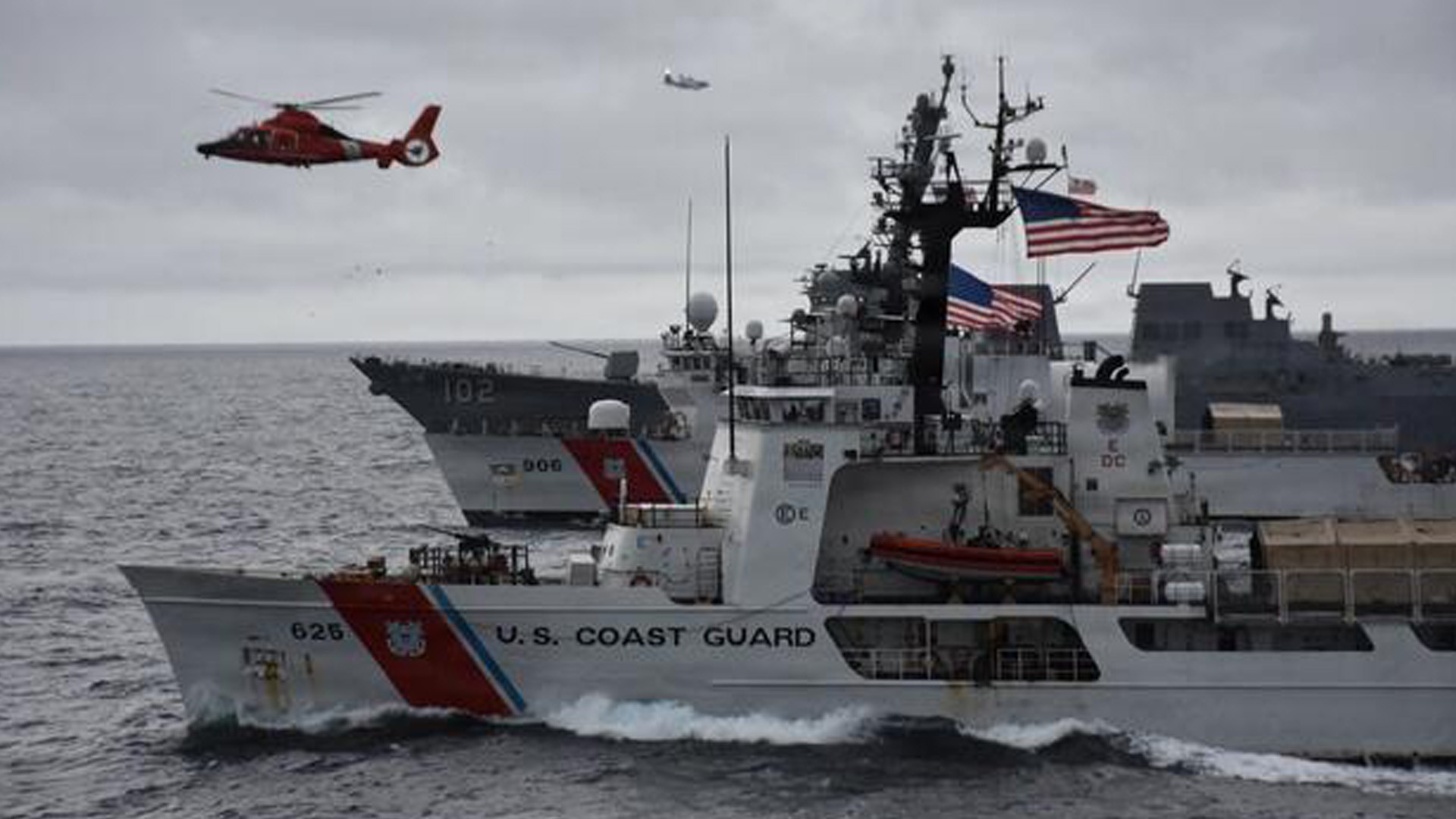
1. The Department of Homeland Security (DHS) has entered a partial shutdown after Congress failed to pass a funding bill before the deadline, which also impacts the U.S. Coast Guard. Unlike a full federal shutdown, this funding lapse affects DHS specifically, the agency responsible for border security, airport screening, disaster response, cybersecurity and immigration enforcement. Much of the federal government remains funded. DHS does not. And unlike the other armed services, the U.S. Coast Guard operates under DHS. That means Coast Guard personnel continue search-and-rescue missions, maritime security patrols and interdiction operations without guaranteed pay during the funding lapse.
2. U.S. Central Command on Saturday said its forces conducted 10 strikes against more than 30 Islamic State targets in Syria from Feb. 3 to Thursday. The strikes were conducted “with precision munitions delivered by fixed-wing, rotary-wing, and unmanned aircraft,” and specifically targeted infrastructure and weapon storage facilities, the command said in a news release. The release did not specify resulting casualty figures from the strikes, instead saying that two months of missions under Operation Hawkeye Strike have killed or captured 50 terrorists and struck more than 100 infrastructure targets. The command gave the same overall casualty figure after a previous round of strikes from Jan. 27 to Feb. 2, which it said targeted a communications site, logistics node and weapons caches. The operation was launched in response to the December shooting deaths of two U.S. soldiers, Sgt. Edgar Brian Torres-Tovar and Sgt. William Nathaniel Howard, and an American translator by a gunman tied to ISIS. The gunman, who attacked U.S. and Syrian security forces in Palmyra, was killed on site, and U.S. officials vowed swift retribution for the attack.
3. For some veterans, filing a claim with the Department of Veterans Affairs can often be a confusing, frustrating process. To streamline this work, many businesses have popped up in recent years claiming to help veterans, only to take advantage, leaving them with thousands of dollars in expenses and not much help. Last week, California Gov. Gavin Newsom signed legislation forcing “claim shark” companies to either systematically change their philosophies by the end of the year or no longer operate, according to CalMatters. Under the law, unaccredited private firms can no longer charge fees to assist veterans in filing claims. California’s bill was heavily supported by veterans’ service organizations like The American Legion and Veterans of Foreign Wars, that assist veterans in filing claims for free.
4. Iran’s top diplomat met with the head of the U.N. nuclear watchdog agency on Monday, ahead of a second round of negotiations with the United States over Tehran’s nuclear program. Iranian Foreign Minister Abbas Araghchi met with Rafael Grossi, director-general of the International Atomic Energy Agency, and said he would also meet with Foreign Minister Badr al-Busaidi of Oman, which is hosting the U.S.-Iran talks in Geneva on Tuesday. “I am in Geneva with real ideas to achieve a fair and equitable deal,” Araghchi wrote on X. “What is not on the table: submission before threats.” As U.S. President Donald Trump ordered an additional aircraft carrier to the region, Iran on Monday launched a second naval drill in weeks, state TV reported. It said the drill would test Iran’s intelligence and operational capabilities in the Strait of Hormuz, the Persian Gulf and the Gulf of Oman.
5. U.S. military forces boarded another sanctioned tanker in the Indian Ocean after tracking the vessel from the Caribbean Sea in an effort to target illicit oil connected to Venezuela, the Pentagon said Sunday. Venezuela had faced U.S. sanctions on its oil for several years, relying on a shadow fleet of falsely flagged tankers to smuggle crude into global supply chains. President Donald Trump ordered a quarantine of sanctioned tankers in December to pressure then-President Nicolás Maduro before Maduro was apprehended in January during an American military operation. Several tankers fled the Venezuelan coast in the wake of the raid, including the ship that was boarded in the Indian Ocean overnight. The Defense Department said in a post on X that U.S. forces boarded the Veronica III, conducting “a right-of-visit, maritime interdiction and boarding.” “The vessel tried to defy President Trump’s quarantine — hoping to slip away,” the Pentagon said. “We tracked it from the Caribbean to the Indian Ocean, closed the distance, and shut it down.”
- Security