

Both North Korea and China conduct weapons tests, Russian missile and drone attacks kill 12 in Ukraine, and U.S. suspends search for sailor missing since helicopter went down July 1.
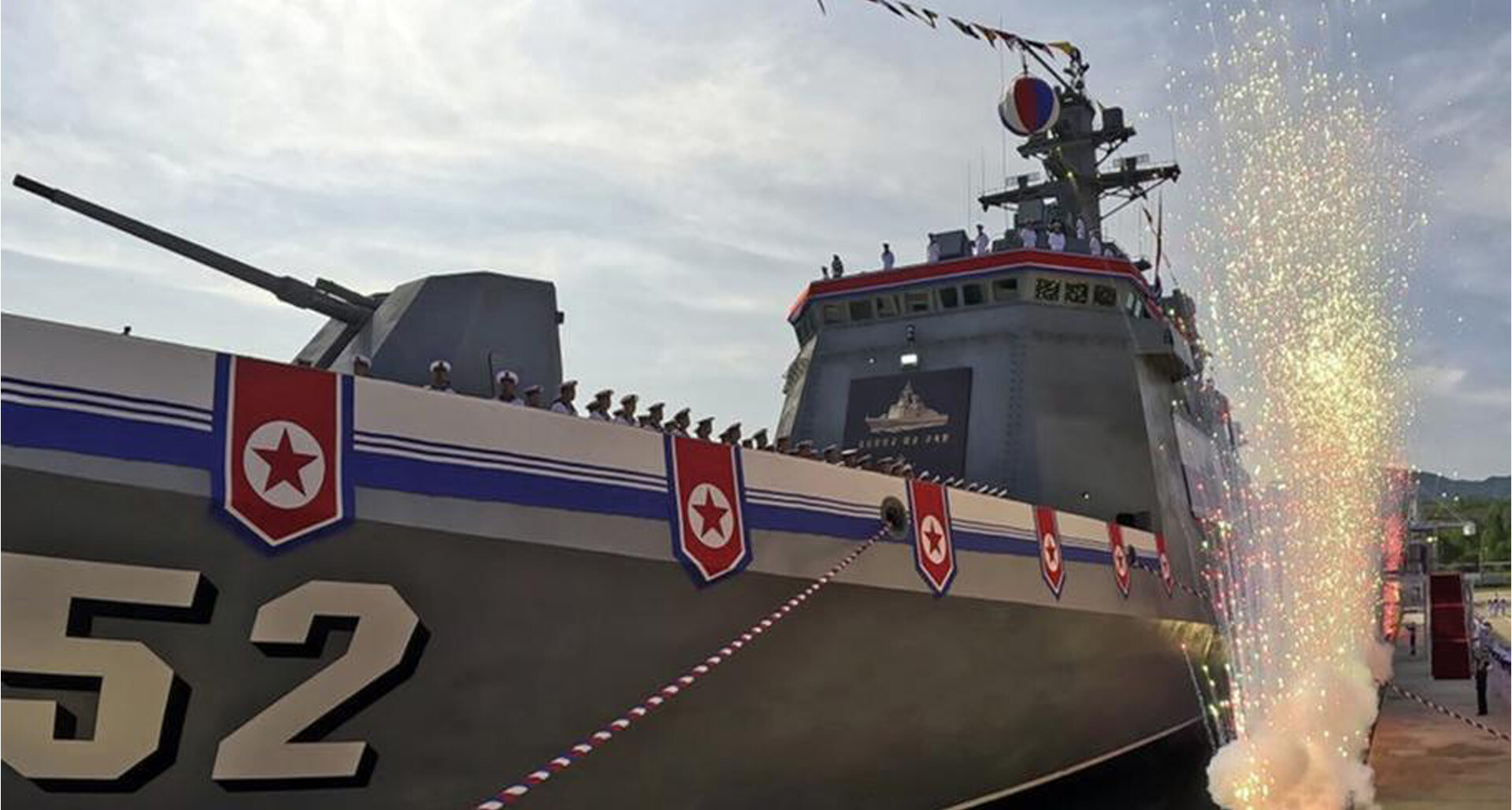
1. North Korean leader Kim Jong Un supervised weapons tests on a 5,000-ton destroyer that capsized at its initial launch last year and ordered the warship commissioned within two months, according to state-run media. North Korea’s navy tested the destroyer Kang Kon’s artillery, automatic machine guns and electronic warfare systems on Friday, the Korean Central News Agency reported Sunday. The South Korean military on Sunday said it detected North Korea firing cruise missiles toward the East Sea, Yonhap News Agency reported that day, Seoul and Washington are analyzing the launch details, according to the report. North Korea relaunched the warship in June 2025, following its failed ceremonial launch the previous month.
2. China’s navy test-launched a long-range ballistic missile Monday from one of its nuclear-powered submarines in the South Pacific in a rare move that drew protest and concerns from countries in the region. The missile was launched at 12:01 p.m. and carried a dummy warhead, according the official Xinhua News Agency. China last conducted a missile test in the Pacific two years ago, then firing an intercontinental ballistic missile with a dummy warhead. That previous launch in international waters was the first in decades since 1980. The launch was part of routine annual training, complied with international law and practice, and was not directed against any country or target, according to a short statement from Xinhua, which was reposted by the Ministry of Defense. The 2024 launch mirrored testing that the United States does for its own ballistic missile fleet, which experts viewed as an assertion of China’s growing superpower status.
3. Russia launched waves of missiles and drones at Kyiv early Monday, killing at least 12 people in an attack that exposed widening gaps in Ukraine’s air defenses, authorities said. All of the ballistic missiles launched by Russia struck their targets, underscoring Kyiv’s need for more Patriot interceptor missiles — a point Ukrainian President Volodymyr Zelenskyy will likely reiterate at a NATO summit in Ankara, Turkey, this week. The attack came hours after Zelenskyy warned that a large-scale attack was imminent. A further 60 people were wounded, according to Zelenskyy, as emergency workers combed through rubble looking for survivors at residential high-rises in two locations that suffered direct hits.
4. The U.S. Navy says it has suspended the active search for a sailor missing since Wednesday, when a MH-60S Sea Hawk helicopter went down in the Arabian Sea. The search concluded Sunday following 102 hours of extensive and coordinated rescue efforts over 14,000 square miles, U.S. Naval Forces Central Command/U.S. 5th Fleet said in a post on X. “The Sailor’s name is being withheld until at least 24 hours after next-of-kin notification is complete in accordance with Navy policy,” the post added. Three of the helicopter’s four crew members were recovered and were last reported in stable condition aboard the USS George H.W. Bush, the carrier to which the Sea Hawk was assigned.
5. The U.S. has withdrawn most of the troops that were sent to Nigeria earlier this year to help root out Islamic State insurgents, according to the head of U.S. Africa Command, as the military pivots toward what it describes as an African-led model for security cooperation. In May, the U.S. carried out a series of strikes against the Islamic State in partnership with Nigerian forces, including an operation that killed Abu-Bilal al-Minuki, the director of global operations for ISIS, along with other senior leaders. Speaking to reporters on the sidelines of the 2026 African Chiefs of Defense Conference in Angola, AFRICOM commander Gen. Dagvin Anderson said most of those service members have now left, but U.S. forces will continue sharing resources at the request of Nigerian officials.
- Security