

U.S., Iran exchange missile strikes, again testing ceasefire; immigration policy causing uncertainty for military families seeking permanent U.S. residency; and top U.S. general overseeing forces in Latin American has rare meeting with Cuban counterparts.
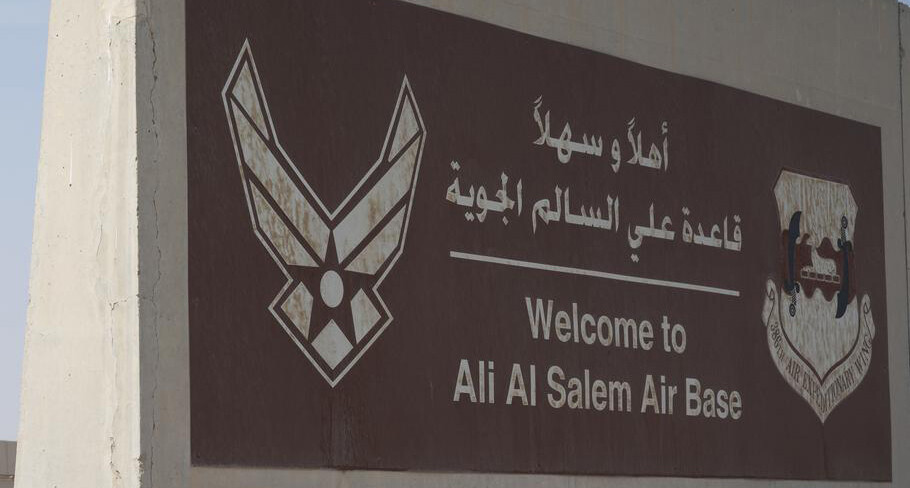
1. The United States said Monday that it bombed radar and drone sites in Iran after Tehran shot down an American drone over the weekend. Iran then said it launched a strike of its own, and Kuwait reported incoming fire. The nominal ceasefire between Iran and the U.S. has been repeatedly tested with such back-and-forth attacks, even as officials from both countries try to negotiate an end to the war. It’s not clear how close they are to a deal — and there is always the risk that an attack could derail those talks. Meanwhile, Kuwait said its air defenses opened fire early Monday morning to intercept incoming drone and missile fire. Kuwait is home to U.S. Army Central, the Mideast forward command for the Army. While the U.S. Air Force no longer flies the MQ-1 Predator, the U.S. Army still does.
2. Military families seeking permanent U.S. residency face new uncertainty under a federal immigration policy that suggests some green card applicants must file from their home countries rather than from the United States. A May 21 memorandum from U.S. Citizenship and Immigration Services states that adjustment of status — the process of obtaining lawful permanent residency without leaving the country — is a matter of “administrative grace” and should be granted only after officers consider the totality of an applicant’s circumstances. USCIS says the memo simply restates existing law. However, immigration attorneys and advocacy groups say it raises questions about whether some applicants, including military spouses and children, could be required to complete the process overseas. The policy “will result in some aliens who do not merit the discretionary benefit ultimately applying with the Department of State overseas rather than USCIS in the United States,” the agency said in an unsigned email Thursday.
3. The top U.S. general overseeing forces in Latin America held a rare meeting on Friday with senior Cuban military officials at the perimeter of U.S. Naval Station Guantanamo Bay, Cuba, the U.S. military said on Friday, confirming a Reuters story. U.S. Marine Corps Gen. Francis Donovan, the head of U.S. Southern Command, briefly discussed operational security matters with the Cuban delegation, which included Cuban Gen. Roberto Legra Sotolongo, first deputy minister of the chief of the General Staff, U.S. Southern Command said on X. “Donovan also led a perimeter security assessment of the naval base and discussed force protection, safety of service members and their families, and operational readiness with base officials,” it said. Donovan’s meeting in Cuba is the first in recent memory by a head of Southern Command and comes amid growing concerns in Cuba of a possible U.S. military attack on the Communist-run island.
4. Over four years ago, Belarus' authoritarian President Alexander Lukashenko allowed longtime ally Russia to use his territory to invade Ukraine. Now officials in Kyiv are warning that Lukashenko could again allow his land to serve as a launchpad for more attacks by the Kremlin's forces. While Belarus has not contributed troops to battle, Lukashenko has backed President Vladimir Putin’s war effort by hosting Russia’s nuclear weapons and military infrastructure, as well as producing components for Moscow’s military industries. Earlier this month, the countries held joint drills of nuclear forces involving Russian weapons deployed in Belarus. Lukashenko, in power for over three decades, has ruled the nation of 9.5 million with an iron fist, relentlessly cracking down on dissent and relying on its close ties with Russia, as well as subsidies from the Kremlin's coffers, to counteract repeated Western sanctions.
5. Israeli forces are making their deepest incursion inside Lebanon since they withdrew from the country over a quarter-century ago, despite a nominal U.S.-brokered ceasefire and the first direct talks between the countries in decades. The Israeli advance presents a challenge in the emerging deal to extend the Iran war ceasefire as Tehran wants any agreement to end fighting in Lebanon, too. Qatar called it a “dangerous escalation.” Germany’s foreign minister said it was cause for serious concern, according to German press agency dpa. There was no comment by the United States. On Sunday, Israeli forces seized a symbolic fort in southern Lebanon that offers commanding views across Lebanon and into northern Israel. The last time they seized it, they held it for 18 years.
- Security