

U.S., Iran announce ceasefire, Russian missile strikes on Ukraine kill 10, U.S. takes out Venezuelan ganglord
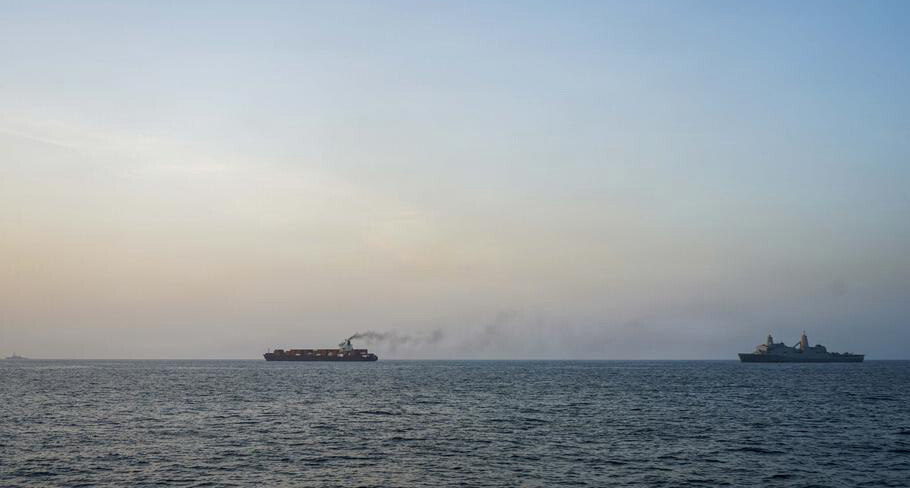
1. The United States and Iran reached an initial agreement early Monday that would extend their shaky ceasefire and lead to the reopening of the Strait of Hormuz, but challenges immediately loomed, including Israel insisting it would hold onto land seized in Lebanon as it battles Hezbollah. Details of the deal, which would potentially allow desperately needed oil and natural gas to reach the global market through the critical waterway, were not immediately released. Iran signaled implementation would not start until the signing, which key mediator Pakistan said would take place Friday in Switzerland. But the memorandum of understanding over the war already faced hurdles. Israel’s continued hostilities with the Iranian-backed militia Hezbollah in Lebanon, where Israel bombed Beirut’s southern suburbs Sunday, nearly derailed the negotiations. Israel joined the U.S. in launching the war on Feb. 28.
2. Russian drone and missile attacks on Ukraine overnight killed at least 10 civilians and wounded dozens more, President Volodymyr Zelenskyy and other officials said Monday. The attacks on the capital, Kyiv, and the second-largest city, Kharkiv, came after Zelenskyy and Russian President Vladimir Putin spoke separately by phone with U.S. President Donald Trump on Sunday. The exchange suggests Washington hasn’t given up on its diplomatic efforts to stop the fighting that followed Moscow’s all-out invasion of its neighbor in February 2022. The war in Ukraine is also set to feature in talks on Tuesday between G7 leaders at a summit in France. Zelenskyy and Trump are due to attend the gathering, as Ukraine’s president pushes to keep the war on leaders’ minds while the Iran war diverts international attention from Ukraine’s plight.
3. President Donald Trump said Friday that a “swift and lethal kinetic” U.S. strike has killed Héctor Rusthenford Guerrero Flores, whom he called “the infamous leader” of the Tren de Aragua gang. Tren de Aragua has been labeled by the United States as a terrorist organization. Guerrero Flores was charged in a New York federal court with racketeering conspiracy and other crimes, including lending support to terrorists in crimes that stretched more than a decade, authorities announced in December. Defense Secretary Pete Hegseth posted on X that the strike occurred earlier in the week on a Tren de Aragua compound in Venezuela. U.S. Attorney Jay Clayton said at the time that the gang is responsible for countless acts of violence, extortion and drug trafficking in North America, South America and Europe. Trump nominated Clayton on Thursday to be director of national intelligence.
4. The only United Nations Command unit permanently stationed inside the Demilitarized Zone has a new leader as it continues a mission that has helped maintain the armistice between North and South Korea for more than 70 years. U.N. Command Security Battalion-Joint Security Area carries out security operations along one of the world’s more heavily fortified borders, supports enforcement of the Korean Armistice Agreement and protects Daeseong-dong, the only South Korean village situated entirely within the DMZ. The battalion is also the only fully combined U.N. Command-South Korean unit and remains responsible for the Joint Security Area, where North and South Korean forces stand face to face along the military demarcation line. Lt. Col. Michael Baker assumed command of the battalion from Lt. Col. Daniel Blankehorn during a ceremony Friday at Camp Bonifas. The battalion is composed of 900 soldiers in eight companies, Blankenhorn said during his farewell speech.
5. More than three-quarters of Americans polled in a recent survey endorse national defense legislation that would include the American Legion-supported "right-to-repair" provision allowing U.S. military service members to fix their own equipment rather than wait for contractors as required by law. Right-to-repair has been one of myriad topics discussed, and amendments included, in both the U.S. House and Senate deliberations of the Fiscal Year 2027 National Defense Authorization Act (NDAA). After the House Armed Services Committee included right-to-repair in its defense bill version, the Senate Armed Services Committee followed suit on Wednesday by voting 18-9 to approve its own $1.14 trillion version that also includes the right-to-repair reform. Now, the full Senate must deliberate the legislation prior to becoming law. According to a survey published June 10 by the Specialty Equipment Market Association (SEMA), about 78.9% of all 1,090 respondents said they support the military’s ability to repair their own equipment. When asked specifically about the Warrior Right to Repair Act contained within the House and Senate bill versions, roughly 73.5% of respondents said they would support its inclusion in the final version.
- Security