

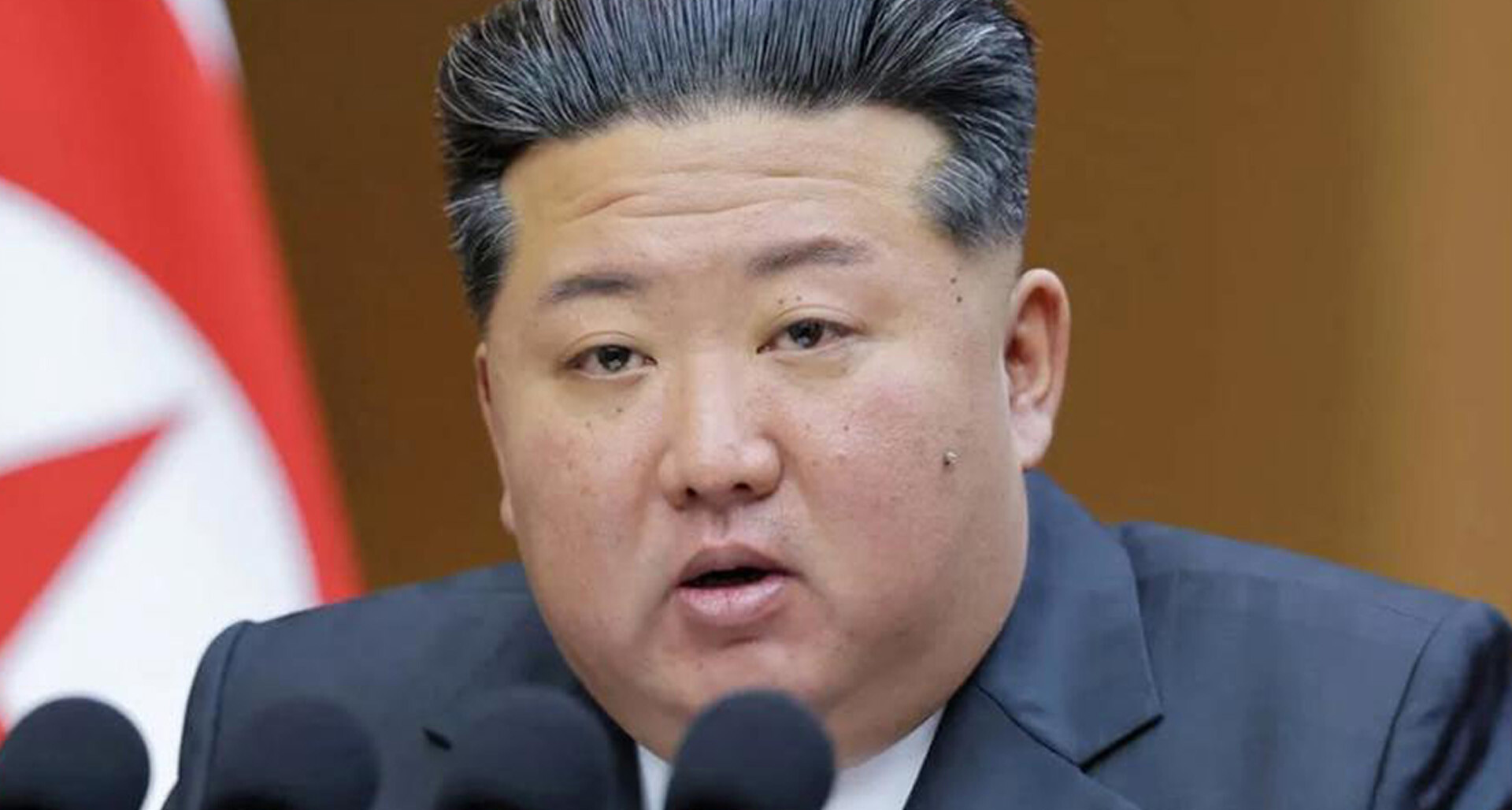
North Korea celebrates anniversary with weapons test, Iran responds to U.S. strikes with attacks in Bahrain and Kuwait, Trump urges Syria to take on Hezbollah, and Putin admits Russia facing fuel ‘deficit’.
1. North Korean leader Kim Jong Un supervised tests of an upgraded rocket launcher and other weapons on the anniversary of the start of the Korean War, according to state-run media. The tests, conducted Thursday, analyzed the combat characteristics of an upgraded 240 mm multiple rocket launcher system, a tactical ballistic missile warhead and a 155 mm self-propelled howitzer, the Korean Central News Agency reported Friday. KCNA said the rocket launcher increased its firing range to 56 miles, while the howitzer demonstrated a firing range of roughly 40 miles. Kim said the launches showcased advances in North Korea’s military modernization policy, particularly efforts to improve firepower by making weapons more automated, longer-range and precise, according to the report. Seoul and Washington detected and tracked multiple projectiles launched by North Korea between 7:27 a.m. and 8:20 a.m. that day and are maintaining close coordination to prepare for any contingencies, Lee Kyung-ho, a deputy spokesman for South Korea’s Ministry of National Defense, said during a regular briefing Monday.
2. Iran again launched drone and missile attacks targeting Bahrain and Kuwait on Sunday following new U.S. airstrikes against the Islamic Republic, and threatened a “complete halt” in negotiations to end the war if Washington continues its attacks. Efforts to reopen the Strait of Hormuz without Iran’s oversight has sparked days of crossfire. A multinational maritime body overseen by the U.S. Navy said Saturday it would expand a route near Oman for inbound and outbound traffic. Iranian Foreign Minister Abbas Araghchi on Sunday reiterated the claim that Tehran must govern the strait to the Persian Gulf that once carried a fifth of the world’s oil and natural gas. “Any attempt to establish new or separate arrangements from those currently being carried out by the Islamic Republic of Iran will only lead to further complications, delay the reopening of the Strait of Hormuz and increase the level of tension,” Araghchi said.
3. As the White House has soured on Israel’s war with Hezbollah in Lebanon, U.S. President Donald Trump has shocked many in the region by pushing an alternative: Let Syria fight the Iran-backed militant group instead. He has suggested that the battle-hardened and Islamist-led insurgents who overthrew Syria’s autocratic President Bashar Assad a year and a half ago and formed a new government would do a better job of rooting out Hezbollah than the Israeli army. Syrian President Ahmad al-Sharaa has said he has no interest in doing so, and has asserted that Trump’s comments were misconstrued. But Trump has doubled down on the idea. Although it remains unclear how serious the White House is about the proposal, the prospect of a Syrian invasion has raised alarms in Lebanon — and also in Israel, which regards al-Sharaa’s Islamist-led government with suspicion and has seized control of a strip of southern Syria since he took power.
4. Ukraine kept up its heavy drone assault on Russia, setting fire to a major oil refinery in the south, as President Vladimir Putin acknowledged for the first time on Sunday that the country was facing a “certain deficit” of fuel and vowed to strengthen protection of oil facilities and boost fuel output. Ukraine has markedly stepped up its long-range attacks on Russian military industries and energy facilities in recent months, aiming to cut Moscow’s revenue for its invasion — now in its fifth year — and make Russians feel the consequences. “Our ‘long-range sanctions’ reached two oil refineries in Russia,” Ukrainian President Volodymyr Zelenskyy wrote on the Telegram messaging app on Sunday. “Each (strike) means a reduction in the resources that fuel the Russian war machine, and another step toward peace.” The campaign has choked Russian fuel supplies, causing widespread shortages and long lines at gas stations across the country and prompting authorities in many regions to introduce fuel rationing. According to Western analysts, it has also slowed Moscow’s efforts on the battlefield, heaping pressure on the Kremlin to come to the negotiating table.
5. U.S. Marines continue to dig through the rubble in northern Venezuela, part of a growing international effort to locate survivors after back-to-back earthquakes hit the country last week. Military personnel are “racing against the clock” to locate people still buried under debris, U.S. Southern Command said in a statement Monday. “Operating day and night, these crews continue to support international search and rescue operations across the hardest-hit communities,” the command said. In coordination with local emergency responders, the Marines are working in dangerous terrain as they navigate hazardous debris and collapsed buildings, SOUTHCOM said.
- Security