

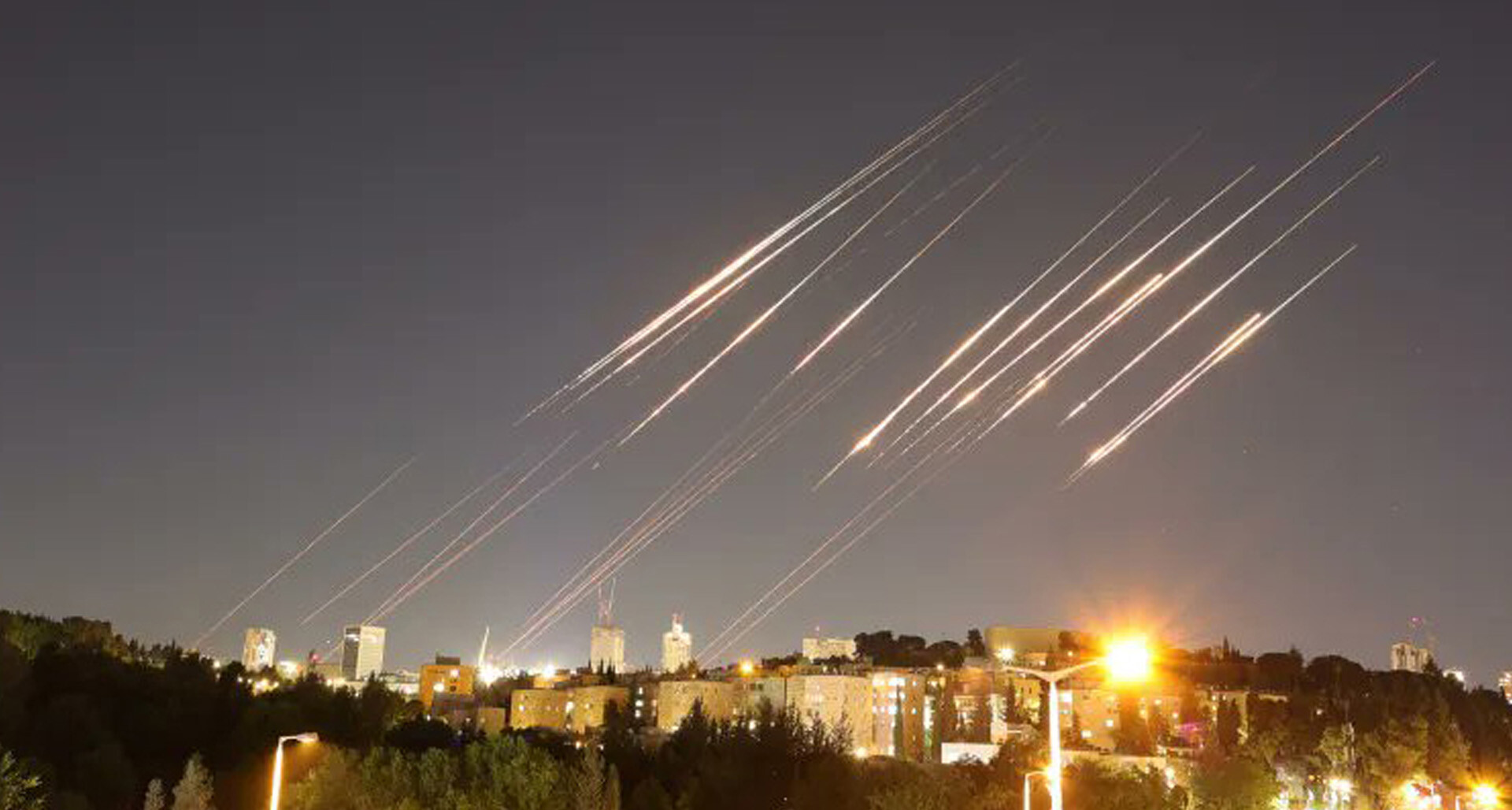
President Trump urges Israel, Iran to ‘immediately’ stop shooting at each other; Chinese and North Korean leadership gathering for rare meeting; and Ukrainian forces strike oil facilities in Russia and occupied Ukraine.
1. President Donald Trump on Monday urged Israel and Iran to “immediately” stop shooting at each other after the two sides exchanged rounds of strikes that threatened to undo his administration’s tenuous ceasefire with Tehran and reignite war in the Middle East. The Iranian salvos Sunday night came in response to Israeli attacks on Hezbollah, an Iran-backed Islamist group based in Lebanon, which Iran insists was covered by a ceasefire agreement it reached in April with the U.S. Iran fired multiple waves of missiles toward Israel, setting off air raid sirens and prompting what Israeli officials described as successful interceptions. Israel later said it struck military sites in western and central Iran. Meanwhile, Iran-backed Houthi rebels in Yemen claimed an attack on Israel and threatened to target Israeli-linked shipping in the Red Sea. The exchange marked the most serious challenge yet to the April ceasefire and came on the 100th day of the war, dubbed Operation Epic Fury. The conflict began in late February with joint American and Israeli strikes that killed top Iranian leaders.
2. Chinese President Xi Jinping received a lavish welcome as he arrived in North Korea on Monday for a rare visit expected to focus on reasserting China’s unique influence over the North in return for providing economic and political benefits. China’s Xinhua News Agency reported that North Korean leader Kim Jong Un and his wife Ri Sol Ju welcomed Xi and his wife Peng Liyuan upon their arrival at Pyongyang’s international airport. Xinhua said the two leaders shook hands. Xi later arrived at Pyongyang’s main square, where a military honor guard and thousands of people, including children carrying balloons and hopping, staged a welcoming ceremony. Buildings surrounding the plaza were draped in the two countries’ flags, giant portraits of Kim and Xi and red-and-yellow banners welcoming the Chinese leader and celebrating the nations’ “friendship and unity.”
3. Ukrainian forces struck oil facilities in Russia and occupied Ukraine, Ukrainian and Russian officials said on Monday, as part of their campaign aimed at making Moscow pay an economic cost for the war. Russia’s defense ministry said its forces shot down 310 Ukrainian drones overnight into Monday, including over the Moscow region, western and southwestern Russia, Russian-occupied Crimea, and the Black and Azov Seas. Russia targeted Ukraine with 155 drones, of which Ukrainian air defenses shot down or suppressed 124, according to Ukraine’s Air Force. Ukraine’s General Staff said Ukrainian forces had struck Russia’s Krasnodar Krai region overnight. The General Staff said the Grushovaya oil transshipment base near Novorossiysk. The complex is one of the largest transshipment hubs in southern Russia for oil and petroleum products.
4. South Korea and Japan resumed joint maritime search-and-rescue drills Sunday for the first time in nine years, ending a hiatus caused by years of political and military tensions. The South Korean navy announced May 30 that the Japan Maritime Self-Defense Force would participate in the exercise, known as SAREX, in international waters southeast of Jeju Island. The training included the rescue of a distressed vessel, shipboard firefighting, emergency medical treatment and helicopter operations, according to the announcement and photos released Sunday by the South Korean navy. South Korea deployed the 4,900-ton landing ship ROKS Cheon Ja Bong, while Japan contributed the 7,250-ton Aegis-equipped destroyer Kongo and a maritime patrol helicopter, the navy said.
5. The Pentagon's Defense Intelligence Agency recently elevated Israel's counterintelligence threat designation to “critical,” the highest level in its system. The assessment was raised in recent weeks, though officials reportedly did not disclose the exact date of the change. The designation became public June 6. The disclosure comes as Congress considers legislation that would significantly expand defense technology cooperation between the United States and Israel. U.S. officials reportedly believe Israeli intelligence services have intensified efforts to collect information regarding internal American deliberations involving Iran and conflicts in the Middle East. Officials told NBC that those concerns prompted the Defense Intelligence Agency to raise the threat designation. Israeli officials denied the allegations and reiterated that Israel does not conduct espionage operations against the United States. The White House and Israel have denied the allegations described in those reports.
- Security