

Legislation touted as effort aimed at reversing chronic under-investment that has left Air Force with aircraft more than 30 years old and Navy with ships pushing 20 years of service.
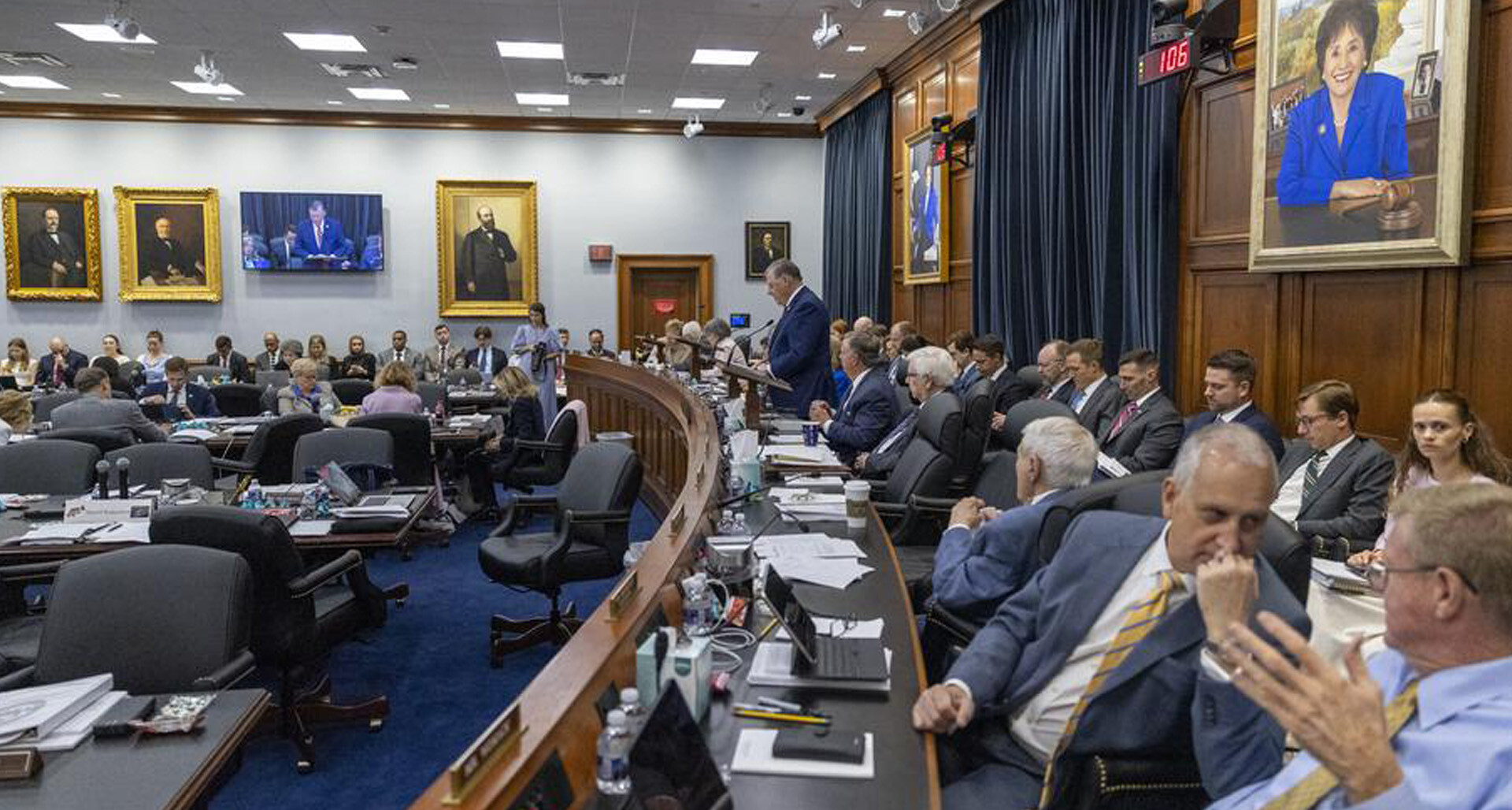
The House Appropriations Committee approved a defense funding bill Wednesday that endorses the Pentagon’s rebrand to the Department of War while allocating $1.1 trillion in defense spending and providing a range of pay raises to troops.
The legislation was approved in a 34-27 vote, reflecting concerns from Democrats about funding a record-high Pentagon budget amid cuts to domestic spending programs. The bill next heads to the full House for a vote.
Republicans touted the legislation as an effort aimed at reversing chronic under-investment that has left the Air Force with aircraft more than 30 years old and the Navy with ships pushing 20 years of service.
“The choice before us is not between spending and saving; it’s between preparing for the threats of tomorrow or paying a far greater price later,” said Rep. Tom Cole, of Oklahoma, the Republican chairman of the committee. “This legislation chooses preparedness, it chooses strength.”
Democrats derided the legislation, pointing to its price tag as well as its lack of funding for Ukraine, continued funding for the deployment of National Guard troops in Washington, D.C., and spending on the proposed Trump-class battleship.
“I will oppose this legislation until we can find a bipartisan consensus on our funding priorities,” said Rep. Betty McCollum, of Minnesota, the top Democrat on the defense appropriations subpanel.
Democrats opposed several Republican amendments added to the bill on Wednesday, including a proposal to formally rename the Department of Defense to the Department of War after President Donald Trump authorized the use of the name last year.
Republican Andrew Clyde, of Georgia, the sponsor of the amendment, said the Department of War name “more directly reflects the warrior ethos.”
The proposed change, estimated to cost up to $125 million, is also supported by the House and Senate Armed Services Committees.
Other adopted amendments block funds for diversity, equity and inclusion initiatives, gender-affirming care for transgender people and a rescinded policy that reimbursed troops who had to cross state lines for abortions.
The panel rejected several amendments offered by Democrats, including attempts to limit troop withdrawals from Europe, rein in the Iran war, cut funding for the Trump-class battleship and force Defense Secretary Pete Hegseth to justify the blocking of senior officer promotions.
Republicans and Democrats on the committee expressed misgivings about the Trump administration’s quest for a $1.5 trillion defense budget for the 2027 fiscal year — a sum that includes a proposed $350 billion reconciliation bill. That legislation, which would have to pass through a complicated party-line process, faces long odds in Congress but contains critical defense priorities such as scaling munitions production and procuring 53 of the 85 F-35 fighter jets requested by the Pentagon.
Rep. Ken Calvert, of California, the Republican chairman of the defense appropriations subpanel, called the Pentagon’s bifurcated funding strategy “uncertain and unaligned.”
“The two legislative vehicles are on entirely separate tracks with different timelines, committees of jurisdiction and approval processes,” he said Wednesday. “This approach is risky and uncoordinated.”
The bill approved by the appropriations committee would fund most of the Trump administration’s $1.15 trillion base defense budget request. Funding for other defense programs would come from the Military Construction appropriations bill and other measures.
The legislation fully funds tiered pay raises for troops, with a 7% pay hike for grades E-5 and below, 6% for grades E-6 through O-3 and 5% for grades O-4 and above. The Senate Armed Services Committee has proposed a flat 3.6% pay raise for everyone.
The bill funds a total end strength of 2,112,200 active-duty personnel — about 40,000 more than in fiscal 2026, which began in October 2025.
The legislation allocates $248 billion for weapons procurement, $221 billion for research and development and $10.6 billion for buying missiles and air defenses, including Patriot and Terminal High Altitude Area Defense interceptors and ship-based surface-to-air missiles.
It also provides $56.7 billion for the Navy to purchase 21 new ships, including 11 warships, as well as $1 billion for the procurement of materials for the new Trump-class nuclear-powered battleship.
The committee expressed reservations about the proposed vessel in a report, however, questioning its “maturity and affordability.”
The panel noted the ship’s lack of a finalized design and cautioned that construction would take place at shipyards that are already stretched thin.
- Security