

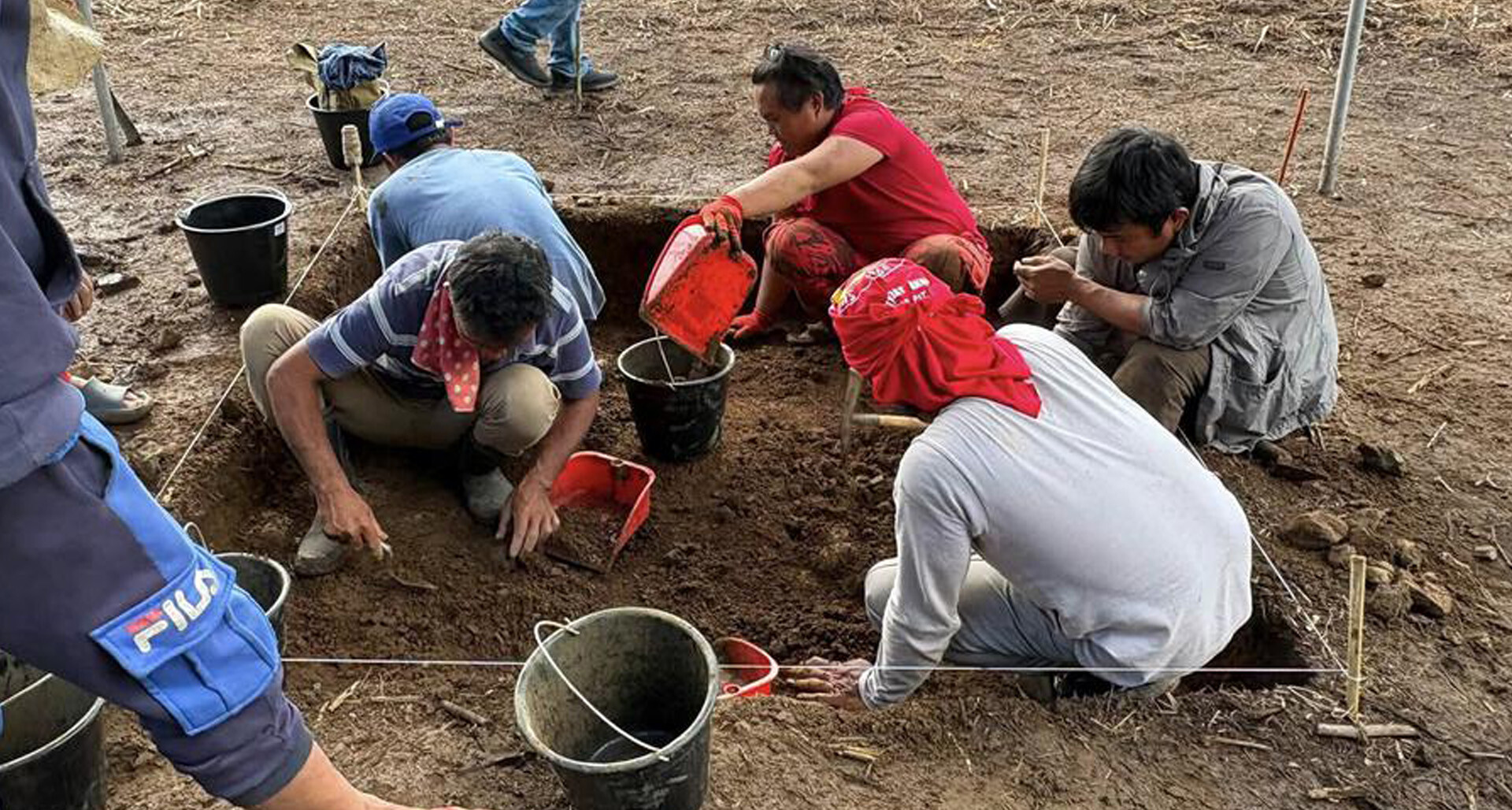
Researchers digging in battle-ravaged Philippine city of Marawi this month in hopes of finding graves of a U.S. general and other soldiers executed by their Japanese captors in World War II.
Researchers are digging in the battle-ravaged Philippine city of Marawi this month in hopes of finding the graves of a U.S. general and other soldiers executed by their Japanese captors in World War II.
Four Americans arrived June 2 on the southern island of Mindanao to work alongside more than a dozen Filipino academics and officials at Camp Keithley, a former U.S. Army post in Marawi.
They’re searching for the remains of Brig. Gen. Guy Fort and three other American prisoners of war executed by Japanese guards at the camp and at a nearby rifle range after U.S. and Filipino forces surrendered in May 1942. The soldiers have been missing for 84 years in a region of the Philippines that’s off limits to most modern American troops due to a threat from Islamic extremists.
In 2017, Marawi was the site of a five-month battle between the Philippine government and Islamic militants. Backed by U.S. Army Special Forces, Filipino troops ultimately regained control.
The team searching for the lost World War II soldiers includes members of the Asymmetric MIA Accounting Group, a nonprofit dedicated to finding missing-in-action service members and civilians. They’re working with more than a dozen Filipino academics and officials, the group’s founder, Michael Henshaw, said by phone June 4 from Iligan, about 20 miles from Marawi.
Fort commanded the 81st Philippine Infantry Division, Henshaw said. Three American POWs — Lt. Col. Robert Vesey, Capt. Albert Price and 1st Sgt. John Chandler — were tied to posts and bayonetted to death by the Japanese at Camp Keithley on July 3, 1942, in retaliation after other prisoners escaped. Vesey, a West Point graduate, had volunteered to take Fort’s place, Henshaw said.
Fort was executed by firing squad on or around Nov. 11, 1942, after he refused to order his guerilla troops to lay down their arms. The firing squad’s commander, Lt. Col. Yoshinari Tanaka, was later tried, convicted and hanged for war crimes.
The researchers pass through government checkpoints between Iligan and Marawi, where there is still damage from the 2017 battle, said Henshaw, who visited Marawi in January and April in preparation for this month’s recovery effort.
“There are destroyed buildings and bullet holes in walls,” he said of the city.
The team has relied on information provided by Benjamin Hagans, now 96 years old and living in Nevada, who witnessed the executions at Camp Keithley as a 12-year-old courier, Henshaw said.
“Some of the nearby area is undeveloped but slated for a carpark, so we are doing some digging,” he said of Camp Keithly.
The Filipino researchers with the team are interested in finding pre-colonial artifacts at the site of the old camp, on the shores of Lake Lanao, he said.
The team is using ground-penetrating radar to search for the soldiers’ graves and other cultural features, Henshaw said.
The purpose of the excavation is to investigate the history and archaeology of Camp Keithley and its surrounding area, Mindanao State University historian Ruhollah A.H.J. Alonto said by email Tuesday.
“Historical records indicate that the site has been occupied since at least the 18th century and has witnessed multiple periods of historical change, including the Spanish colonial era, the American period, and the Second World War,” he wrote.
The researchers will do DNA tests on any remains uncovered that AMAG’s forensic anthropologist deems might be American, while any others must be reinterred within 24 hours in accordance with local customs, Henshaw said.
“We want to do future missions here,” he said, noting that 185 American soldiers and thousands of Filipino scouts remain missing in action on Mindanao.
- Security