

President Trump extends deadline for Iran to open Strait of Hormuz, while Iranian missile strike capacity is thought to be expanding; warship named for Medal of Honor recipient arrives at homeport ahead of commissioning; and remains of Navy sailor killed at Pearl Harbor identified.
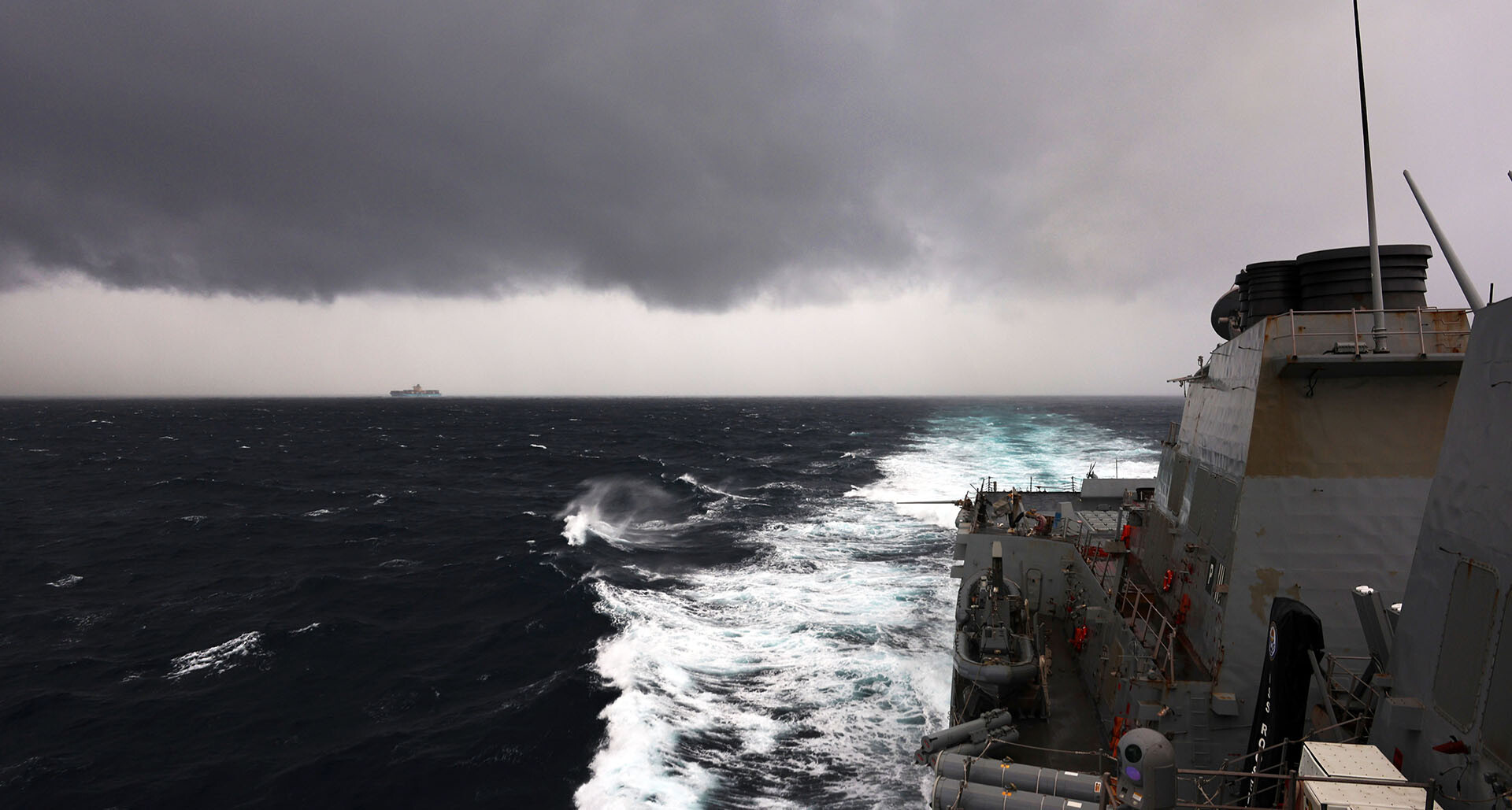
1. President Donald Trump has extended his deadline for Iran to reopen the Strait of Hormuz, saying the U.S. will hold off on power plant strikes for five days. Trump made the announcement on his Truth Social site Monday, hours ahead of a deadline later in the day. Writing in all capital letters, he said the U.S. and Iran have had “very good and productive conversations” that could yield “a complete and total resolution” in the war. Talks will continue “throughout the week,” Trump said. Trump did not elaborate on the diplomatic negotiations that had taken place. Iran did not immediately acknowledge any talks between the countries, but Iranian Foreign Minister Abbas Araghchi did say he spoke by phone with his Turkish counterpart, Hakan Fidan. Turkey has been an intermediary before in negotiations between Tehran and Washington.
2. Iran fired two intermediate-range ballistic missiles at a joint U.S.-U.K. military base in the Indian Ocean, marking the first operational use of a weapon system that potentially puts targets far beyond the Middle East in range, The Wall Street Journal reported Friday. Neither of the missiles hit the strategic Diego Garcia base — a hub for long-range U.S. bombers, warships and submarines — that is some 2,500 miles from Iran. One missile failed in flight while a U.S. warship fired an interceptor at the other, the Journal reported, citing multiple unnamed U.S. officials. It wasn’t clear on what day the missiles were fired or if the second missile was struck by the interceptor or also failed in flight. Still, the incident marked Iran’s first operational use of an intermediate-range ballistic missile, which suggests its missiles have a greater range than Tehran has previously acknowledged, the Journal reported.
3. Medal of Honor recipient and retired Marine Corps Col. Harvey C. Barnum Jr. welcomed the warship bearing his name as it arrived to its homeport at Naval Station Norfolk in Virginia. The USS Harvey C. Barnum Jr. arrived Friday ahead of its commissioning ceremony scheduled for April 11. Barnum said standing on the pier to greet the destroyer’s crew at their new homeport was a “monumental” moment, according to a service news release. “This warship represents the enduring bond between the Marine Corps and the Navy, and I have the utmost confidence in the crew to carry on the legacy of service and courage that defines our naval forces,” Barnum said. “I look forward to seeing them ‘bring her to life’ and join the fleet.”
4. The Defense POW/MIA Accounting Agency has identified the remains of a Navy sailor who was killed during the Japanese attack on Pearl Harbor more than 84 years ago. DPAA announced that Seaman 1st Class Clyde Clifton McMeans was officially accounted for on Nov. 25, 2025. McMeans, 26, was assigned to the battleship USS California (BB-44) on Dec. 7, 1941, when Japanese torpedo bombers and dive bombers struck the vessel at its berth along Ford Island. The attack killed 103 of the California's crewmen, according to the agency.
5. The night air in eastern Ukraine is crisp, and a myriad of stars scatter above a small crew of soldiers watching for Iranian-designed Shahed drones that Russia launches in waves. Such teams are deployed across the country as part of a constantly evolving effort to counter the low-cost loitering munitions that have become a deadly weapon of modern warfare, from Ukraine to the Middle East. While waiting, the crew from the 127th Brigade tests and fine-tunes their self-made interceptor drones, searching for flaws that could undermine performance once the buzzing threat appears. When Shahed drones first appeared in autumn 2022, Ukraine had few ways to stop them. Today, drone crews intercept them in flight with continually adapting technology. In recent years, Ukraine’s domestic drone interceptor market has burgeoned, producing some key players who tout their products at international arms shows. But it’s on the front line where small teams have become laboratories of rapid military innovation — grassroots technology born of battlefield necessity that now draw international interest.
- Security