

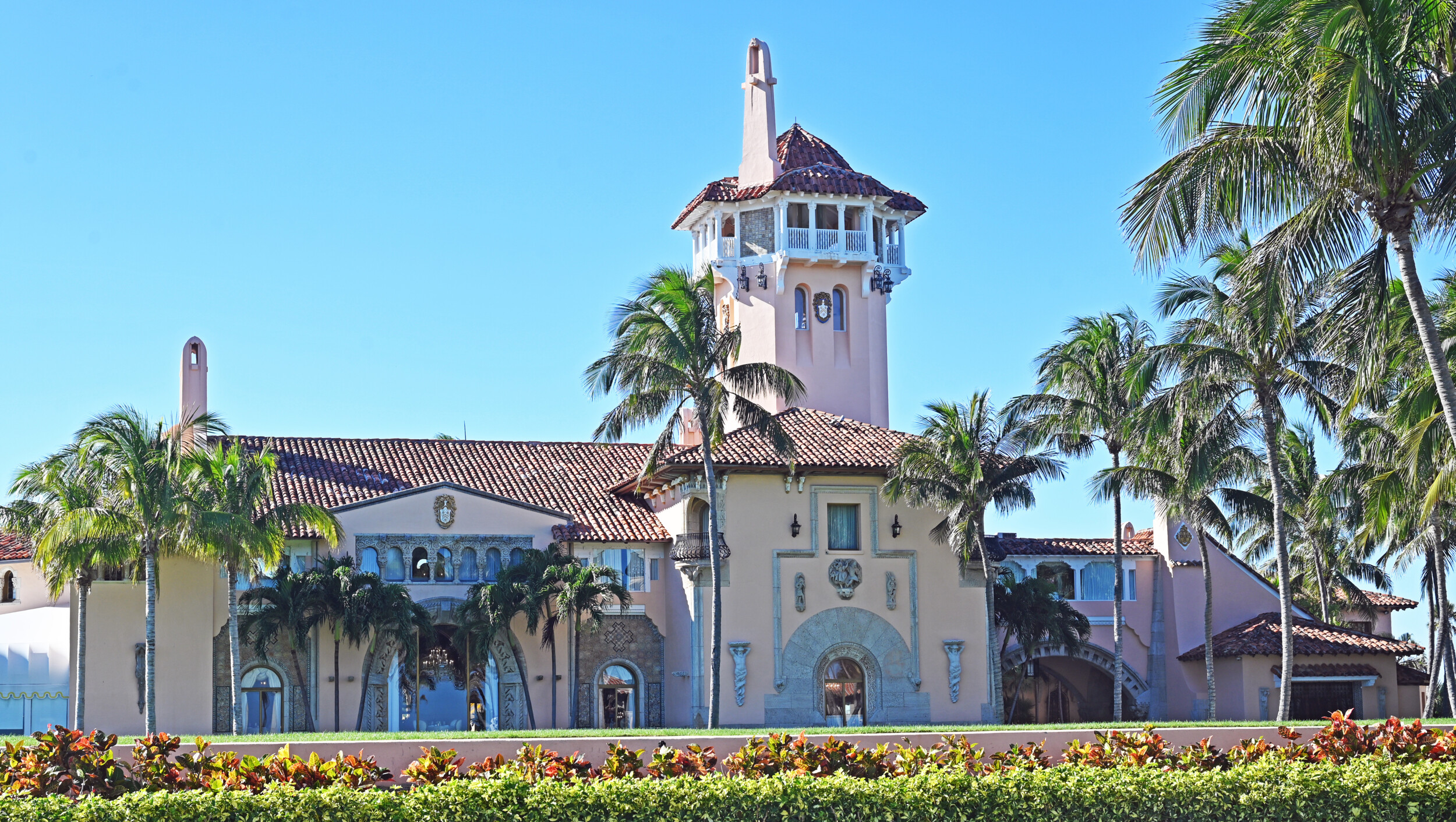
Short-ranged missile system deployed around Mar-a-Lago, high-level meetings taking place in Iran to avert renewed fighting, and Ukraine said Starlink satellite communications now fully restored.
1. The U.S. military has deployed short-range air defense systems around President Donald Trump’s Mar-a-Lago estate in Florida, expanding protection at a private property that has already required millions of dollars in federal security expenditures. The North American Aerospace Defense Command (NORAD) and U.S. Northern Command confirmed the deployment Oct. 23, saying they positioned the equipment at the Secret Service’s request. Photographs identified Humvee-mounted Avenger short-range air defense systems, which are designed to engage low-flying aircraft and other aerial threats. The military has not disclosed the deployment’s cost, duration or whether a particular threat prompted the decision. However, the additional defenses expand an operation that already requires fighter aircraft, military personnel and coordination among federal agencies. Similar military operations protected previous presidents at their personal residences, although the latest deployment adds ground-based missile systems to the aircraft traditionally used to defend presidential airspace.
2. High-level delegations from Saudi Arabia, Pakistan and Turkey were in Tehran on Monday for meetings with Iranian authorities to try to avert renewed fighting between Iran and Israel and the United States, Iran’s Foreign Ministry said. The talks come as many in Iran are anxious about a possible return to all-out war. Israeli and American leaders have been sharpening their threats ahead of elections in both countries, while Iranian leaders have remained defiant. Saudi Defense Minister Khalid bin Salman, Pakistani army chief Field Marshal Asim Munir and Ibrahim Kalin, the head of Turkey’s intelligence service, were to meet with Iran’s top security officials and negotiators to push for a deal between Tehran and Washington. The war in Yemen and strikes by Iranian-backed Houthi rebels against Saudi Arabia were also topics of the talks, according to two regional officials who spoke on condition of anonymity because they were not authorized to speak to reporters.
3. Ukraine said Saturday that Starlink satellite communications have been fully restored for its military after more than a week of restrictions that disrupted battlefield operations. Ukrainian President Volodymyr Zelenskyy said Starlink and its military-grade version, Starshield, were again functioning at speeds needed to support Ukrainian drone operations and battlefield communications. “The most important thing today is that Starlink and Starshield operations have been restored to the speeds we had before all the restrictions,” Zelenskyy said in a statement. “The speeds are now where they need to be.” Ukraine’s Defense Ministry said Saturday that its testing confirmed stable satellite connections on equipment moving faster than 250 mph. The previous restrictions had limited connections on some fast-moving equipment to speeds of roughly 100 mph, interfering with Ukraine’s ability to send out interceptor drones targeting Russian jet-powered Shahed munitions.
4. Missiles fired from Navy aircraft and Marine Corps ground launchers struck a floating target during a weekend firepower demonstration coordinated with Japanese forces, military spokesmen said Monday. The missiles simultaneously hit an inflatable target in the Sea of Japan, also known as the East Sea, in a Keen Sword drill simulating a response to an approaching naval threat, according to a news release from the exercise’s Combined Joint Information Bureau. F/A-18 Hornet and F-35 Lightning II fighters — operating from Marine Corps bases and the aircraft carrier USS Theodore Roosevelt — participated in the drill alongside ground-based launchers, Navy Lt. Dennis Petersen and fellow exercise spokesman Army Maj. Ephesian Poinsette said by phone Monday. “There were so many moving parts, and they all came together pretty seamlessly,” Petersen said. The training took place Friday and Saturday, said Poinsette, who declined to disclose its exact location or the types and numbers of munitions fired.
A U.S. Marine has been formally charged with killing and robbing a Japanese woman at a hotel in Okinawa’s capital, three weeks after his arrest prompted calls for changes to the status of forces agreement governing American military personnel in Japan. Lance Cpl. Devin Jacob Ballard, 20, was indicted Sunday on a charge of robbery causing death in the killing of Anna Yagi, 39, according to a copy of the indictment provided by the Naha Public Prosecutors Office. They allege Ballard wrapped a telephone handset cord around Yagi’s neck in the early hours of Oct. 3 “with intent to kill,” strangled her and stole her backpack containing a wallet and other belongings. Ballard, who was arrested the next day, has denied the allegations, according to Okinawa Prefectural Police. If convicted, he faces the death penalty or life imprisonment under Japan’s penal code.
- Security