

U.S. denies Iran struck one of its ships, North Korea puts second naval destroyer into service, and U.S. envoys enjoy ‘good discussion’ with Zelensky following meetings with Putin.
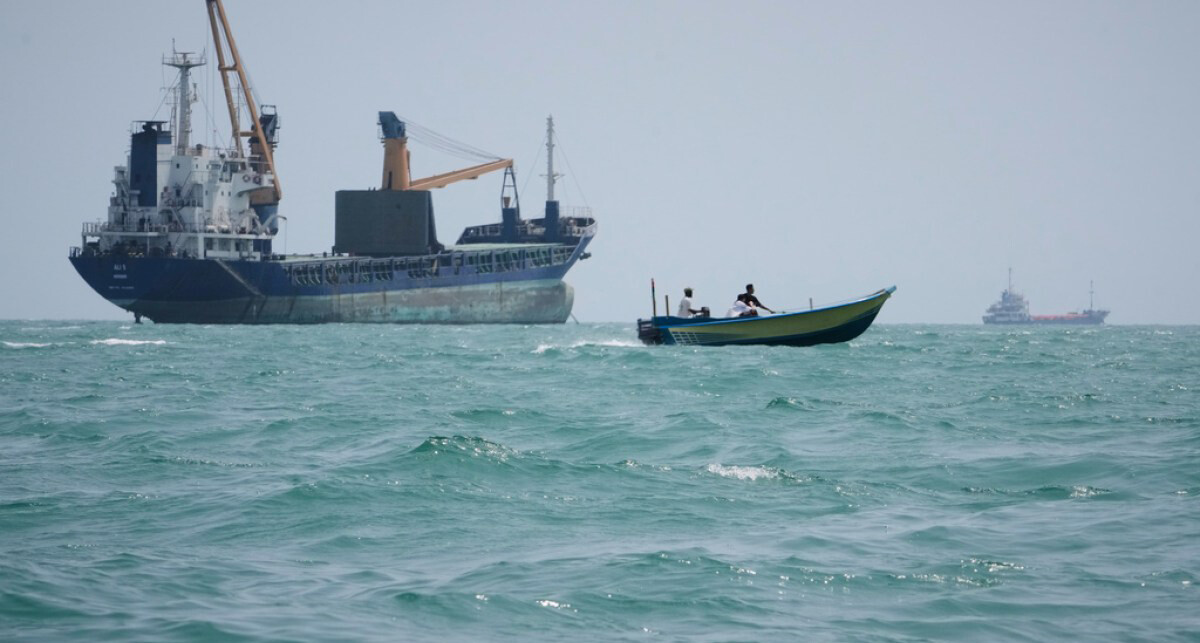
1. The U.S. military denied that Iran struck an uncrewed American military vessel in the Strait of Hormuz, calling the claim a “total lie.” A top Iranian official said Tehran plans to announce an “exclusion zone” outside the Strait of Hormuz aimed at vessels it believes are attempting to transit the waterway. State-run media in Tehran said the U.S. vessel was trying to enter an area that Iran says is restricted in the Strait of Hormuz, but Capt. Tim Hawkins, spokesperson for the U.S. Central Command, called it "a total lie." The claim came a day after the U.S. said it struck Iranian oil tankers in retaliation for Iran launching ballistic missiles at Navy warships. Attacks resumed last week after roughly a month of quiet. Iran’s parliament speaker and chief negotiator, Mohammad Bagher Qalibaf, said the era of “proportionate responses” is over and Iran’s retaliation will be “faster, heavier and more painful.”
2. North Korean leader Kim Jong Un put his second naval destroyer into service and called for building a more reliable nuclear deterrent, state media reported Monday, as the United States, South Korea and Japan began a trilateral military exercise he views as a security threat. The ship’s commissioning comes as North Korea is dialing up pressure on the U.S. after rebuffing President Donald Trump’s decision to scale back a major military drill with South Korea in a conciliatory step toward Kim. Observers say North Korea wants to wrest bigger U.S. concessions. The destroyer Kang Kon was commissioned into North Korea’s navy in the eastern port city of Wonsan Sunday at a ceremony attended by Kim and his teenage daughter, whom South Korea’s spy service calls his likely heir. North Korean state media photos showed the girl in a white dress and blazer walking alongside her father on a red carpet, touring the warship and posing with sailors.
3. US envoy Steve Witkoff and President Donald Trump’s son-in-law Jared Kushner pushed for a return to trilateral talks between the US, Russia and Ukraine on Sunday after “substantive” discussions with Ukrainian officials in Kyiv. It marks their first visit to the Ukrainian capital since the war began and comes amid near-constant Russian missile and drone strikes on the city. Although no major breakthroughs were announced after Sunday’s talks, Witkoff said he was “confident that there’ll be a good resolution here.” Ukrainian President Volodymyr Zelensky said “several new ideas” were discussed during “good discussions” with the US, but did not expand on what those ideas were. The talks followed intensive meetings Witkoff and Kushner held with Russian President Vladimir Putin in Moscow, part of Washington’s renewed push to end the war in Ukraine.
4. Israel’s air forces carried out two airstrikes early Monday on a southern Lebanese village, killing at least nine people, including women and children, the Health Ministry said. The strikes came amid a new round of escalation between Israel and Hezbollah. The ministry said one of the strikes hit a building and killed eight people, including a child and two women. It added that 11 people were also wounded, including four children and two women. The ministry added that another strike on a car in the village killed a paramedic with the Lebanese Islamic Risala Scout Association and wounded two others.
5. Jules and Gédéon Naudet were making a documentary about a rookie New York firefighter when the Sept. 11 attacks happened. Their project became a record of the rescue effort inside the World Trade Center, filmed by people who had no way of knowing what would happen next. Twenty-five years later, footage like theirs still has something to tell us. So do the accounts of Pentagon survivors and families who have spent the years since living with a loss the rest of the country remembers each September. For veterans of the wars that followed, that history can be deeply personal. These 13 documentaries cover the attacks and the lives they changed, from a 12-minute account of the Manhattan boat evacuation to a series tracing the war on terror. Several are available free.
- Security