

Iran targeted U.S. forces in the Middle East, including with a ballistic missile barrage aimed at a Jordanian air base used by the American military, as fighting intensified across the region.
Iran targeted U.S. forces in the Middle East on Wednesday, including with a ballistic missile barrage aimed at a Jordanian air base used by the American military, as fighting intensified across the region.
Jordan’s military said its air defenses engaged 20 ballistic missiles fired from Iran toward the country, intercepting and destroying 18. The other two fell in unpopulated areas and caused no casualties, the military said.
Iran’s Islamic Revolutionary Guard Corps said it launched ballistic missiles at al-Azraq Air Base in Jordan as part of a retaliatory operation, according to Iran’s state-run IRNA news agency.
Several videos circulating on social media appeared to show air defenses firing interceptors at a barrage of missiles over Jordan. Stars and Stripes was unable to independently verify the authenticity of the videos. Fox News later reported that Iran used cluster munitions in the attack.
Asked about the attacks on the Jordanian base, a U.S. official told Stars and Stripes that there had been “no significant impact to U.S. bases” and that “all U.S. service members are accounted for.”
Meanwhile, U.S. troops in Bahrain were told to seek shelter early Wednesday because of a missile threat, according to a message sent to service members and seen by Stars and Stripes. There were no immediate reports of an attack.
The latest missile threats came as the conflict also intensified at sea.
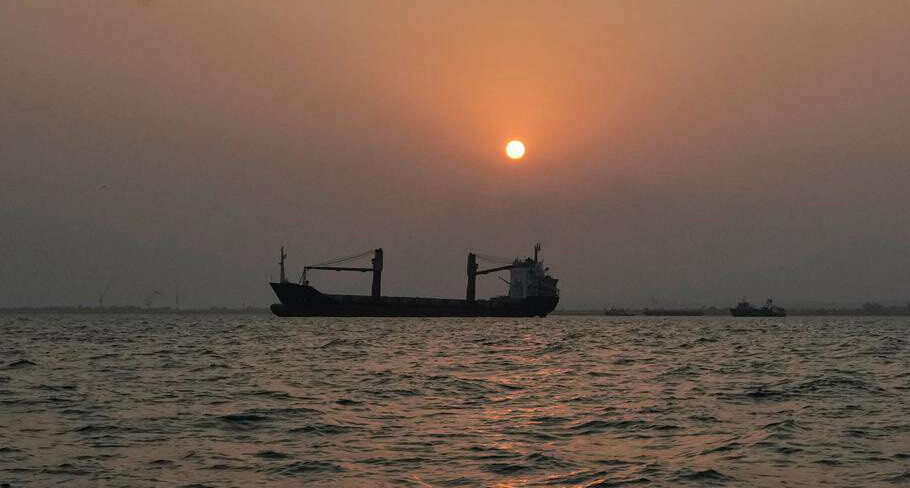
U.S. Central Command, which oversees military operations in the region, announced Tuesday that it had destroyed five Iranian crude oil carriers after the Revolutionary Guard targeted a U.S. Navy warship with ballistic missiles twice over the previous two days.
The ship, which was not named, evaded the attempted Iranian strikes and continued to patrol regional waters, CENTCOM said, adding, “No American personnel were harmed.”
Overall, U.S. forces destroyed 10 Iranian tankers in the past week, according to CENTCOM.
“These vessels were part of a multibillion-dollar shadow network that funds the IRGC, and Iran cannot defend them,” the command said on X.
Iran’s Revolutionary Guard said it would continue attacking U.S. targets until “Washington’s aggression was halted,” IRNA reported.
Iran resumed ballistic missile and drone attacks on military bases hosting American forces in the Middle East in late August following U.S. airstrikes aimed at stopping Iranian forces from laying mines in the Strait of Hormuz.
That was after weeks of relative calm in the war.
The U.S. says it is working to safeguard freedom of navigation and ensure the free flow of commerce through the Strait of Hormuz, one of the world’s most important energy chokepoints.
About 25% of the world’s seaborne oil trade normally passes through the waterway, according to the International Energy Agency. The war has severely disrupted that flow and helped drive up oil prices.
Brent crude futures, the international oil benchmark, rose above $100 a barrel Wednesday for the first time since late July. The national price per gallon of gas in the U.S. on Wednesday was $4.22, according to the AAA Gas Prices website.
U.S. casualties have also continued to rise as the war continues.
Since Iran resumed strikes Aug. 31, the Pentagon’s public database for tracking U.S. military casualties has listed 61 additional Americans as wounded in action.
More than 800 U.S. service members have been wounded and 18 killed since the United States and Israel launched strikes against Iran on Feb. 28.
- Security