

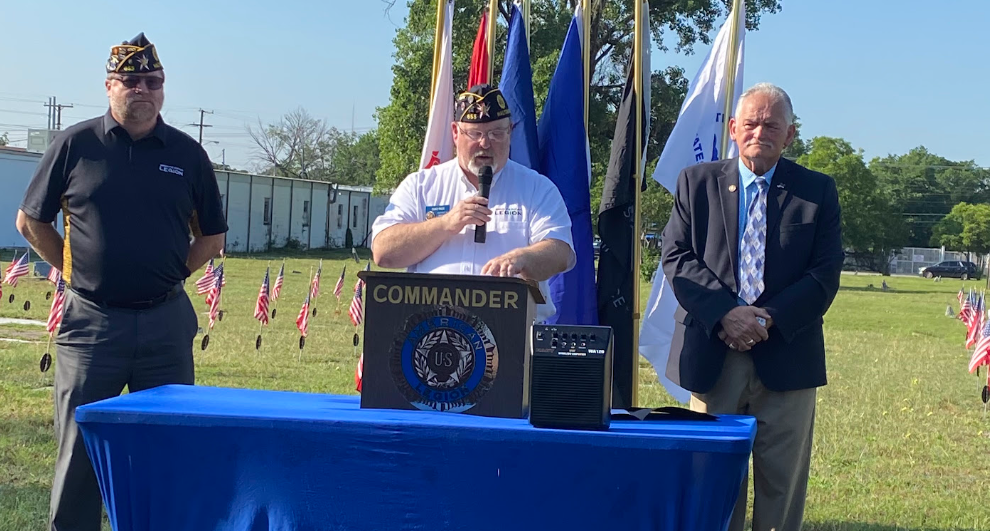
Texas district commander on service, nonprofits and the role of business in strengthening civic trust.
[originally published on alpost655.org]
America’s 250th birthday is more than a celebration of the past. It is a test of who we are now and who we intend to become. America250, the official nonpartisan effort created to help lead the nation’s semiquincentennial commemoration, has framed this milestone as a nationwide call to educate, engage and unite Americans ahead of July 4, 2026. That ambition matters. But it also raises a serious question: what will make America250 more than a branding exercise, a parade or a once-in-a-generation calendar event?
The answer is volunteerism.
If America wants its 250th anniversary to mean something deeper than fireworks and speeches, the commemoration must be rooted in service. It must be visible in neighborhoods, schools, veterans’ organizations, food pantries, youth programs, churches, parks and community centers. It must be measured not only in attendance, but in action. That is why the broader service emphasis around America250 matters so much. A meaningful national milestone should inspire Americans not only to remember the country’s history, but to participate in its future.
Volunteerism is not a sidenote in the American story. It is one of the clearest expressions of what has always made this country strong.
America has never thrived solely because of government, markets or institutions acting alone. It has thrived because ordinary people have stepped forward when their communities needed them. They coach Little League, staff local shelters, raise scholarship funds, organize food drives, mentor young people, honor veterans, respond to disasters and keep civic life alive. They do the work no system can fully automate and no policy can fully replace. Volunteerism is how patriotism becomes practical.
That is what makes service such a powerful frame for America250. The anniversary should not only ask Americans to look back at 250 years of history. It should ask them what kind of nation they want to help build now. Volunteerism answers that question in a direct and visible way. It reminds us that citizenship is not passive. It is participatory. It is not only about what we inherit, but about what we contribute.
And if volunteerism is the engine, nonprofits are the infrastructure.
Nonprofits are the backbone of volunteer service in America because they turn goodwill into organized impact. They recruit volunteers, train them, direct them, protect accountability and keep service aligned with real human need. They know the neighborhood, the families, the veterans, the seniors, the students and the gaps outsiders often miss. They do not just invite people to help; they make that help useful.
That matters especially in a moment like America250. A national anniversary can inspire broad attention, but attention alone does not feed a family, mentor a child or help a veteran navigate benefits. Nonprofits convert public spirit into public good. They make civic energy durable. Without them, volunteer enthusiasm is often temporary and fragmented. With them, it becomes strategic, measurable and local.
This is where the business community comes in.
Business engagement in America250 should not stop at sponsorships, logos or patriotic messaging. The strongest business contribution will come when companies connect their resources, people and brand influence to nonprofit-led volunteer efforts in their own communities. That is where credibility is built and where public trust becomes real.
Consumers and communities are increasingly skeptical of performative corporate goodwill. They can tell the difference between a company that sponsors a patriotic campaign and a company that shows up, year after year, with employees, time, expertise and sustained local investment. A press release may generate attention. Service generates credibility.
When a business partners with a nonprofit, three things happen at once.
First, the company improves its community relationships. It is no longer speaking at the public; it is working beside the public. Employees build firsthand understanding of local needs. Business leaders stop guessing what matters in a neighborhood and start hearing directly from the people and organizations serving it every day.
Second, the company strengthens internal culture. Volunteerism can improve morale, teamwork and employee pride because it gives people a shared mission beyond quarterly targets. A company that serves together often communicates better, collaborates better and retains stronger emotional buy-in from its workforce. Service, done well, becomes leadership development in real time.
Third, the company protects and improves its public image. Not through optics alone, but through visible alignment with trusted community institutions. Nonprofits lend authenticity because they have already earned confidence at the local level. When businesses support them humbly and consistently, that relationship becomes reputational capital money alone cannot buy.
In other words, nonprofit partnerships help businesses become not just better known, but better regarded.
That is especially true during America250, because the country is not merely looking for celebration. It is looking for meaning. A business that ties its America250 engagement to service projects, veteran support, youth mentorship, historic preservation, food security, educational programming, or neighborhood revitalization is doing more than participating in a national event. It is helping define what that event stands for.
This is also good strategy. Businesses that want to be part of this national moment should ask a simple question: how can our company help people, not just visibility? The answer will usually lead them to a nonprofit partner.
For some companies, that may mean sponsoring volunteer days in partnership with local service organizations. For others, it may mean lending professional expertise, logistics, transportation, marketing support, event space, equipment or employee hours. For regional businesses, it may mean adopting a local nonprofit for a yearlong America250 service campaign. For national brands, it may mean supporting networks of nonprofits working across multiple states while letting local leaders shape the actual work.
The key is this: businesses should not try to replace nonprofits. They should empower them.
That requires humility. The nonprofit sector understands that service is not about corporate hero narratives. It is about people. Businesses that enter this space well will listen first, ask what is needed, respect existing relationships and commit for the long term. The best partnerships are not built on the question, “How can this make us look?” but on the question, “How can we help this community win?”
That is where America250 can become something genuinely powerful.
At its best, the 250th anniversary is an opportunity to remind Americans that citizenship is active. It is lived out in service to one another. Volunteerism reflects the best of our national instincts: generosity, initiative, sacrifice and responsibility. Nonprofits are the backbone of that volunteerism because they turn compassion into coordinated action. And businesses that genuinely engage nonprofits in this work do more than enhance their image. They strengthen the civic fabric on which both communities and markets depend.
If America250 is going to leave a lasting legacy, it should not be remembered only for the scale of its ceremonies. It should be remembered for the scale of its service.
That would be a celebration worthy of 250 years.
And it would say something important to the next generation: the American story is not finished, and it is not carried forward by spectators. It is carried forward by citizens who serve.
Read Part 2, “The Future of Civic Life Will Be Built Around the Tables We Still Set,” here.
Donald N. Thompson Post 655 will celebrate America’s 250th birthday by leading the veteran-recognition portion of the North Tarrant Chamber of Commerce’s Family 4th Event on Wednesday, July 1, as well as by cooking 400 corn dogs for an eating competition. On the 4th, they will hold their traditional all-you-can-eat breakfast buffet, with red, white and blue pancakes and extra donations for America250.
Chad Page is a Navy and Navy Reserve veteran, 12th District commander for the American Legion Department of Texas, commander of Donald N. Thompson Post 655 in Fort Worth, a local resource partner with America250, and founder/executive director of Patriot Impact Networks.
By National Executive Committee resolution, American Legion departments and posts are encouraged to connect with their state and local America250 commissions. An online directory is available to contact these commissions at america250.org/our-partners/state-and-territory-commissions. Share your stories of involvement on Legiontown, and send details of your post or department events to magazine@legion.org.
- USA250