

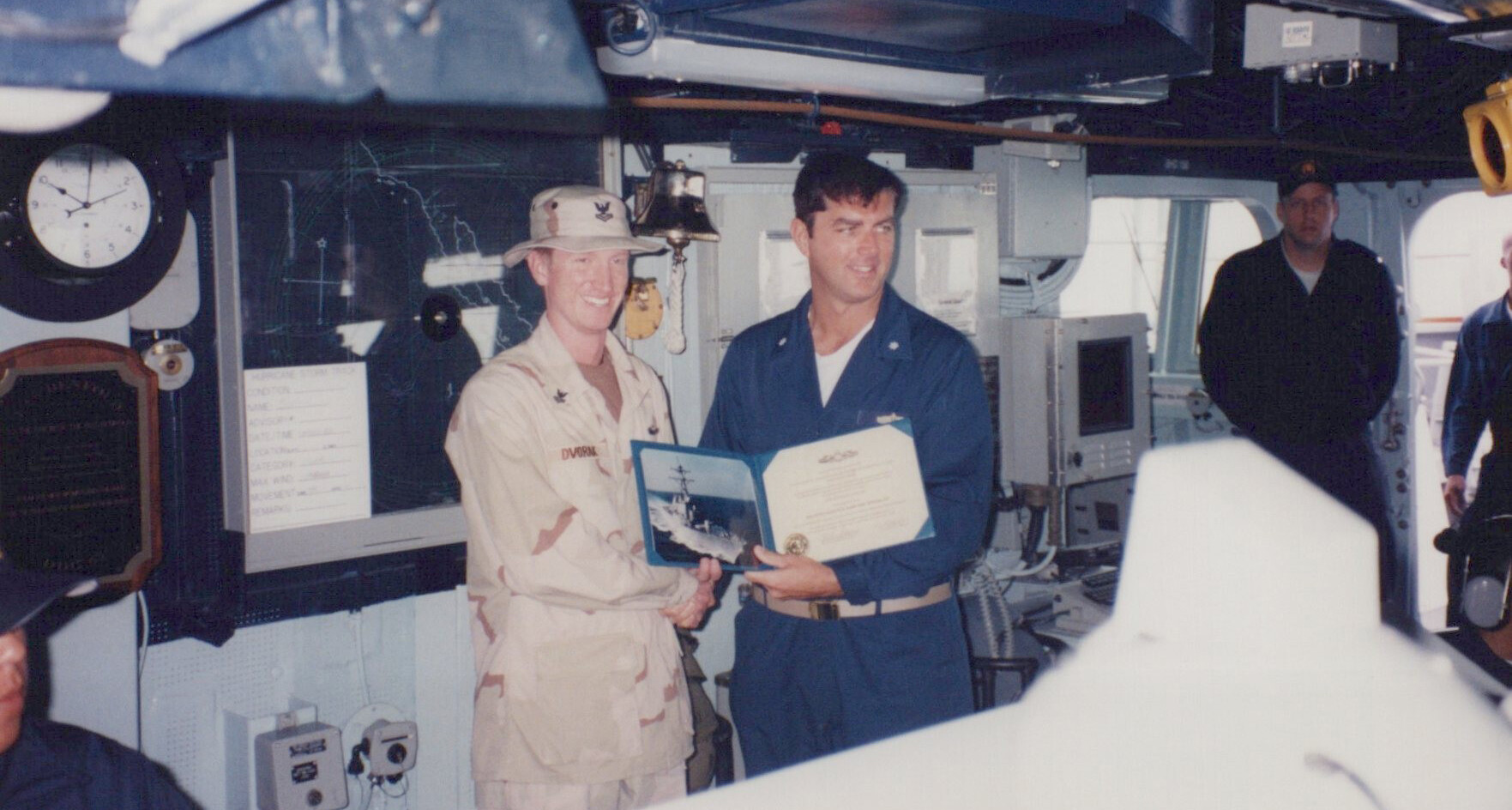
U.S. Navy veteran and Texas Legionnaire has used Cognitive Processing Therapy to manage his PTSD and other mental health challenges.
Everyday life can take its toll on a person’s mental wellness. But for some veterans, it’s a harder struggle.
Transitioning from military to civilian life can wear on a veteran’s mental health. So, too, can their experiences in the military, whether through the long-term effects of serving in a combat zone, being a victim of military sexual trauma or dealing with some other difficult situation while in service.
But for every veteran facing mental health challenges, there’s a success story of one overcoming those challenges and returning that veteran’s mental wellness to a safe and secure place. Their stories can serve as an inspiration to others, which is why we want to share those stories.
Today is the first of those stories, shared by U.S. Navy veteran Dave Dvorak, a member of Missing Man Post 667 in San Antonio, Texas. He shares how Cognitive Processing Therapy has helped him deal with post-traumatic stress disorder and other conditions.
I expected PTSD therapy to make me remember.
I did not expect it to help me forgive myself.
Twenty-two years after leaving the Navy, I found myself staring into an old fireproof chest. Inside rested my original ribbon rack and my Enlisted Surface Warfare Specialist (ESWS) pin.
The uniforms were gone.
I had thrown them away many years earlier.
A silent beast called depression convinced me I no longer deserved to wear the uniform. On the way out of Augusta, Ga., for the last time, I tossed my uniforms in an apartment complex dumpster.
After a medical drop from Special Warfare Combatant-Craft Crewman training, I spent my final four years at Fort Gordon. I arrived as a second-class petty officer with Arabic-language and sea-duty experience. My first duty assignment was several weeks on cigarette-butt patrol at the Navy barracks.
Within two short months, I visited the mental health clinic after ruminating for several hours over a public dressing-down by a chief. The Army psychiatrist, a kind colonel, diagnosed me with depression, not otherwise specified, and prescribed Paxil.
The floodgates opened.
After starting Paxil, I gained 75 pounds, drank more, and behaved in ways I barely recognized. At the time, I did not understand whether the illness, the medication, or both were changing me. I only knew something was terribly wrong.
My weight kept me from reenlisting. Administratively, I was dead in the water.
At the end of my service in December 2003, I was resentful of what I’d lost, the decisions I’d made, and how events transpired at Fort Gordon. So, I left the uniforms behind and headed home to San Antonio, Texas.
The VA took over my care. After a few months, my diagnosis changed from depression, not otherwise specified, to major depressive disorder. By July 2004, the diagnosis had changed again, this time to bipolar II disorder.
Well, that’s quite a difference from depression, not otherwise specified!
In the intervening years, I’ve learned that functioning and healing are not the same thing.
The VA psychiatrist added a mood stabilizer that began helping me regain some balance.
It would take many more years of trial and error to find the right balance of medications. It’s still a work in progress.
In 2025, I was diagnosed with PTSD connected to two incidents aboard a ship in the Persian Gulf: a dangerous helicopter hoist and a real chemical, biological and radiological alarm during which I had no gas mask. The fear resurfaced as distrust of leadership and conflict in the workplace.
The VA started me on Cognitive Processing Therapy (CPT) in December 2025. Through structured writing exercises, I examined the incidents and beliefs that had kept me trapped in loops. The work helped me identify the conclusions I had drawn from those experiences and ask whether they were actually true.
One belief kept returning: the failures of my final years had erased everything that came before them. CPT taught me to test that belief instead of automatically obeying it. I had focused only on the weight gain, the alcohol, the anger and the humiliations. I had ignored 10 years of service, deployments, qualifications, evaluations, ribbons, medals and an honorable discharge.
I had been treating shame as testimony. CPT taught me to examine the evidence.
Even after I completed the full course of sessions, I still needed time to process what had surfaced. My therapist stayed with me as I worked to understand it.
It was difficult work, and I would do it again.
Shame still makes its old accusations, but now I know to ask for evidence.
The hardest conclusion was also the simplest: I needed to forgive myself.
The uniforms will never come back.
But the rack and ESWS pin remain in the fireproof chest. They belong to a sailor who served honorably, even if he spent years believing otherwise.
Depression called him a failure.
The rack says different.
His DD-214 says honorable.
After CPT, I’m finally learning to believe them.Everyday life can take its toll on a person’s mental wellness. But for some veterans, it’s a harder struggle.
Transitioning from military to civilian life can wear on a veteran’s mental health. So, too, can their experiences in the military, whether through the long-term effects of serving in a combat zone, being a victim of military sexual trauma or dealing with some other difficult situation while in service.
But for every veteran facing mental health challenges, there’s a success story of one overcoming those challenges and returning that veteran’s mental wellness to a safe and secure place. Their stories can serve as an inspiration to others, which is why we want to share those stories.
Today is the first of those stories, shared by U.S. Navy veteran Dave Dvorak, a member of Missing Man Post 667 in San Antonio, Texas. He shares how Cognitive Processing Therapy has helped him deal with post-traumatic stress disorder and other conditions.
I expected PTSD therapy to make me remember.
I did not expect it to help me forgive myself.
Twenty-two years after leaving the Navy, I found myself staring into an old fireproof chest. Inside rested my original ribbon rack and my Enlisted Surface Warfare Specialist (ESWS) pin.
The uniforms were gone.
I had thrown them away many years earlier.
A silent beast called depression convinced me I no longer deserved to wear the uniform. On the way out of Augusta, Ga., for the last time, I tossed my uniforms in an apartment complex dumpster.
After a medical drop from Special Warfare Combatant-Craft Crewman training, I spent my final four years at Fort Gordon. I arrived as a second-class petty officer with Arabic-language and sea-duty experience. My first duty assignment was several weeks on cigarette-butt patrol at the Navy barracks.
Within two short months, I visited the mental health clinic after ruminating for several hours over a public dressing-down by a chief. The Army psychiatrist, a kind colonel, diagnosed me with depression, not otherwise specified, and prescribed Paxil.
The floodgates opened.
After starting Paxil, I gained 75 pounds, drank more, and behaved in ways I barely recognized. At the time, I did not understand whether the illness, the medication, or both were changing me. I only knew something was terribly wrong.
My weight kept me from reenlisting. Administratively, I was dead in the water.
At the end of my service in December 2003, I was resentful of what I’d lost, the decisions I’d made, and how events transpired at Fort Gordon. So, I left the uniforms behind and headed home to San Antonio, Texas.
The VA took over my care. After a few months, my diagnosis changed from depression, not otherwise specified, to major depressive disorder. By July 2004, the diagnosis had changed again, this time to bipolar II disorder.
Well, that’s quite a difference from depression, not otherwise specified!
In the intervening years, I’ve learned that functioning and healing are not the same thing.
The VA psychiatrist added a mood stabilizer that began helping me regain some balance.
It would take many more years of trial and error to find the right balance of medications. It’s still a work in progress.
In 2025, I was diagnosed with PTSD connected to two incidents aboard a ship in the Persian Gulf: a dangerous helicopter hoist and a real chemical, biological and radiological alarm during which I had no gas mask. The fear resurfaced as distrust of leadership and conflict in the workplace.
The VA started me on Cognitive Processing Therapy (CPT) in December 2025. Through structured writing exercises, I examined the incidents and beliefs that had kept me trapped in loops. The work helped me identify the conclusions I had drawn from those experiences and ask whether they were actually true.
One belief kept returning: the failures of my final years had erased everything that came before them. CPT taught me to test that belief instead of automatically obeying it. I had focused only on the weight gain, the alcohol, the anger and the humiliations. I had ignored 10 years of service, deployments, qualifications, evaluations, ribbons, medals and an honorable discharge.
I had been treating shame as testimony. CPT taught me to examine the evidence.
Even after I completed the full course of sessions, I still needed time to process what had surfaced. My therapist stayed with me as I worked to understand it.
It was difficult work, and I would do it again.
Shame still makes its old accusations, but now I know to ask for evidence.
The hardest conclusion was also the simplest: I needed to forgive myself.
The uniforms will never come back.
But the rack and ESWS pin remain in the fireproof chest. They belong to a sailor who served honorably, even if he spent years believing otherwise.
Depression called him a failure.
The rack says different.
His DD-214 says honorable.
After CPT, I’m finally learning to believe them.
- Veterans Healthcare