

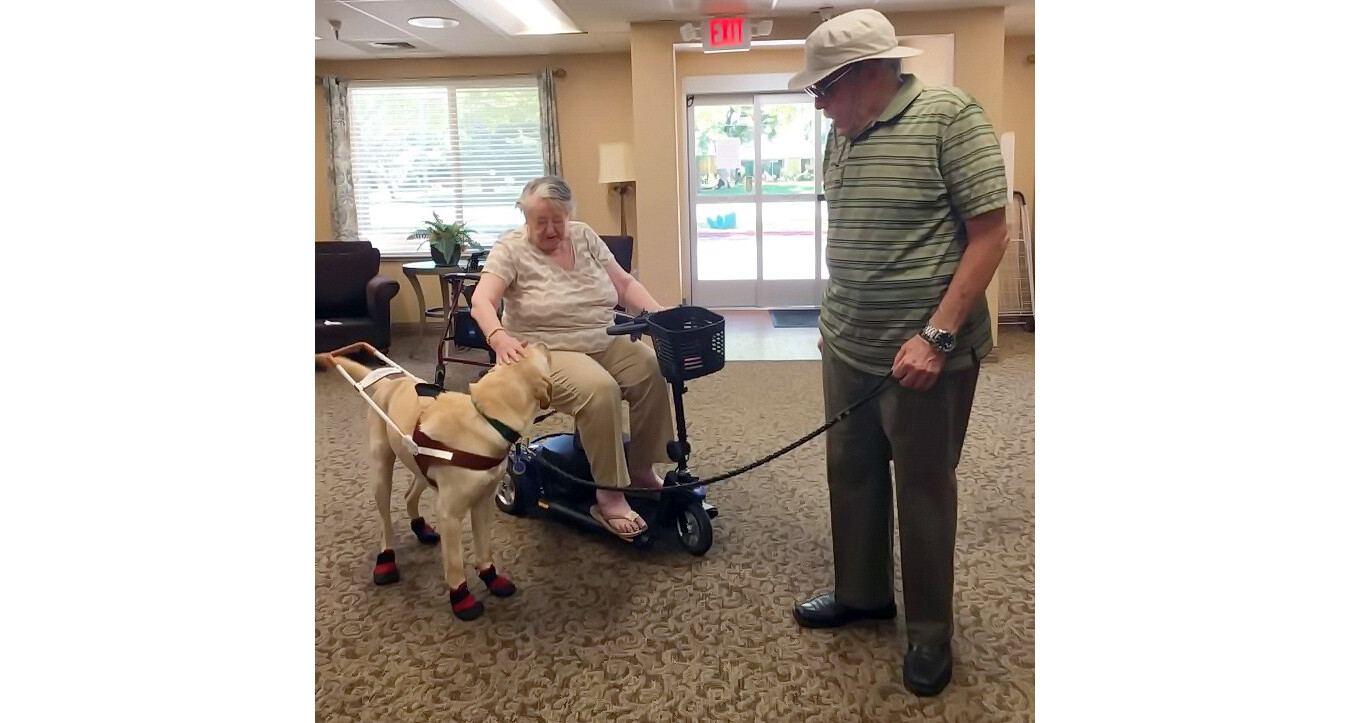
U.S. Air Force veteran and former American Legion Department of California Area 1 historian shares the impact of both of his service dogs, including his current one, Guinness.
National Service Dog Day falls on Sept. 20 and is designed to honor the role of service dogs in the lives of people with disabilities and America's veterans. The day was designated by Congress in 2023 and is part of September’s National Service Dog Month.
We asked you to share how your service dog has impacted your life, so we can share your story with others. We will continue to publish those stories throughout September.
Submit your own story and photo on www.legiontown.org in the “Why I Love My Service Animal” section.
Our latest in the series is from U.S. Air Force veteran former American Legion Department of California Area 1 Historian Mike Chinnock, who underwent 60 hours of brain surgery. His life then took a complete turn when he met the first of his two service dogs, and how much his current one, Guinness, means to him.
Post-military service I experienced 60 hours of brain surgery through four craniotomies over a three-year period. This brought a complete halt to my life. The left half of my body was paralyzed, with my poor balance resulting in many falls while using a cane or walker. Half my face was paralyzed and my speech was slurred. Nothing was really good about my life, other than I was alive and I knew I was alive.
At the local VA Hospital I met a patient advocate who referred me to a nonprofit that was training post-traumatic stress disorder (PTSD) dogs for veterans at the hospital. After an interview, the two service dog trainers offered me a PTSD-trained dog and the training I needed, if I committed to three years of effort needed to get the traumatic brain injury (TBI) service dog I needed. We began the three-year task of training my first service dog.
My life took a complete turn when I began using the service dog as we trained. My falls went away, except when I was not allowed use of the service dog. I got involved in this nonprofit service training group, as the Disabled Veteran Adviser. I even gave fundraising presentations to other nonprofits, using my service dog as the example. I am still amazed at how my life went from quite limited to actually getting involved in life again.
Sadly, a dog's life span is much shorter than a human's. My dog developed hip dysplasia. Four years later, America's VetDogs/Guide Dog Foundation brought me a replacement service dog, Guinness. Even though I have aged and now live in a senior retirement community, this new service dog fits right in. He assists me with balance and mobility, just as his predecessor did.
This new service dog turned out to be a real Godsend. Not only did he continue to assist me with balance and mobility, but he socializes better than I ever can. People come over to scratch him behind the ears and chat with me about him. This activity expanded to where I began taking him to the community Memory Care Unit, as a therapy dog. The people love him, his hugs and his kisses. He loves the scratches behind the ears.
When I watch the people in the Memory Care Unit react with joy and smiles as they interact with my service dog, I am reminded of my first encounter with my first service dog. I am happy to give back a little of that which I have received. It is clear to me that these two service dogs restored a quality of life this veteran lost when he experienced a mild traumatic brain injury.
- Veterans Healthcare