

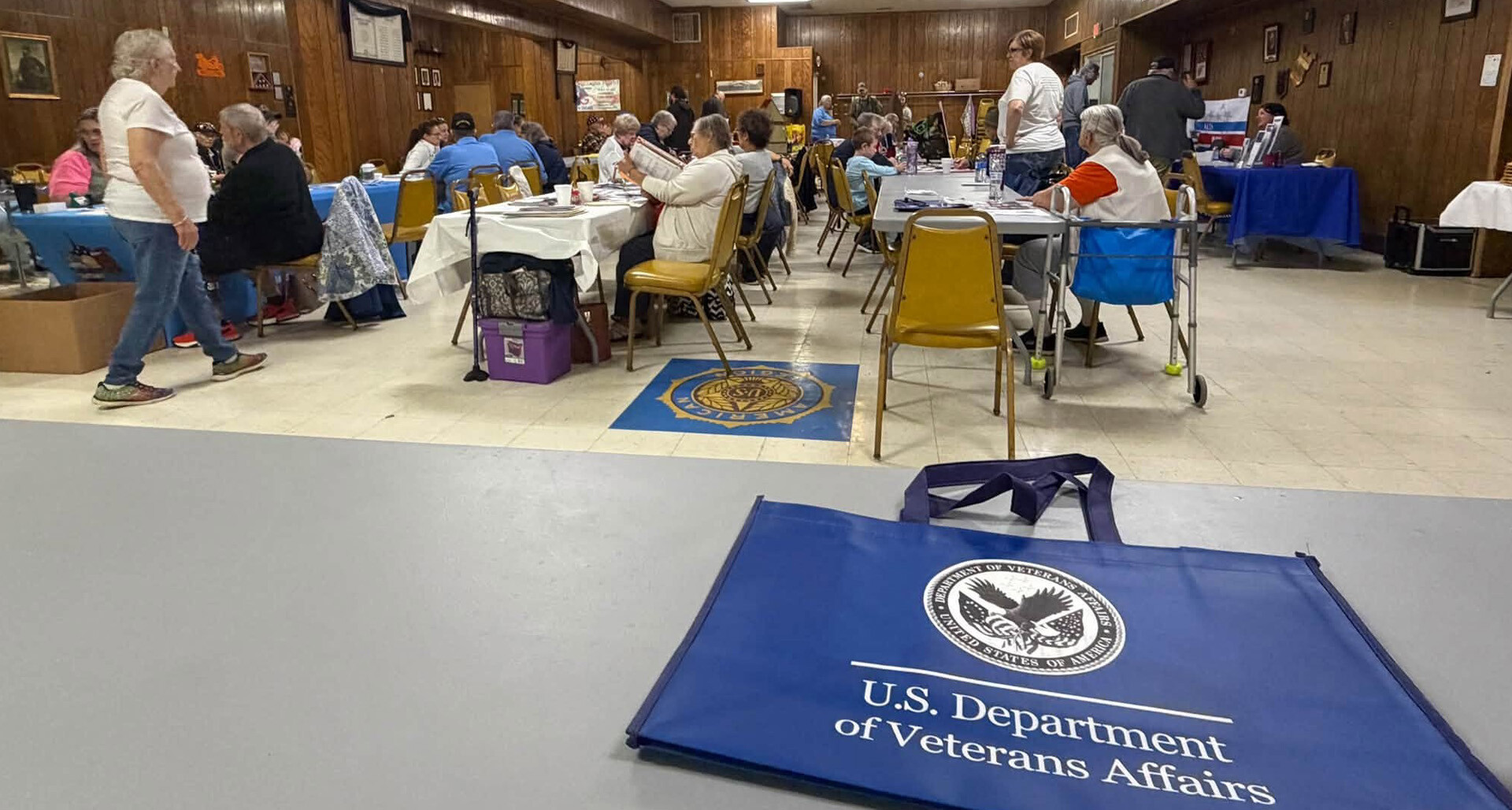
West Virginia post’s Veterans Services Fairs geared to bring resources to veterans before the tipping point.
West Virginia Legionnaire Cliff Shingleton served nearly 25 years in the U.S. Air Force before retiring in 2009. And he still clearly remembers how mental health was viewed among servicemembers during his time in the military.
That’s why changing that stigma is a priority for Shingleton, who now serves as The American Legion Department of West Virginia District 3 and first vice commander of Post 31 in Shinnston.
“There actually was a stigma,” Shingleton recalls. “If you had any kind of security clearance, then you would lose that if you sought mental healthcare. If you were in a career field that allowed you to carry a firearm on duty, you’d lose that career field if you sought mental healthcare. There were lots of things attached to seeing mental healthcare that veterans chose to avoid. And then they didn’t get mental healthcare until they hit their crisis point and couldn’t help it any more.”
That’s why three years ago Shingleton and Post 31 Adjutant Tom Willis initiated Together With Veterans (TWV), a community-based suicide prevention program for rural veterans. TWV involves partnering with rural veterans and their communities to implement community-based suicide prevention and is funded by the Veterans Health Administration Office of Rural Health. Shingleton serves as the director of TWV, while Willis is its facilitator.
And two years ago, through Together With Veterans, Post 31 began hosting quarterly Veterans Services Fairs to bring veterans face-to-face with resources available to them.
“One of the things we were looking at was the level of awareness within the community,” Shingleton said. “We went out and talked to community leaders. We went out and talked to police officers and politicians and asked them how big of a problem is veteran suicide in our area. And they didn’t know. They just didn’t have any idea (the number of veterans) a day who were killing themselves. They didn’t know there was anything in place to help with that problem.
“So we thought of the fair idea and bring everybody in the community who has some service to offer veterans into one place. And then invite the veterans in to walk around and see what’s available to them.”
Shingleton said the goal is to get to veterans who might be on the road to crisis but are not there yet. “We’re trying to impact the social indicators of health before someone becomes suicidal,” he said. “We’re working on food insecurity, home insecurity, financial insecurity and some of these other things in veterans’ lives before they get to the crisis point.
“I had two friends who I served with in the military who became suicidal. Both of them reached out, and we were able to save them. They’re both still life-long friends.”
Organizations at the fair included the U.S. Department of Veterans Affairs and mental health service providers.
“I think one veteran committing suicide is too many,” Shingleton said. “If we can get as many veterans as possible to get the tools in their hands to intervene and save someone’s life, then that’s what we need to be doing.”
Shingleton points to the Army’s recruitment slogan from 2001 to 2006 – “An Army of One” – as a way the mental healthcare stigma was reinforced unintentionally. “The Army spent years telling their soldiers they were ‘An Army of One,” he said. “And now we’re trying to tell them, ‘Well, that might have been true, but you’re no longer an army of one and you need help. And it’s OK to get that help.’
“But some of these younger veterans are still very worried – even though they’re no longer in the military – they’re worried that if they get mental healthcare, they’re going to lose their right to carry a firearm. Or they’re going to lose their rights to the job they got on the outside … if they ask for help. And that’s the biggest struggle to get through: to let them know that just asking for help doesn’t cost you those things. But if you let it go to a point where it becomes a crisis, it becomes suicidal, if you get yourself committed to a hospital, then these things become a real risk. So we’re trying to convince them to let us help early. Let us get involved with your home is at risk, not when you’re homeless.”
Shingleton attended the Legion’s Be the One training during its national convention in Louisville last August and wants to see other West Virginia American Legion posts promote Be the One while implementing Together with Veterans in their own communities.
“I think (Be the One is) one of the most important missions The American Legion can take on,” he said. “If we can get our members suicide aware, we can change the world. If they have the tools to be aware, it’s not just Legion members that will benefit from that knowledge. They can reach out to veterans at the VA hospital, at the VFW. They can impact other veterans.
“We can change the landscape of veterans’ culture in the United States in no time if we can get everybody on the same page.”
- Be the One