

It was the message U.S. military families in Bahrain had been waiting for amid weeks of stalled U.S. talks with Iran and a massive buildup of forces in the Middle East: “THIS IS NOT A DRILL.”
The first alert buzzed across Bahrain less than an hour before the explosions started.
“THIS IS NOT A DRILL,” read the text. “Effective immediately all Department of Defense (DOD) sponsored dependents in Bahrain are authorized to depart.”
It was the message U.S. military families on the island had been waiting for amid weeks of stalled U.S. nuclear talks with Iran and a massive buildup of forces in the Middle East. The departure was abruptly postponed, followed by a new message 42 minutes later.
“MISSILE THREAT WARNING. Seek hardened shelter immediately. Real World.”
What followed has been one of the largest movements of U.S. military families out of the Middle East in years. Many of those evacuees have arrived at U.S. bases in Europe, providing the first look at where families are going and what they’re facing once they get out.
It’s unclear why the U.S. waited until after launching Operation Epic Fury to authorize departures for military families. U.S. Central Command, which oversees military operations in the Middle East, referred questions over the past week about the evacuations to the Defense Department and the State Department, neither of which had responded as of Wednesday.
When the U.S. bombed Iran’s nuclear facilities in June, hundreds of military families were evacuated from the Middle East on charter flights arriving at U.S. bases in Europe days ahead of the attack.
But while the U.S. beefed up its military presence in the region over the last few months, including two Navy aircraft carriers and dozens of Air Force fighter jets, and President Donald Trump warned Iran of potential American strikes, the Pentagon did not authorize evacuations.
When the U.S. and Israel launched their attack on Iran last month, that notice was less than an hour.
“You knew you were going to do this or at least there was a very high possibility,” said retired Cmdr. Chris Moran, whose last assignment was as operations officer at U.S. Naval Support Activity Bahrain. “Why in the world did you not get the (military) dependents out at that point?”
Moran’s duties in Bahrain included reviewing noncombatant evacuation plans. Moran said there are several factors that influence decisions to evacuate: enormous costs, uprooting families and potentially tipping off the enemy among them.
In this case, the U.S. strikes came after the largest American military buildup in the Middle East in decades.
Moran said he contacted his congressional representatives early in the conflict, urging them to better fund evacuations so thousands of military spouses, children and civilian workers at NSA Bahrain could leave quickly. He also questioned why more assets, such as large transport aircraft, weren’t devoted to helping evacuees get out faster.
Evacuations appear to have increased over the last week, Moran said.
While restrictions on airspace and availability of airfields may have hampered early evacuation efforts, those potential quagmires are planned for, he said.
“If we’re going to do an evacuation, we need to do it ahead of time,” Moran said. He added that everyone involved should understand “that once the war starts, you don’t have control over everything anymore but you do have control before the war starts.”
It’s not clear how many military dependents and DOD civilians have evacuated.
Iran targets US bases
NSA Bahrain is one of the few American bases in the region that allows family members to accompany service members on deployment.
About 8,300 military personnel and their families live on the island situated in the Persian Gulf off the coast of Saudi Arabia.
The base, which hosts U.S. Naval Forces Central Command/U.S. 5th Fleet, is one of numerous U.S. installations that have come under attack across the Middle East since the war began more than a week ago. Bases in Kuwait, Iraq, Syria, the UAE, Saudi Arabia and Jordan also have been targeted.
It has taken major damage, including the destruction of communication satellites and warehouses.
No U.S. casualties have been reported in Bahrain, but a 29-year-old woman was killed early Tuesday in the capital city of Manama in an Iranian attack on a residential building. One other person was killed in a missile attack on March 2.
As of Wednesday, the civilian international airport in Bahrain remained closed, and Gulf Airlines, the major air travel provider in the country, still was not operating. Meanwhile, service members, civilian workers and their families who have evacuated the Middle East have chronicled hasty, chaotic departures during which they’ve navigated closed airspaces, jammed land routes and incoming missile alerts as Iran launched thousands of retaliatory strikes.
Escaping drones and missile fire
A U.S. civilian who worked on base said he was on a call with his friends on the morning of Feb. 28 when he heard the first explosions hitting NSA Bahrain three blocks away. The civilian quickly dropped to the floor of his apartment as the walls shook, calling his parents in the U.S., he said.
He tried repeatedly to leave his building and move further from the base, but the missile warnings kept coming.
“I just thought it would end,” the civilian worker said. “It did not end.” Stars and Stripes has agreed to withhold his identity due to concerns about reprisal.
Eventually, he made it to a friend’s home, and after several days made the decision to try to leave via the 15-mile series of bridges connecting Bahrain to Saudi Arabia. It was his best shot at leaving the island, but he said he still worried the road would be a target for Iran.
“I was scanning the skyline the entire time, looking for a drone to be flying over it. I was tearing up, and we floored it across,” he said. “Even my driver was nervous. We were going like, 90, 100 miles per hour.”
Evacuees arrive in Europe
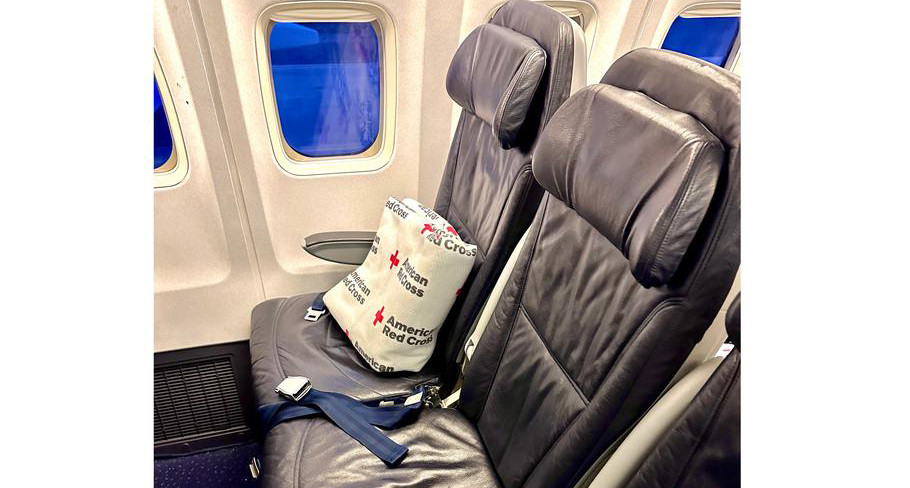
Recently, dozens of people who safely left the Middle East wandered at a U.S. base in Europe, shopping at a convenience store for snacks and supplies and eating meals at a food court. A few were escorted by volunteers who offered directions and information.
Stars and Stripes is withholding identification of the bases used as evacuation points for now as a precautionary measure.
In the days since the start of Operation Epic Fury, the base has welcomed hundreds of evacuating military dependents, civilians and service members arriving on flights from the Middle East. They’ve been greeted by a cadre of officials and volunteers, including the USO and Navy-Marine Corps Relief Society.
Early last week, tables at an arrival center were full of snacks, water, energy drinks and other items, such as diapers, for travelers. By mid-week, the tables were depleted but being restocked.
It’s not clear how long evacuees may stay at bases in Europe, but some appear to be moving on quickly.
Military officials in Europe also are asking their communities for donations of new or gently used soft-sided crates for military families traveling with pets. “Your donations will help keep pets safe, comfortable and close to their families during travel,” one message said.
Service organizations and bases in Europe are asking for volunteers to help arriving evacuees and seeking donations of items such as coloring books, crayons, toiletries, diapers and car seats.
One military spouse stationed in Bahrain said she and her kids endured days sheltering in a closet, listening to the sounds of drones and missiles, before they were able to make it out. Now, they’re in a safe space, she said, but her children are still affected.
One of her kids asked her, “Is Iran bombing here now, too?” Another keeps saying, “no closet,” the spouse said.
The situation has been similar in diplomatic communities around the region as American civilians and government employees looked for a way out. Only Israel and Beirut embassies authorized departures for their non-emergency personnel prior to the U.S. strikes against Iran. Since then, multiple embassies in the region have authorized or mandated departure for employees. The State Department says it is currently assisting tens of thousands of Americans home on commercial and charter flights.
One service member who evacuated the region said he has been frustrated by a lack of support when it comes to housing arrangements, schooling for his family and reimbursement costs. He noted that the U.S. naval buildup in the region happened over several weeks, and said he was frustrated that the government didn’t move more Americans prior to initiating the conflict.
“It was plenty of time to [evacuate] Americans,” he said.
Alerts keep coming
The civilian living in Bahrain who drove into Saudi Arabia said he was eventually able to fly to the United States. All of his possessions remain in Bahrain.
He keeps in touch with his U.S. friends who are still on the island, he said. His phone continues to buzz with emergency notifications for Bahrain even though he’s no longer there.
They come in rapid succession — sometimes two, three, or five minutes apart — all bearing the same message: “MISSILE THREAT WARNING Attention,” the texts read. “Seek hardened shelter immediately. Real world.”
- Security