

Bills span improving health care access, government accountability and benefits for education and workforce readiness.
A whopping 27 bills for reauthorizing specific veterans programs and policies were presented Wednesday at an unusual hearing of the House Veterans’ Affairs Committee that focused on eventually combining many of the initiatives into a single omnibus package for a vote in Congress.
The bills spanned improving health care access, government accountability and benefits for education and workforce readiness. Several pieces of legislation focused on efforts to update infrastructure, operations and processes at the Department of Veterans Affairs — affecting how medical facilities are managed, how quickly new drugs are made available and how research is prioritized on veterans health.
“These bills aim to address ongoing issues that have hindered VA health care delivery over the years due to excessive bureaucracy and cumbersome processes, which has shifted the focus away from placing veterans at the center of everything VA does,” said Rep. Mike Bost, R-Ill., the committee chairman, at the start of the two-hour hearing.
Some statutes and polices have not been meaningfully updated for 30 years, Bost said.
“When programs fall short, it is the duty of this committee to ask questions, demand answers and make the legislative changes to fix the problems. Reauthorization is not a procedural exercise. It is how Congress evaluates whether programs are working as intended,” he said.
The bills included 12 Republican-led and 15 Democrat-led pieces of legislation.
Bills would align the VA’s national drug formulary with health care industry standards, update VA’s leasing and construction practices, and reform processes for issuing contracts and making procurements.
Other bills sought to establish or significantly broaden veterans access to specific health programs. They included an initiative to expand dental coverage to more veterans and for the first time provide VA mental health care to incarcerated veterans with PTSD, traumatic brain injuries and other service-connected conditions.
VA officials said they do not support the Dental Care for Veterans Act, led by Rep. Julia Brownley, D-Calif. The agency has “significant concern” about costs to implement the bill, said Phillip Christy, a principal executive director and chief acquisition officer at the VA. Of the approximately 9 million veterans enrolled in VA health care, only about 2.4 million currently qualify for coverage for dental services, he said.
“VA anticipates that there would be a large initial surge in demand for dental care,” Christy said in written and oral testimony.
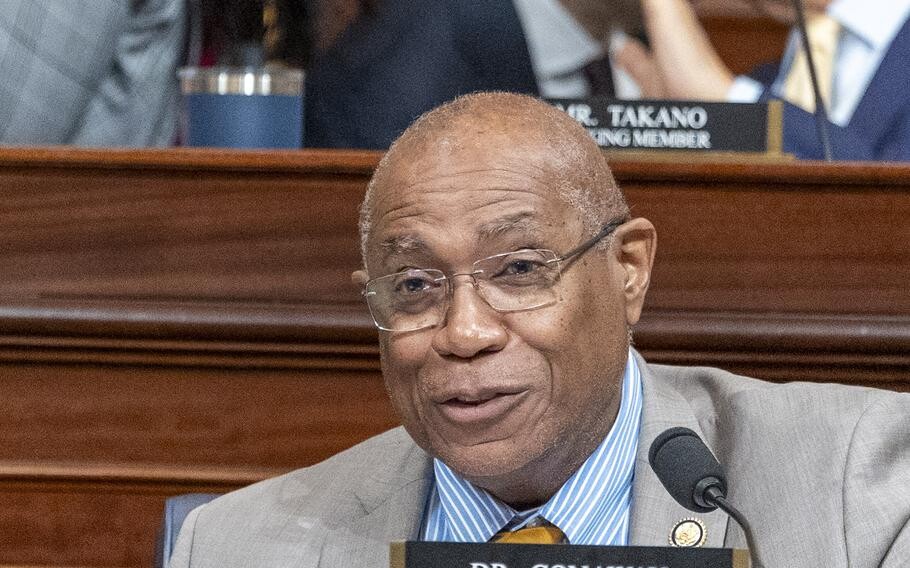
The Get Justice-Involved Veterans Back Home Act — which is still in draft form — would direct the VA to furnish mental health services to veterans in prison with services that include telehealth, mobile care units and other means, said Rep. Herb Conaway, D-N.J., a physician and Air Force veteran. Veterans with serious mental health problems have a higher incarceration rate, Conaway said. The bill also would ensure resumption of disability benefits upon release.
Rep. Mark Takano, of California, the top Democrat on the committee, spoke in support of the Ensuring Veterans’ Smooth Transition Act, or the EVEST Act. The bill would automatically enroll in VA health care eligible service members leaving the military.
“Veterans earned this care through service to this nation,” Takano said. “For us to gatekeep their access to that care does nothing to improve their outcomes. We know that the months following transition can be stressful, and risk factors are elevated, including for mental health.”
Six out of 10 of veterans who died by suicide in 2023 were not receiving VA health care in the year before their death, according to the most recent National Veteran Suicide Prevention Annual Report.
The VISN Reform Act would change how the VA runs its regional health networks, known as VISNs, which oversee hospitals and clinics that care for millions of veterans. The bill would reduce the number of networks from 18 to eight, creating a new map with much larger regions. Supporters argued that consolidation would streamline authority.
The VA National Formulary Act would update VA management of prescribed medications, including how quickly it evaluates new drugs and makes them available to veterans.
The VA Research Reform Act aims to update research practices and standards by creating a centralized database and prioritizing studies for enhancing health outcomes. The bill requires “veteran impact forecasts” to ensure that clinical studies focus on improving veteran health.
The VA Funding and Workforce Protection Act, led by Rep. Tim Kennedy, D-N.Y., would help shield the VA workforce from layoffs. The bill would add protections for the 30% of VA staff who are military veterans.
Takano also discussed the Toxic Exposure Advisory Committee Establishment Act, which is still in draft form. The bill would help to advance the intent of the PACT Act, which provides the health care and disability compensation to veterans with diseases and chronic illnesses linked to toxic exposures from military service, Takano said.
The legislation would establish an advisory committee to guide the VA on further assisting toxic-exposed veterans. Identified toxins span burn pits, radiation, herbicides including Agent Orange, and other hazardous materials. Task force members would include veterans as stakeholders.
“This advisory committee would create a venue for veterans to be heard and require their ideas to be taken seriously,” Takano said.
- Veterans Healthcare